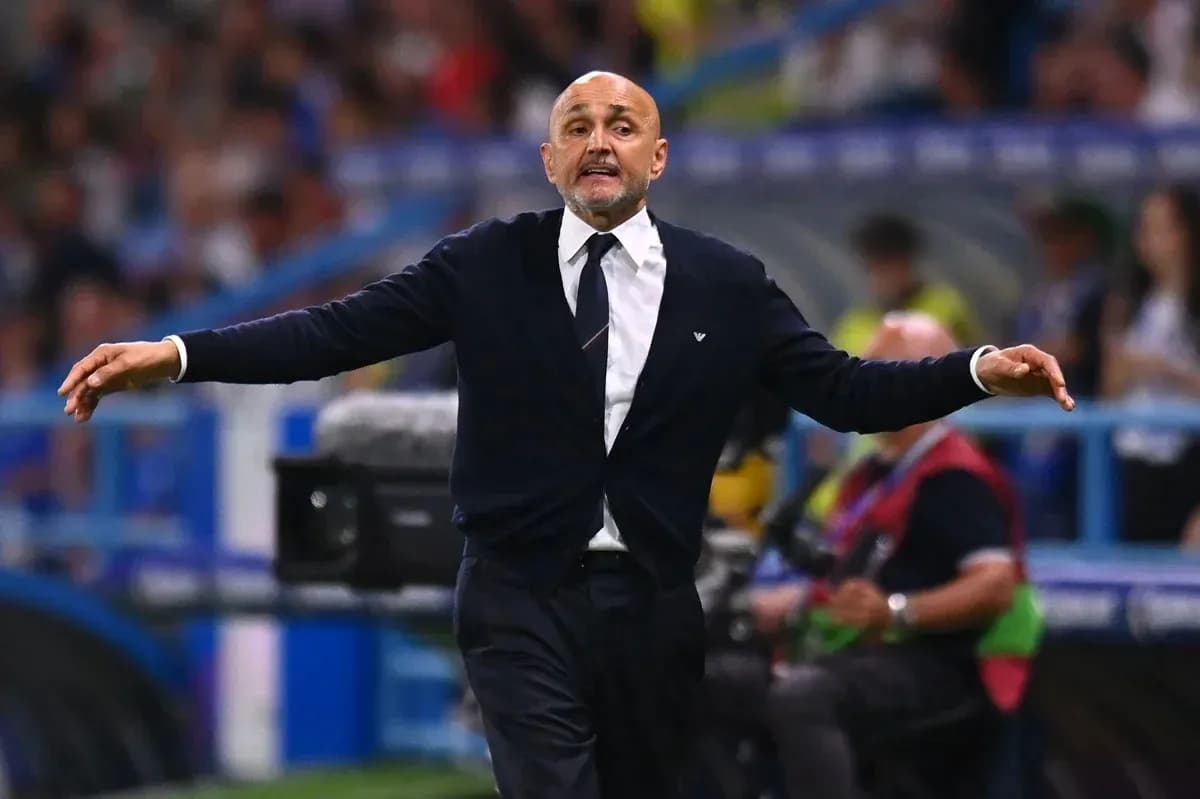
Luciano Spalletti has never been one for fairy tales, and he was not about to start now. Asked to assess Juventus’ summer transfer window, the coach cut through the usual post‑market platitudes with one blunt line.
“The perfect transfer market no longer exists, only the possible one exists.”
That sentence frames Juve’s entire summer. Ambition met reality. Plans met budgets. Targets met the chaos of a market that rarely bends to a manager’s will.
A window of compromises
Juventus moved to strengthen the squad, aware that the season ahead demands more depth, more quality, more solutions. Spalletti had identified specific profiles, pushed for particular names, and the club worked those lines. Some arrived. Others never got close. A few deals shifted at the last second as circumstances changed.
He wanted more. More changes, more star power, more tools to shape a side fully in his image. But he has been in this game long enough to know how it works. You ask. The club pushes. The market decides.
Spalletti did not hide that gap between desire and reality, but he refused to turn it into a complaint. Instead, he framed it as the modern condition.
There is scouting, he pointed out, the long, detailed work of identifying players who fit the team’s needs and character. Then the market throws something unexpected at you: a rival club steps in, a player chooses another league, a fee spikes overnight. Just like on the pitch when a game plan collides with a stronger opponent, you adapt or you lose.
Praise for Juve’s directors
In that context, Spalletti’s verdict on Juventus’ hierarchy was striking. Rather than lament what he did not receive, he praised what the directors managed to do.
“Our directors have been very good at fitting into the right contexts and adapting to what the market has to offer,” he said, via Gianluca Di Marzio.
That is not the language of a coach at war with his board. It is the tone of someone who recognises the constraints: financial rules, competition for targets, timing, and the sheer unpredictability of a window where one big move can knock over a dozen smaller ones.
Juventus, by his account, navigated that maze smartly. They picked their battles, reacted to opportunities, and avoided chasing the kind of illusion Spalletti dismisses outright – the flawless, all‑needs‑met summer that simply does not exist anymore.
Now the work starts
For all the nuance around the market, the reality is simple: this squad is now his. The new arrivals are in the dressing room. The ones who did not come are someone else’s problem.
Juve did “some fine pieces of business,” as even the more demanding voices around the club have acknowledged. It was not a revolution, but it was not a standstill either. The blend of continuity and change now lands squarely on Spalletti’s shoulders.
He must integrate the signings, accelerate their understanding of his demands, and squeeze more out of the players who survived the summer cull. If the new faces settle quickly and the core responds, Juventus have enough to mount a serious push for trophies. If they do not, the conversation will shift from what the club could not do in the market to what the coach could not do with what he had.
Spalletti, for his part, has made peace with the premise. There is no perfect window, only the possible one. The question now is brutally straightforward: will “possible” be enough for Juventus’ ambitions this season?