Four games into the EFL Championship season and the table is already throwing up a few sharp storylines, even if the real judgments will come much later.
Swansea, QPR and Charlton all sit on 10 points, setting an early pace that feels more like a warning shot than a definitive statement. Swansea look slick, QPR energetic, Charlton quietly efficient. Charlton’s start, in particular, could prove gold dust when the winter grind and relegation anxiety begin to bite. These are the points that keep you breathing in March.
Wolves, Boro, Bristol City, West Brom and Birmingham make up a congested early top eight, all within four points of the summit. It’s too tight to separate, but patterns are emerging: Wolves have already shown flashes of attacking threat, Boro and Bristol City look organised, West Brom and Birmingham are hanging around the right end without yet catching fire.
Then there’s West Ham. Three stuttering opening games, then a statement win over Wolves that served as a reminder: they still have the squad and the ceiling to be favourites for automatic promotion. That performance cut through a lot of early-season noise.
At the other end, the alarm bells are already humming. Preston North End are bottom with four defeats from four, no points, no momentum. Burnley, winless with just two points, are stuck in neutral, while Stoke’s three points leave them hovering above the trapdoor. It’s early, but the table has a habit of telling the truth sooner than clubs like to admit.
Top eight:
- Swansea – 10 pts
- QPR – 10 pts
- Charlton – 10 pts
- Wolves – 7 pts
- Boro – 7 pts
- Bristol City – 7 pts
- West Brom – 7 pts
- Birmingham – 6 pts
Bottom three:
- Stoke City – 3 pts
- Burnley – 2 pts
- Preston NE – 0 pts
Tottenham, spared the chaos of European football this season, step into September with something rare in the modern game: space. Fewer fixtures. More training ground time. No excuses.
Roberto De Zerbi now works with a largely settled squad, though the situation around Richarlison still hangs in the air. Once that’s resolved, the picture becomes clearer. For now, the schedule hands Spurs an opportunity they cannot afford to waste.
Four matches await the men’s team this month: Forest at home on 5 September, Everton at home on 12 September, Liverpool away in the EFL Cup on 15 September, then Aston Villa at home on 19 September.
Forest and Everton at home are exactly the kind of fixtures that define whether a season leans towards optimism or frustration. These are games where a side with top-six ambitions must impose itself, not just escape with points. The trip to Anfield in the EFL Cup is a different test entirely – a night where De Zerbi’s ideas, rotation choices and nerve will be examined under the floodlights.
His team showed flashes of what they could be against Newcastle last week, but walked away with nothing. That can’t become a theme. With a brutal October looming, this month is about stacking points, building rhythm and turning promise into results.
On the women’s side, a new chapter begins. Spurs Women open their season against West Ham this weekend, then travel to Liverpool and Crystal Palace, with cup and league fixtures coming thick and fast: West Ham again in the League Cup on 23 September, Villa on 27 September, and a League Cup trip to Brighton on 30 September.
Big personalities have gone. Beth England and Molly Bartrip were not just names on a teamsheet; they were pillars in the dressing room. Their departures leave a vacuum and a chance. This is a new-look Spurs side, and September will tell us whether it has merely changed, or genuinely evolved.
Tottenham’s summer window did not whisper. It roared.
The hierarchy backed De Zerbi with more than £300m, a staggering outlay for a club that flirted with relegation last season. The message was blunt: that cannot happen again.
Cristian Romero and Guglielmo Vicario departed, stripping away two of the most recognisable figures from the spine of the team. In their place, Spurs moved aggressively. Mateus Fernandes arrived as a marquee signing, the kind of deal that signals intent rather than merely plugging gaps.
There was smart business too. Marcos Senesi and Andy Robertson, both secured on free transfers, represent the sort of opportunistic recruitment that can transform a squad’s depth and leadership profile without smashing the budget. Then came the premium move: Savio, brought in to inject quality and chaos on the wing. He should lift the attacking ceiling immediately.
Omar Marmoush feels like one of those signings that can quietly become a fan favourite if he hits stride. Mykhailo Mudryk is the opposite: a high-profile, high-risk addition that raises as many questions as it answers. Can De Zerbi unlock him in a way Chelsea never quite managed? And if he does, what does that mean for Spurs in the long term, structurally and financially?
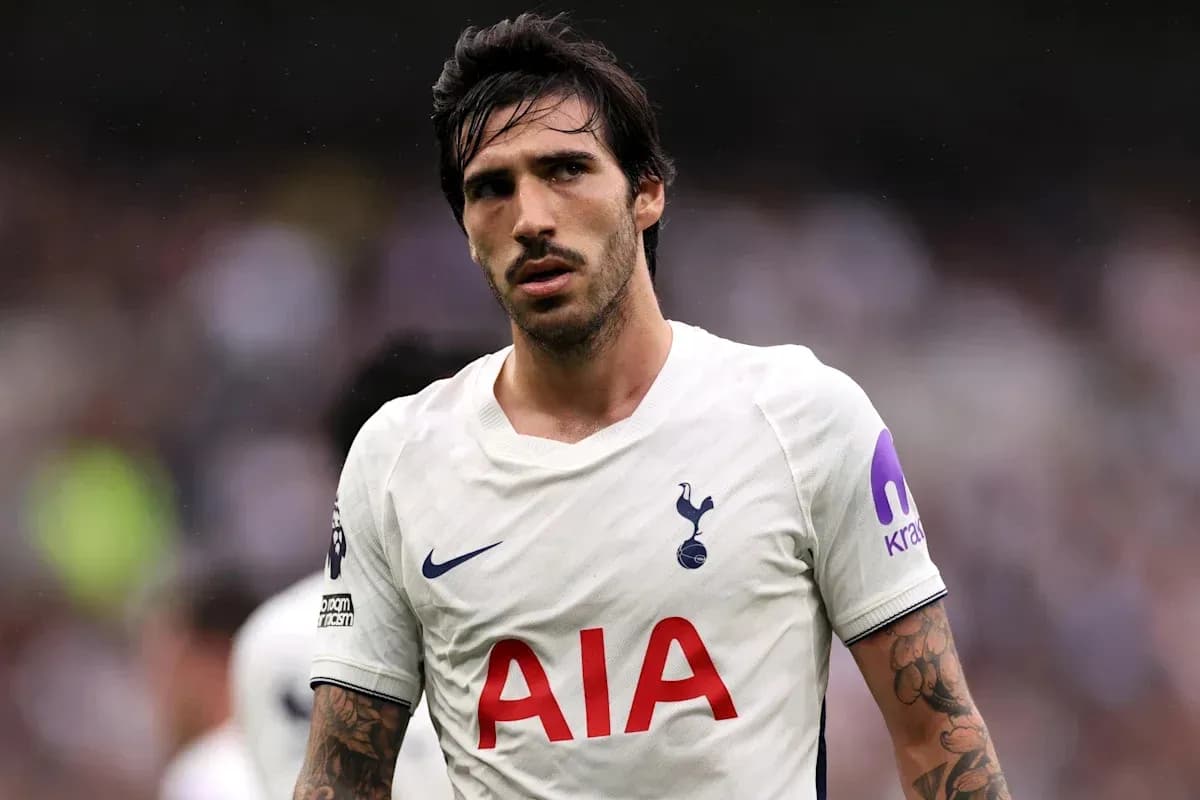
Sandro Tonali’s arrival underlines the ambition. A midfielder of his calibre doesn’t just fill a role; he reshapes how a team can play. On paper, it all looks like a window that drags Spurs up a level.
Yet the doubts are there, and they’re not minor.
Letting Will Lankshear go feels like a misstep. A loan route seemed the obvious pathway to development, but Spurs chose to cash in with a decent sell-on clause instead. It may prove clever business down the line, but it also might be one they regret if his career takes off elsewhere.
Then there’s the goalkeeper situation. Martin Dubravka does not look like a genuine long-term challenger, and Antonin Kinsky still doesn’t inspire total confidence. In a summer of sweeping change, the failure to decisively upgrade in goal stands out. It feels like a missed chance in a position that so often defines seasons.
Even with those caveats, the overall picture is clear: this was a strong window. Ambitious, expensive, coherent in many areas. A B+ feels fair.
Now the money is spent, the squad reshaped, the excuses stripped away. The next judgment won’t be on the balance sheet, but on the league table.