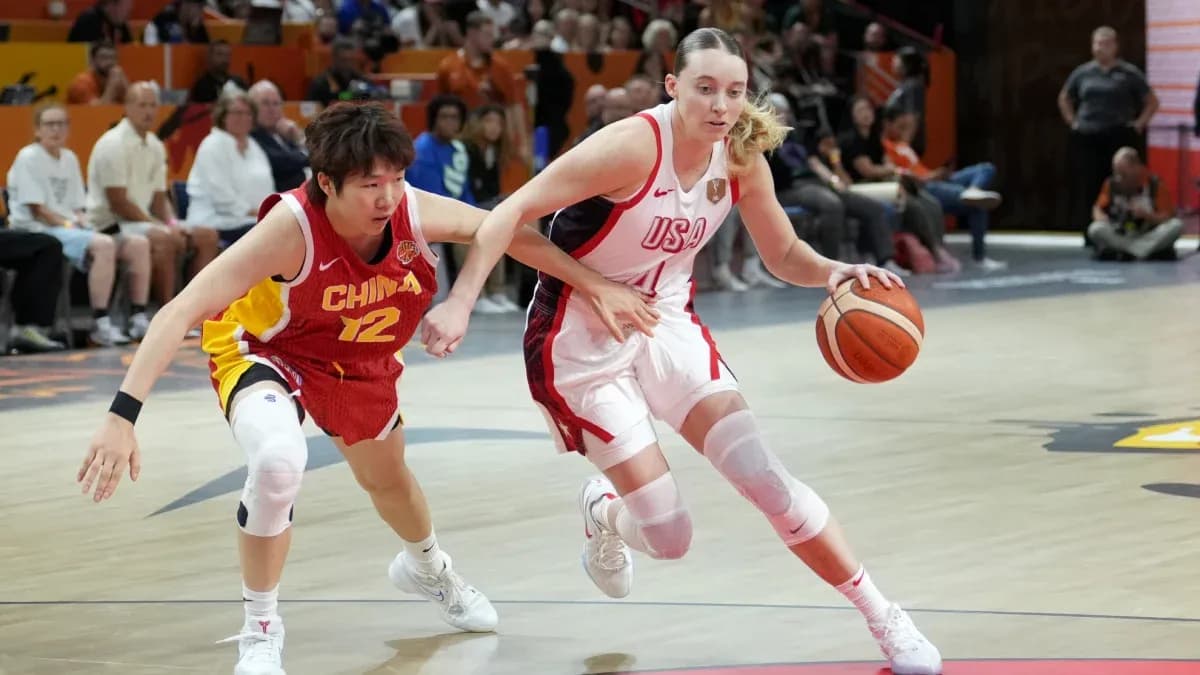
Team USA Dominates China in FIBA World Cup Opener
Team USA didn’t just open its 2026 FIBA Women’s Basketball World Cup campaign. It planted a flag.
A 94-61 dismantling of China in Berlin on Friday was as ruthless as it was routine, a statement win that immediately framed Group D around one question: how cleanly can the Americans carve their path to another gold?
A familiar mission, a new route
The United States arrived in Germany chasing a fifth consecutive World Cup title, an extension of a dynasty that has turned these tournaments into exercises in problem-solving rather than survival. The expectation, internally and externally, is the same: win it all.
USA Basketball has long circled this World Cup as another chapter in that run. ESPN had already placed the Americans alongside France as the tournament’s standard-bearers. Nothing about opening night suggested that assessment was misplaced.
But this edition comes with a twist.
FIBA’s revamped format splits 16 teams into four groups of four. Each side gets three group games. Finish first and you walk straight into the quarterfinals. Land second or third and you’re forced into a single-elimination qualification game just to reach the last eight.
In other words, this isn’t just about getting out of the group. It’s about avoiding an extra 40 minutes where one cold shooting night, one foul-troubled starter, can flip an entire tournament.
Group D: advantage USA
Group D pairs Team USA with China, Italy and Czechia. The Americans have already done the heavy lifting in their opener, beating China by 33 to collect two competition points and seize control of the standings.
Italy handled Czechia on day one as well, so the early table is simple: USA 1-0, Italy 1-0, China and Czechia chasing.
The schedule now turns quickly. The United States faces Italy on Sunday, then Czechia on Monday to close group play. The math is straightforward:
- One more win and the Americans are in the knockout phase.
- Two more wins and they likely skip the danger zone entirely.
A 2-1 record guarantees a top-three finish in a four-team group, so any split of Italy and Czechia is enough to survive. But survival is a low bar for a roster like this. The target is first place, and with it a direct ticket to the quarterfinals.
Three wins from three would lock that up, assuming the USA stays ahead on overall record. Even at 2-1, tiebreakers could still hand them top spot, but they can erase any doubt by taking care of business in both remaining games.
They control the group. Now they have to act like it.
A new-look roster, same imposing ceiling
If the scoreline against China looked familiar, the cast delivering it did not.
This is not the exact group many expected to see when preparations began. A'ja Wilson and Kelsey Plum, pillars of recent USA dominance, withdrew before the tournament because of health and injury concerns. Their absences reshaped the rotation and the hierarchy.
In came Sonia Citron and Kiki Iriafen, two players who bring energy and upside but also shift more responsibility onto the veterans who remain. Breanna Stewart and Napheesa Collier now carry even more of the leadership and two-way burden. The younger guards and wings have been handed a larger stage.
On opening night, they embraced it.
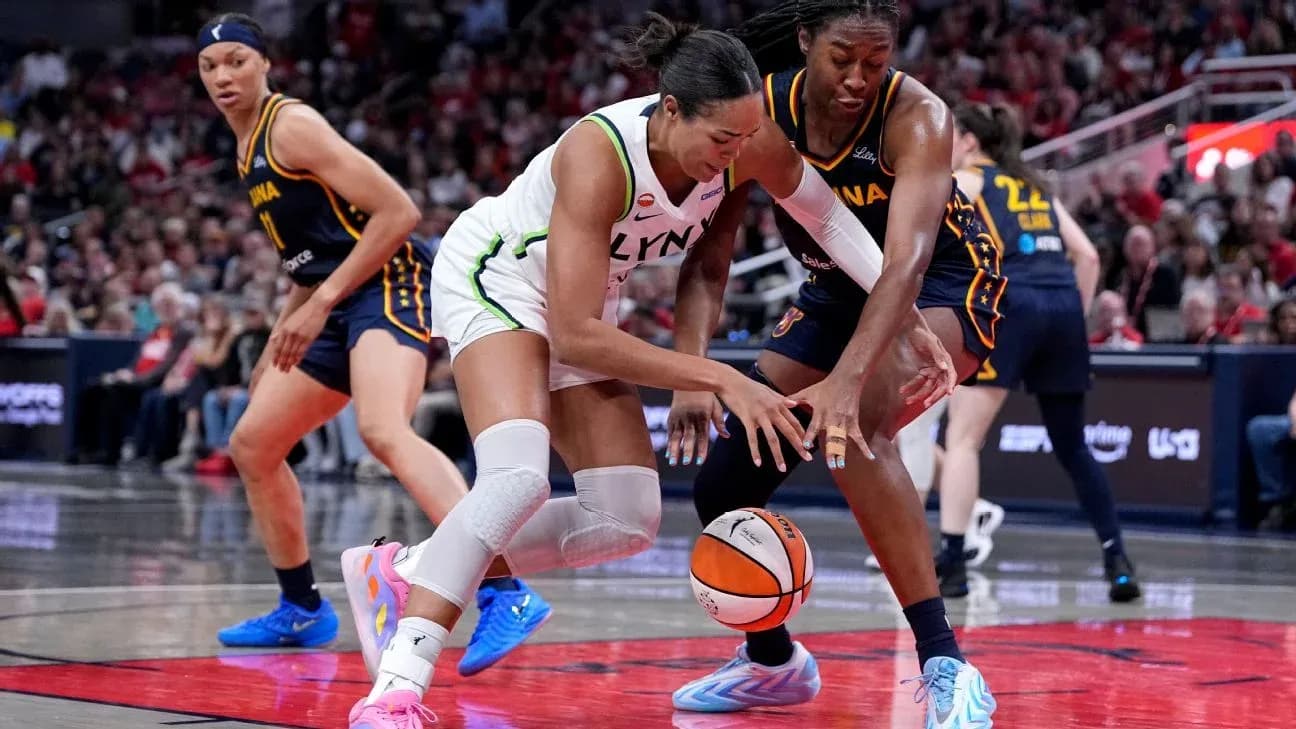
Caitlin Clark’s World Cup debut delivered the kind of line that turns heads in any arena: 14 points, 11 assists, orchestrating an offense that kept stretching China until the game broke open. Rhyne Howard matched her 14 points. Paige Bueckers added 14 of her own. Multiple perimeter threats, all humming at once, turned a tricky matchup into a runaway.
China’s size is no joke. Its frontcourt can overwhelm teams, distort game plans, and drag contests into uncomfortable territory. Team USA solved that puzzle with pace, spacing and relentless pressure on the perimeter, turning a potential grind into a 33-point cruise.
That performance reinforced what FIBA’s rankings already say. Even shorthanded, the United States remains the No. 1 team in the world and the clear favorite in Berlin.
Why first place matters
The stakes in Group D are about more than bragging rights.
Top spot means no qualification game, an extra day of recovery, and one fewer opportunity for chaos. In a condensed tournament, that rest day can be as valuable as any tactical adjustment.
It also reduces the risk of the kind of one-off upset that has haunted giants in every sport. One misstep in a qualification game and years of planning disappear. For a team aiming at a fifth straight title, removing that variable is almost as important as any matchup advantage.
Because once the quarterfinals begin, the tournament reverts to a familiar shape: straight knockout. Quarterfinals. Semifinals. Medal games. No more safety nets, no more second chances.
That’s where the real threats wait.
France looms largest after pushing the Americans to the brink in the 2024 Olympic final, losing by a single point. Belgium and Australia have the depth and experience to trouble anyone, and both are built to survive the later rounds. China, even after Friday’s loss, showed that its size and physicality can still bend games in its favor.
The path from Group D to the podium will not be gentle.
The equation from here
For now, though, the picture is clear.
Beat Italy or Czechia and Team USA secures a top-three finish and a place in the knockouts. Beat both and they almost certainly claim first place, dodge the qualification game, and stride straight into the quarterfinals with momentum and fresher legs.
Given the blend of experience, athleticism, playmaking and depth on this roster, the expectation is blunt: they should finish the job in Group D, take the direct route, and keep the chase for a fifth consecutive World Cup crown very much alive.
The opening statement has been made. The real question is whether anyone in Berlin can stop them from turning it into another chapter of dominance.