Team USA’s FIBA Women’s World Cup Ratings Surge
The numbers from Team USA’s FIBA Women’s World Cup run are in, and they read like a statement of intent.
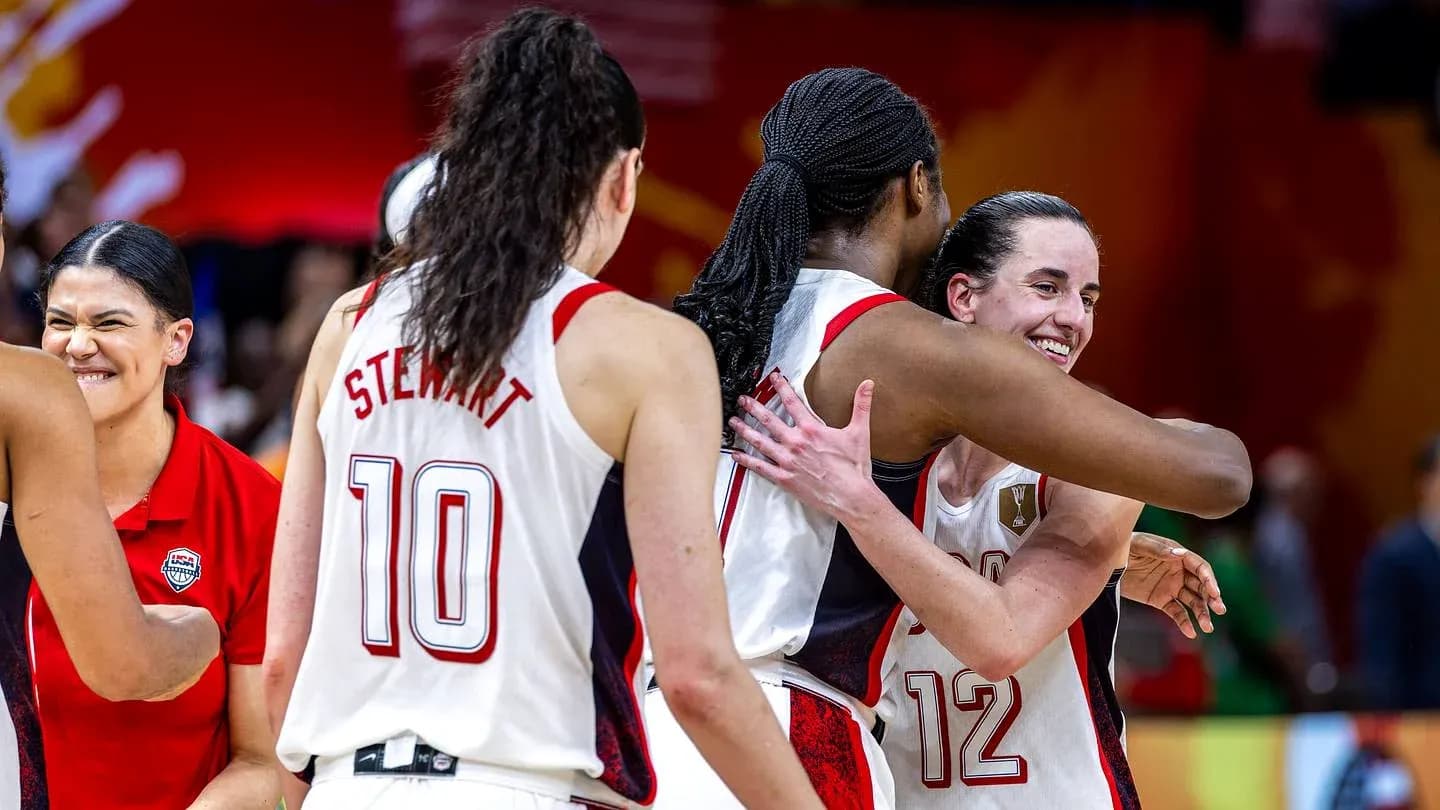
Sunday’s final against France, a 97–79 U.S. win, pulled in an average of 1.2 million viewers across HBO Max, TNT and truTV. That’s not a gentle uptick. That’s a surge: up 158% from the 2022 FIBA Women’s World Cup final and a remarkable 750% jump from the 2018 title game.
In women’s basketball television history, those are the kind of leaps that turn heads in boardrooms.
A Final in the Eye of the NFL Storm
Context matters here. The U.S.–France game didn’t exist in a vacuum. It tipped off right in the middle of Week 1 of the NFL regular season — the single most powerful ratings machine in American sports.
On top of that, the U.S. Open men’s final was unfolding at the same time, with American Ben Shelton on court and drawing his own sizeable audience. Women’s basketball, the NFL, and a Grand Slam tennis final, all colliding in one broadcast window.
And still, 1.2 million people chose the World Cup final.
That figure made USA–France the third most-watched FIBA Women’s World Cup game ever. Only two contests in the same tournament did better: Team USA’s near-shock against Italy, which averaged 1.3 million viewers, and their final group-stage clash with Czechia, which matched the final at 1.2 million.
So yes, the final and semifinal drew slightly fewer eyes than those earlier games. But look at what they were up against.
Spain Semifinal Cuts Through a Crowded Saturday
The semifinal against Spain on Saturday averaged 938,000 viewers. That’s not just a solid number; it’s historic, ranking as the fourth most-watched FIBA Women’s World Cup game on record.
There was no NFL that day. There was, however, the weekly religion of college football, rolling wall-to-wall across networks. The U.S.–Spain matchup landed right in the middle of that schedule, fighting for oxygen in a packed Saturday window.
Several media voices didn’t hide their irritation with the timing. The sport’s showcase games were pushed into direct competition with American football at both the college and professional levels, plus a marquee tennis final. For a tournament trying to break through, the scheduling felt like a headwind.
And yet, the audience still showed up.
A Ratings Statement for Women’s Basketball
Strip away the conflicts and the what-ifs, and one reality stands out: a women’s basketball game averaged well over a million viewers in the heart of an NFL Sunday.
That doesn’t happen by accident. It’s the product of a sport that’s been building momentum and a national team packed with names that cut through the noise.
Caitlin Clark sits at the center of that. Her presence alone shifts interest, drawing casual fans into appointment viewing. Alongside her, Paige Bueckers and Angel Reese bring their own gravitational pull — different styles, different personalities, but the same effect: people tune in.
This World Cup felt like an early glimpse of what that trio can become on the global stage. The basketball was one thing. The attention they commanded was another.
If these are the numbers now, in the shadow of the NFL and the U.S. Open, what happens when the stage is cleared and the Olympic rings go up?
Paris 2028 is a long way off on the calendar. On the ratings curve, it suddenly doesn’t feel far away at all.