Team USA Faces Tough Challenge from Italy in World Cup
Team USA rattled China on opening night. Italy is making them sweat.
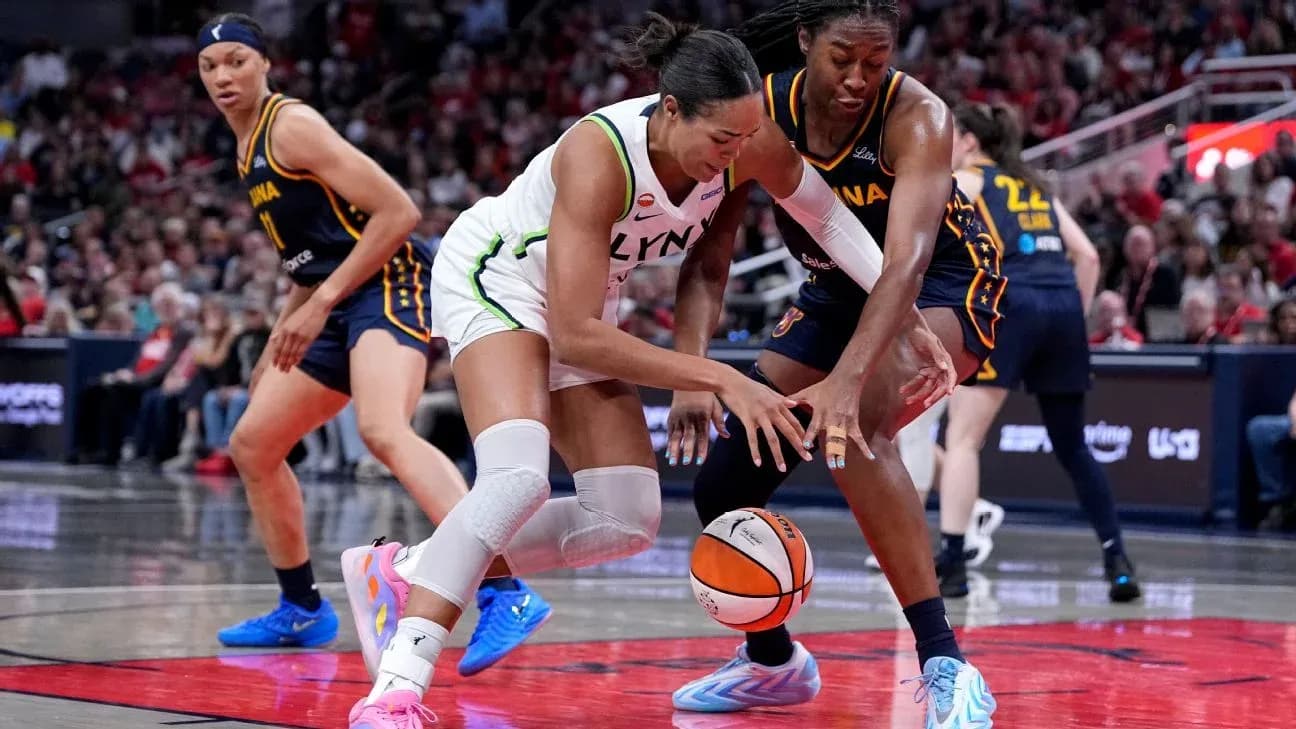
Two days after a 94-61 demolition of China, the four-time defending FIBA Women’s World Cup champions walked into Berlin Arena on Sunday expecting another step along a familiar path toward gold. Instead, they found an Italian team that refused to play the part of overmatched underdog and a game that turned into a grind.
By the middle of the third quarter, the alarm bells were real.
Italy, which had led for just 42 seconds all afternoon, suddenly held a 33-32 edge with 5:32 left in the third. The United States had missed seven straight field goals. The paint, usually Team USA’s private office, was locked. The perimeter? A wasteland: 0-for-9 from three.
Italy wasn’t just hanging around. It was dictating terms.
A champion dragged into a street fight
Kara Lawson’s team had come out with the same defensive bite that shredded China. Nine different Americans scored in the first quarter as the “young and turnt” group pushed out to an 18-8 lead. Paige Bueckers set the early tone with four points, while Italy coughed up eight turnovers and shot just 21%.
The script looked familiar: depth, pressure, separation.
But Italy refused to fold. Andrea Capobianco’s side tightened its defense, packed the lane and turned the game into a half-court wrestling match. Every cut was challenged, every catch contested. The Americans, who had buried 12 threes against China on Sept. 4, suddenly couldn’t buy one.
By halftime, the U.S. still led 30-24, but the mood had shifted. The double-digit cushion had vanished under a 14-6 Italian run over the final 6:45 of the second quarter. The Americans were shooting 32% from the floor; Italy sat right behind at 31%. This wasn’t a blowout. It was a stalemate.
“We’re just making too many errors. We’re making too many mistakes,” Lawson said at the break. “Italy’s playing with great force. We knew they would. It’s forced us into a lot of unforced errors.”
The numbers backed her up. The U.S. managed only nine points in the second quarter. The paint was crowded, the rhythm gone, the easy transition buckets dried up. For a program used to imposing its will, it felt uncomfortably human.
Zandalasini answers the moment
Italy’s belief had a name: Cecilia Zandalasini.
The versatile wing, who plays under U.S. assistant Natalie Nakase with the WNBA’s Golden State Valkyries, carved out every inch of space she could find. She powered Italy’s surge in the second quarter, scoring her way to nine points by halftime and leading all scorers.
At the 4:15 mark of the second, Italy was on a 14-3 tear, slicing what had been a 19-8 U.S. advantage down to 26-20. Zandalasini hit shots, drew contact and forced the American defense to bend toward her.
Her foul tally, though, told the other half of the story. Three fouls by the break, with FIBA’s five-foul limit looming. For Italy, keeping its star on the floor became as critical as any offensive set.
On the other side, Angel Reese was answering with edge of her own. In less than three minutes, she piled up a steal and two blocks, then closed the half as the U.S. leader with six points, two blocks and a steal. Her activity around the rim was one of the few consistent bright spots on an otherwise choppy offensive afternoon.
Team USA’s defensive numbers still looked like those of a powerhouse. By the 6:45 mark of the second quarter, they’d already racked up six steals and four blocks, picking pockets and swatting shots. But those plays weren’t breaking the game open the way they had against China. Italy absorbed the blows and kept coming.
Foul trouble and frayed nerves
The tension ratcheted up early in the third. With 7:31 left in the quarter, Napheesa Collier picked up her third foul and headed to the bench, Rhyne Howard checking in. In FIBA play, five fouls is all you get. For a U.S. team already searching for offensive flow, the possibility of losing one of its defensive anchors added another layer of concern.
Italy sensed the opening. The defensive pressure intensified, the rotations sharpened, the paint remained a no-go zone. The United States, normally so fluid and ruthless, looked stuck in mud.
This was not how the Americans had envisioned their second group game. They had already dismantled Italy once this year — a 93-59 win in Puerto Rico on March 14, when Kahleah Copper led a balanced attack with 15 points and five U.S. players hit double figures. That night, the gulf in talent and execution was obvious.
In Berlin, it was anything but.
A tournament with no safety nets
The broader stakes hang over every possession. Team USA has not lost a World Cup game since 2006 and has captured four consecutive titles. They entered Berlin as heavy favorites, the only team with minus-odds to win the 2026 FIBA Women’s World Cup, ahead of contenders like France, Belgium, Australia and Spain.
They arrived without two of their biggest stars. A’ja Wilson, the MVP of the 2022 World Cup and a four-time WNBA MVP, and five-time All-Star Kelsey Plum were both ruled out four days before the tournament began because of health reasons. Lawson’s response was blunt: there was no time to dwell on who wasn’t here.
Sonia Citron and Kiki Iriafen stepped in to replace them, part of a reshaped roster that blends established winners — Breanna Stewart, Chelsea Gray, Napheesa Collier — with the new wave headlined by Caitlin Clark, Paige Bueckers and Angel Reese.
The group’s ceiling is obvious. So are the growing pains.
USA Basketball managing director Sue Bird had framed Italy as both a test and an opportunity before tipoff.
“We want to continue to work on ourselves, try to build a chemistry as we go through the tournament, but obviously respect our opponent,” Bird said. “It’ll be a challenge, and hopefully, we can do a little bit of both.”
Italy made sure the “challenge” part landed.
The road beyond Berlin
This game is only one step in Group D, where the United States shares space with Czech Republic, Italy and China. The Americans opened with that emphatic 94-61 win over China on Sept. 4, powered by a 14-point, 11-assist double-double from Clark — her 11 assists the most by an American in World Cup play — and 14 points each from Rhyne Howard and Bueckers.
Next up after Italy is Czechia on Monday, Sept. 7. Top spot in the group carries real weight: group winners move straight to the quarterfinals on Sept. 10. Second and third place must survive the Playoff Qualification Round on Sept. 8 just to reach the last eight.
For a program built on dominance, Sunday against Italy was a reminder. The rest of the world isn’t just chasing. It’s closing in, possession by possession, stop by stop.
Team USA still has the deepest talent pool, the longest winning streak, the heaviest expectations. But as Italy showed in Berlin, none of that guarantees comfort.
Not in this World Cup. Not anymore.