In the middle of a bruising week for Esteban Ocon, Toto Wolff chose São Paulo to remind the paddock how hard some people once fought to get the Frenchman on the grid – and how much they personally paid for the privilege.
Ocon’s future has been thrown into turmoil after Haas confirmed his axe ahead of the Brazilian Grand Prix, days after the team stood him down during the Mexico City weekend. No one at Haas has gone on the record to explain the split. Ocon has pushed back only on the most explosive rumour, firmly denying talk of a physical altercation.
Behind the noise, Wolff painted a very different picture: the long, expensive road that took Ocon from junior champion to a surprise F1 debut with Manor in 2016 – and the role played not just by Mercedes, but by Ferrari boss Fred Vasseur’s own wallet.
The $2 million break
Ocon arrived at the door of Formula 1 with serious credentials. He had won the GP3 title with Vasseur’s ART Grand Prix outfit, then raced for the team’s DTM squad. Talent wasn’t the problem. Budget was.
“So Mercedes, we picked up the management of Esteban due to Gwen actually,” Wolff recalled, referencing former Mercedes junior chief Gwen Lagrue, who helped guide the careers of George Russell and Kimi Antonelli and has now agreed a move to Red Bull from 2027.
Lagrue entered the picture when Gravity Sport Management collapsed, leaving Ocon’s career at risk. Mercedes and Vasseur combined to keep him moving through GP3 and into DTM. Then the break came.
A seat opened up at Manor from the Belgian Grand Prix onwards in 2016. The price: $2 million.
Wolff laid out the numbers bluntly. Mercedes could find $1 million. They were short by the same amount. That is when Vasseur stepped in – not with team money, but his own.
“Fred put the money in personally to give Esteban the opportunity,” Wolff revealed.
It was an unusually candid admission in a sport where funding is often discussed in vague terms. Without that extra $1 million, Ocon’s debut might never have happened. No Manor races. No launchpad into the midfield. No chance to show what he could do against the established order.
Across those early years, Wolff said, the pair worked in lockstep to push Ocon up the ladder, convinced they were backing a driver who simply needed the right car and the right moment.
From backing to break-up
That long shared history made the scenes of the past fortnight all the more jarring. Ocon, now 30 and still under Mercedes management, finds himself on the outside at Haas, his position gone before the season is done and his reputation under heavy scrutiny.
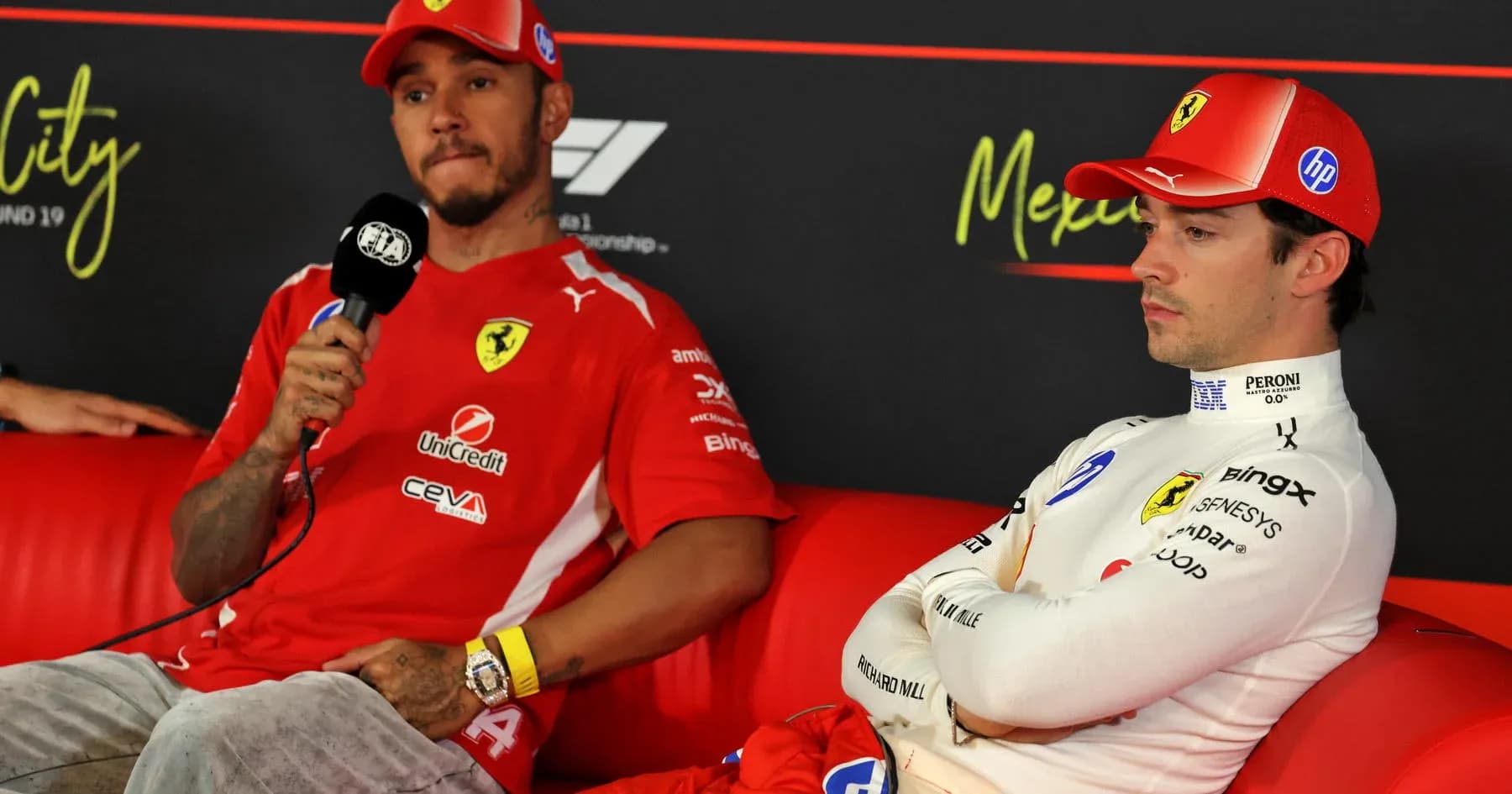
Wolff, sitting alongside Vasseur in the team principals’ press conference at Interlagos, did not challenge Haas’s right to act. He framed it instead as a hard line drawn by team boss Ayao Komatsu.
“I think at the end, it came to the point where Ayao needed to represent the team and protect the team from a certain rhetoric,” Wolff said. On the other side, he added, Ocon felt he had done nothing wrong in what he said.
The conclusion was stark: “You’ve got to respect that in the end the team calls the shots. The team principal needs to decide when it’s enough, and that is what Ayao did.”
Haas moved quickly once the decision was made. In Mexico, reserve driver Ryo Hirakawa stepped in. For Brazil, it was Rafael Camara who got the call, the Brazilian making his F1 debut on home soil earlier than expected.
The team had already signposted that Ocon would not be part of their plans for 2027, with Camara signed for the future. His early promotion underlined just how decisively the door has been closed.
Vasseur’s respect, and Ocon’s crossroads
Vasseur, now in red but still the man who once bet his own money on Ocon, chose his words carefully. He refused to wade into Haas’s internal issues.
“I worked with Esteban in GP3, in DTM. I don’t know if it was 10 or 15 years ago. With Toto also at this stage,” he said. “He did very well, I think, in the junior series, in DTM, in F1.”
On the current mess, he drew a clear line: “Now to comment what’s happened in another team, it’s difficult. I have enough to do with my guys, and I don’t know what’s happened between Ayao, Haas, and the team and the driver. I don’t want to make any comment.”
What he did offer was a reminder of the competitor behind the headlines.
“For sure, it’s a shame for Esteban because I think he’s a pure competitor. He put a lot of energy in all over the season to be in F1, and for this we need to have a huge respect.”
That respect is not the same as a race seat. Ocon leaves Haas with his reputation under attack from outside voices and his next move unclear. Even former world champion Jenson Button has questioned who will be willing to pick him up.
Yet the story Wolff told in São Paulo cuts through the current storm. Ocon is not a pay driver who bought his way in; he is the driver others once paid for, out of conviction rather than convenience. Mercedes management, Vasseur’s personal funds, years of backing through junior titles and touring cars – all poured into one career.
Now the grid tightens, the options shrink, and the same paddock that once opened a door for him starts to close them. The question that hangs over Ocon is simple, and unforgiving: in a sport that remembers the present far more vividly than the past, does that early faith still count for anything?