
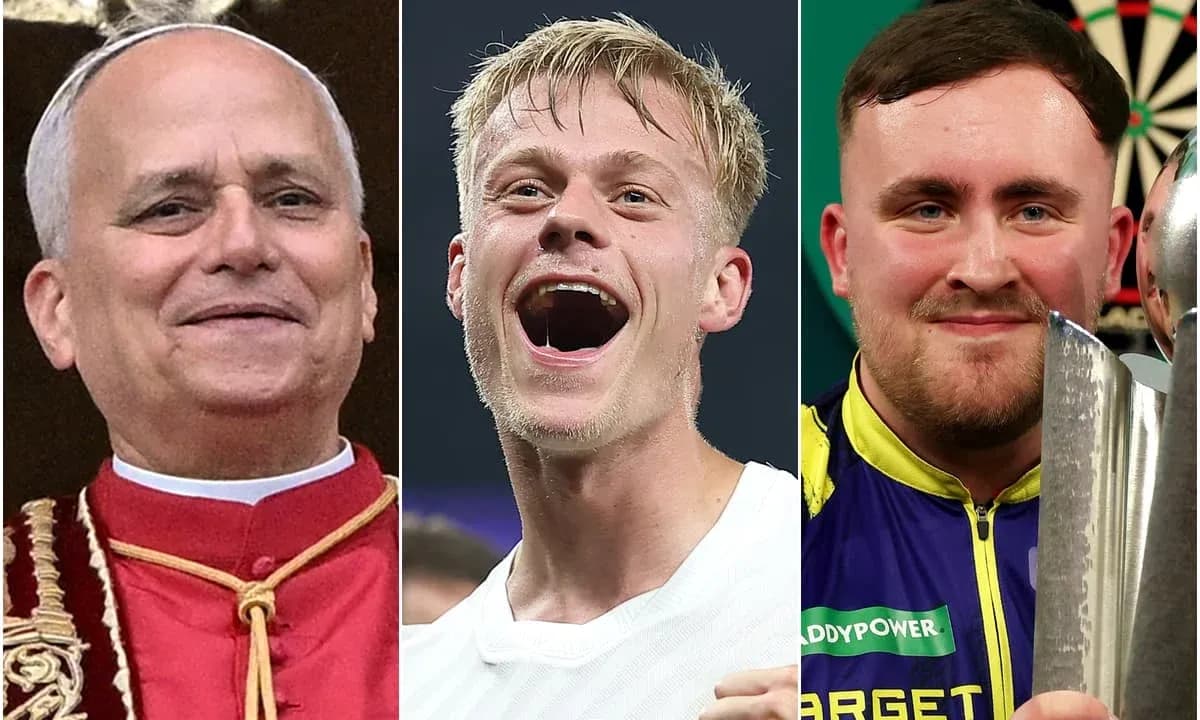
It has been 1,108 days since Tottenham last stitched together four straight Premier League wins. Three years in which the world has changed, governments have fallen, popes have come and gone – and Spurs have veered from title talk to the brink of disaster.
Now they go to Elland Road with a simple target that suddenly feels symbolic: win at Leeds and finally make it four on the spin again.
From Ange’s surge to a hard crash
You have to go back to the opening months of Ange Postecoglou’s reign for the last time Tottenham found this kind of rhythm. In that bright, breathless start to 2023-24, they won eight of their first 10 league games, surged five points clear at the top and briefly looked immune to the summer loss of Harry Kane to Bayern Munich.
They rattled off three consecutive wins twice in that spell, either side of a north London derby draw, playing with a swagger that felt like a rebirth. They did not sustain it. The title challenge fizzled, the injuries mounted and they eventually came home in fifth.
That was the last time “on the bounce” meant anything more than a memory.
A new pope, an old president, a changing country
While Spurs have been stuck on three, the wider world has rattled through eras.
In May 2025, Cardinal Robert Francis Prevost emerged from the conclave as Pope Leo XIV, the 267th Pope of the Catholic Church. A Real Madrid admirer by reputation, he ended up with a different shirt in his hands: Sunderland, “Pope Leo, 14” on the back, a gift as the Black Cats prepared for a Europa League campaign. It echoed 2013, when club chaplain Father Marc Lyden-Smith handed a Sunderland jersey to Pope Francis before a famous derby win over Newcastle.
Across the Atlantic, the White House door swung open again for Donald Trump. Defeated by Joe Biden in 2020 after his first term, Trump returned to power in November 2024, beating Democratic candidate and former vice-president Kamala Harris to reclaim the presidency he first won over Hillary Clinton in 2016.
At home, British politics turned over at speed. After 14 years out of office, Labour swept back to power in July 2024 as Sir Keir Starmer became Prime Minister in a landslide. Two years later, in July 2026, Starmer was gone, replaced by Andy Burnham. Five Prime Ministers in five years. Instability as a new normal.
Tottenham, as it turned out, knew the feeling.
Levy walks away, the floor falls out
In September 2025, Daniel Levy stepped down as executive chairman, closing a 25-year chapter that had defined the modern club. His exit was framed as a reset. Non-executive chairman Peter Charrington spoke of “a new era of leadership for the club”.
The reality was brutal. What followed was the worst Premier League season in Tottenham’s history.
Twelve months earlier, Spurs had finally ended a 17-year wait for a major trophy, lifting the Europa League after beating Manchester United in Bilbao. Postecoglou had delivered silverware and a sense of direction. Sixteen days later, he was sacked.
The decision detonated the stability they thought they had built. Within a year of that European high, Tottenham were staggering towards the trapdoor.
From Europa League glory to the edge of the abyss
Spurs’ trophy drought ended in style, but the glow did not last. Instead of pushing on from that Europa League triumph, they collapsed into a relegation fight that felt unthinkable when they were outplaying Europe’s elite.
By the final day of last season, the equation was stark: fail to beat Everton at home and they were down. Tottenham, a club that had spent years selling itself as a Champions League brand, stood one bad afternoon away from the Championship.
They survived. Barely. A nervy 1-0 win over Everton kept them up, the tension inside the stadium a world away from those carefree early days under Postecoglou.
The previous year’s escape had been just as fraught. Locked in a relegation battle with West Ham, Spurs stayed up only “by the skin of their teeth”, saved by a crucial goal from loanee Joao Palhinha. From Kane and Champions League nights to depending on a temporary midfielder to keep them in the division – all in the same three-year stretch.
Three managers, ten chaotic months
Once Postecoglou was pushed out, the dugout became a revolving door.
Thomas Frank came in as the man to build on European success. By February 2026, with Tottenham hovering over the relegation zone, he was gone. The club turned to Igor Tudor. His tenure lasted 44 days.
Panic set in. Roberto De Zerbi arrived as the third appointment in 10 months, charged simply with steering the club to safety. He did that, but the damage to any long-term plan was obvious. The “new era” promised after Levy’s departure had, in its first iteration, delivered chaos.
West Ham tumble, Littler rises, Antonelli rewrites F1
Tottenham’s turbulence played out against a sporting landscape shifting just as dramatically.
Across London, West Ham offered a cautionary tale of their own. Conference League winners one year, relegated to the Championship within three seasons. Poor recruitment, constant managerial churn and ownership uncertainty dragged them from the high of their first major trophy in 43 years back to the second tier after 14 straight years in the Premier League.
Elsewhere, new stars were rewriting what “teenage prodigy” means.
In darts, Luke Littler exploded into public consciousness at 16, storming to the World Championship final on his debut at Alexandra Palace in January 2024. He did not fade. He became a back-to-back world champion, the dominant player in the sport while still a teenager and one of the biggest names in British sport.
On four wheels, Kimi Antonelli did something similar. At 20 years and 68 days, he clinched the 2026 Formula One world title with a third-place finish at the Mexico City Grand Prix, becoming the youngest world champion in the sport’s history. His season tore up records: youngest Monaco Grand Prix winner, youngest driver to record a Grand Slam, and the first Italian world champion in more than 60 years.
Tennis goodbyes and Fury’s familiar return
While fresh faces took centre stage, an era quietly closed in tennis.
Sir Andy Murray, two-time Wimbledon champion and the face of British tennis for a generation, retired in August 2024. Rafael Nadal, owner of 22 Grand Slam titles and the king of Roland Garros, followed in October. With Roger Federer already gone since 2022, that left Novak Djokovic as the last active member of the sport’s fabled “Big Four”.
Boxing, by contrast, clung to an old storyline. Tyson Fury announced his retirement for a fourth time last year. Few believed it. They were right. By April 2026 he was back again, beating Russian heavyweight Arslanbek Makhmudov by unanimous decision in his first fight of a fifth act.
He then defeated Mariusz Wach in Thailand and now moves towards a long-awaited showdown with Anthony Joshua in Cardiff in December, another chapter in a rivalry that has spent years simmering just out of reach.
Back to Elland Road, and a familiar question
All of this – popes, presidents, prime ministers, prodigies, retirements, resurrections – has unfolded since Tottenham last won four Premier League matches in a row.
Three years ago they were top of the table under a new manager, playing with freedom and talking about the future. Since then they have sacked that manager after he delivered a European trophy, changed the chairman, burned through coaches and twice stared down relegation.
Now comes Leeds away. One game, one modest milestone: four on the bounce. After everything that has happened, is this finally the moment Spurs stop looking backwards and start behaving like a club on the rise again?





