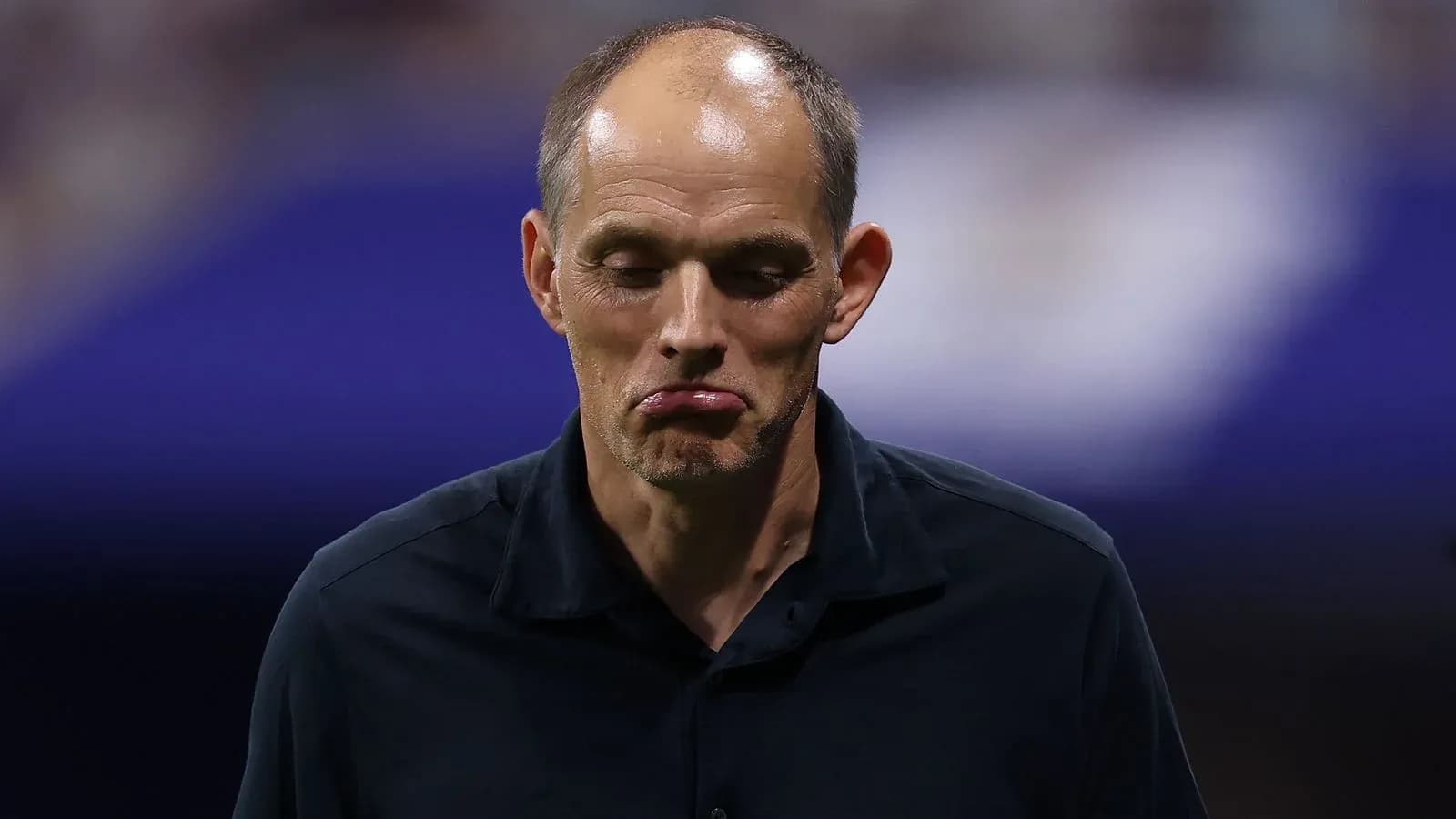
Thomas Tuchel insists that when England fans look back on the World Cup, they are not replaying his substitutions against Argentina in their heads.
They are talking about where they watched Mexico. The surge against Croatia. The nerves against DR Congo. The celebrations. The stories.
That is his version, at least.
Tuchel defends World Cup legacy
Tuchel has lived under the glare since England’s 2-1 semi-final defeat to Argentina, a night when his decisions were dissected in real time and again in the weeks that followed.
England led through Anthony Gordon in the second half. They had Lionel Messi and company rocking. Then came the switch.
Tuchel went for security. Three defenders off the bench. England dropped deeper, the pitch seemed to tilt, and Argentina poured forward. Enzo Fernandez finally broke them with a late strike, and Lautaro Martinez finished the comeback. A place in the final slipped away.
Tuchel knows exactly where the criticism lands. He just does not accept that this is how most people will remember the journey.
“99.9 per cent of the fans don't talk about substitutions, tactical tweaks or tactical details,” he told the press.
“They speak about where they watched the Mexico game, and they speak about the second-half energy of the Croatia match.
“They speak about how nerve-racking it was to watch our match against Congo and where they celebrated. This is the feedback I get. This is what we created, and how it should be.
“This is what a World Cup is for: to connect with people and give them experiences they do not forget.
“It makes me proud, it makes me happy. Even if it's just in a cab, at a coffee shop or in the supermarket, you share these little moments and understand that it actually meant something.
“It showed that what the players built was transmitted, and it's what we want to build on.”
For Tuchel, the story of the summer is one of connection and shared memories, not a half-hour collapse against Argentina.
A view that jars with the mood
Not everyone buys that framing.
Tuchel has no desire for England’s campaign to be defined by the final 30 minutes of that semi-final. Many England supporters would argue that those 30 minutes are exactly where the story turned.
In his World Cup debrief with the FA, Tuchel talked about “beautiful” moments. The brotherhood inside the camp. The performance in the bronze-medal match against France, a side he described as “maybe the strongest squad in the world”, even if that game carried the feel of a dead rubber to many outside the dressing room.
He highlighted the win over Mexico. The tense passage past DR Congo. He suggested fans approach him to relive those nights, not to grill him on whether he went too defensive and effectively invited Messi and his teammates onto England in that semi-final.
That stance cuts across the general mood. Yes, England finished third – their best World Cup result since 1966. Tuchel wants that front and centre. Context, progress, a platform.
But context comes with expectation. The FA hired him, on big money, to do what Gareth Southgate could not quite manage: take that final step. Southgate reached a World Cup semi-final and a European Championship final. Tuchel’s brief was clear – go one better.
He did not. The inability to turn promise into a final is the headline many will keep.
There are positives to carry forward: the level of performance in spells, the depth of the squad, the sense of unity he talks about so often. The nagging question sits alongside them. Will anything actually change next time, or did England simply repeat the same old mistakes in a different shirt?
Backed before Mexico – and beyond Argentina
Tuchel also revealed that his future was settled long before the inquest began.
He knew, he says, even before England’s World Cup clash with Mexico that he would stay on as head coach beyond the tournament. The semi-final defeat to Argentina did not trigger a rethink at the FA. The backing remained firm.
“I felt the full support from all my bosses through the whole tournament. Before the Mexico game they told me we know anything can happen in a football match but don't worry, we can see what's going on,” he said.
“I felt this kind of freedom to take my choices and coach freely. There was never a doubt in my mind we'd continue together and there was clearly never a doubt in their mind. Reflection is sometimes necessary to get better and experience is a crucial part.”
He leaves no doubt: those substitutions, that defensive turn against Argentina, were made by a coach who felt secure enough to trust his instincts.
Now comes the real test. He has the job, the authority, and the time. The next World Cup will show whether England’s defining memory under Thomas Tuchel is a bronze medal and a bundle of stories – or the moment they finally stopped talking about what might have been.