Tyson Fury is running out of road.
Boxing has always been a sport of late twists and sudden U-turns, but even by heavyweight standards, the last few weeks have been chaotic. The planned superfight with Anthony Joshua has crumbled under the weight of venue politics, broadcast interests and big-money geography. Fury tried to pivot. The problem? His chosen escape route, Oleksandr Usyk, has no interest in playing the role of saviour.
Fury’s plan B hits a wall
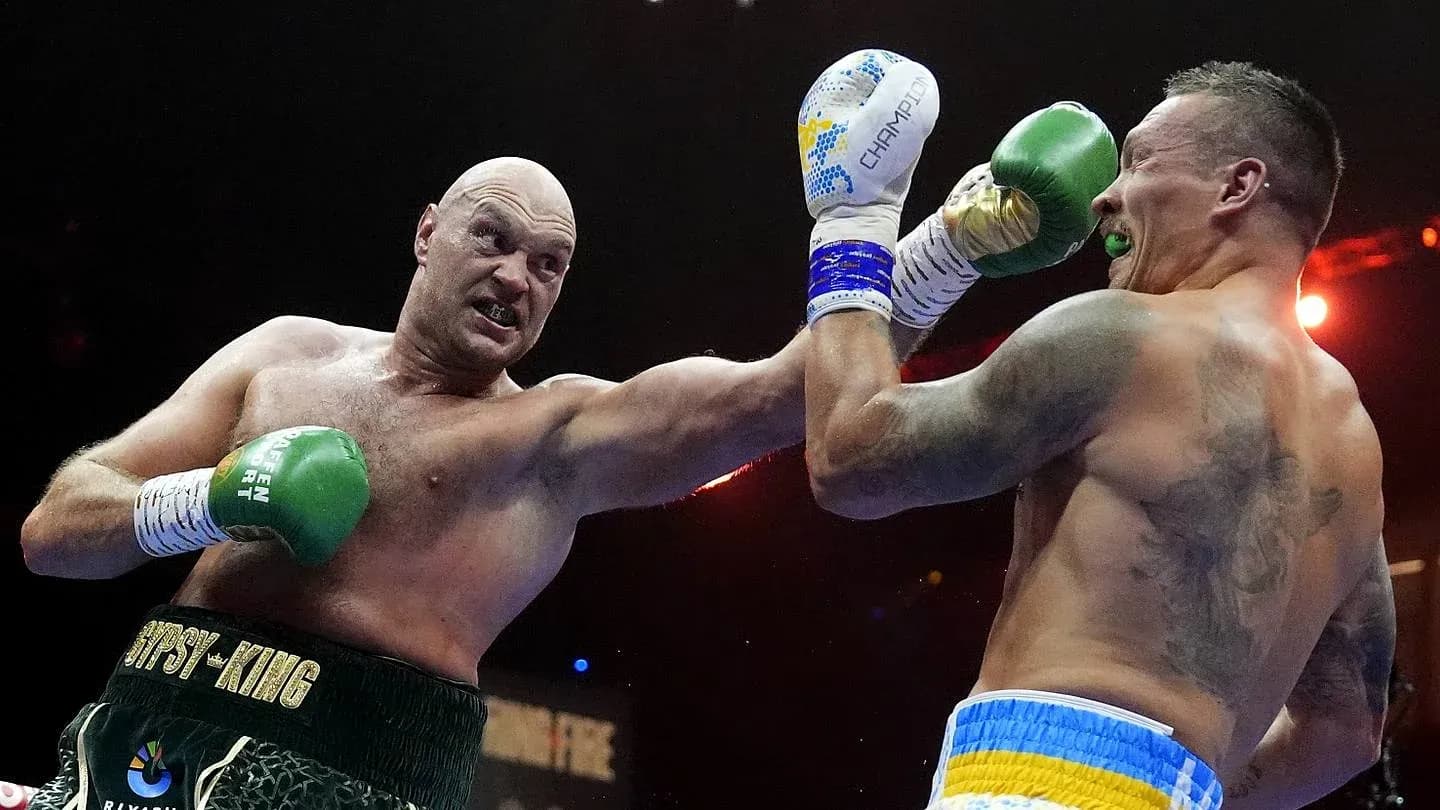
When the Joshua fight stalled, Fury moved quickly. He believed Oleksandr Usyk, the generational former undisputed heavyweight champion, could be the backup. One more chapter in a rivalry already written over 24 one-sided rounds. One more chance to reset his career narrative. One more massive payday.
Usyk’s camp saw it very differently.
Usyk is nearing the end. He has spoken of a ‘last dance’ – one final fight to close a remarkable career on his terms. That doesn’t sound like a man willing to accept a short-notice November date just to help Fury out of a corner. His team have made it clear: a rushed, last-minute battle is not the right send-off for a fighter on the brink of retirement.
So when Fury turned to the cameras and called him out, it reeked less of rivalry and more of urgency.
A public plea, thin on leverage
Fury went to Sky Sports and made his pitch directly to Usyk.
“You got the decisions last time; fair play to you. Good luck to you; let's do it again. Let's run it back in November. The ball is now in your court... do you want to fight me this year, 2026, or are you calling it quits? Let me know because I am now looking for a new opponent.”
It sounded like a challenge. It also sounded like a plea.
Because strip away the noise and the reality is blunt: Usyk dominated their two-fight, 24-round series. There were no controversial scorecards hanging over the rivalry, no unresolved questions, no sense of injustice that usually fuels a trilogy. If those fights had been razor-thin, Fury might have a case. They weren’t. Usyk’s superiority in those bouts undercuts any sporting need for a third meeting.
Usyk knows it. His team knows it. And crucially, they know they don’t need Fury anymore.
Venue wars and a shrinking window
The Fury–Joshua breakdown centres on where the fight should land. Fury has signed off on New York, on the bright lights and history of Madison Square Garden. Joshua wants to bring it home, to Wembley Stadium, in front of a British crowd that has followed him from the Olympic podium to world titles.
Hovering over all of it is Turki Alalshikh, the Saudi powerbroker behind Zuffa Boxing, who has made no secret of his desire to carve into the American market. From his perspective, a Fury–Joshua clash belongs on U.S. soil, a flagship event to plant a flag in New York.
So the biggest fight of Fury’s career sits stuck between Wembley and the Garden, between domestic loyalty and global ambition. While that stalemate drags on, the calendar keeps moving. Fury wants a November 2026 date. Roughly two months away. He needs a name, a story, a reason for the public to care.
Usyk refuses to be that stopgap.
Usyk’s camp closes the door
From Usyk’s side, the message has been sharp and dismissive. His manager, Sergey Lapin, pushed back on any idea that the Ukrainian is waiting in the wings as a contingency for Fury.
“Usyk is not Tyson's backup plan. If Fury needs an opponent, he should visit the Ready to Fight platform. They can help him find a worthy opponent there.”
The sarcasm cuts deep. It also exposes the core problem for Fury: leverage.
Once, Fury could walk into any negotiation with the aura of the lineal heavyweight champion, the man who toppled Wladimir Klitschko and outboxed Deontay Wilder. Now, the one fight that could truly define his era – against Joshua – is drifting away, and the other marquee name of his generation, Usyk, has no sporting or financial need to roll the dice again.
When your rival’s manager is effectively telling you to go shopping for opponents on a platform, it doesn’t sound like the start of a blockbuster trilogy. It sounds like a man being frozen out.
What’s left for Fury?
Strip it back and the questions are brutal.
What leverage does Fury have if Joshua won’t budge on Wembley and Usyk won’t entertain a third fight? How does he turn a November date into something more than a holding pattern? A rushed, ill-matched opponent risks turning a once-must-see attraction into a sideshow.
Lapin’s jab about desperation isn’t just a soundbite. Desperate fighters rarely produce great fights. They chase names, dates, headlines. They accept terms they once would have laughed off. The danger for Fury is that he slides from era-defining heavyweight into a man scrambling to stay central to a story that is already moving on.
He says he’s looking for a new opponent. He’ll need one quickly if the Joshua impasse holds and Usyk walks into retirement without looking back.
What we know for sure: that opponent will not be Oleksandr Usyk.