UEFA has locked in the destinations of Europe’s biggest club finals for the next four years and signed off a significant tweak to the Nations League – all in one sweeping Executive Committee meeting in Thessaloniki.
This was not housekeeping. It was a redrawing of the continent’s football calendar.
Munich and Barcelona take centre stage
The headline decisions, as ever, belong to the men’s UEFA Champions League.
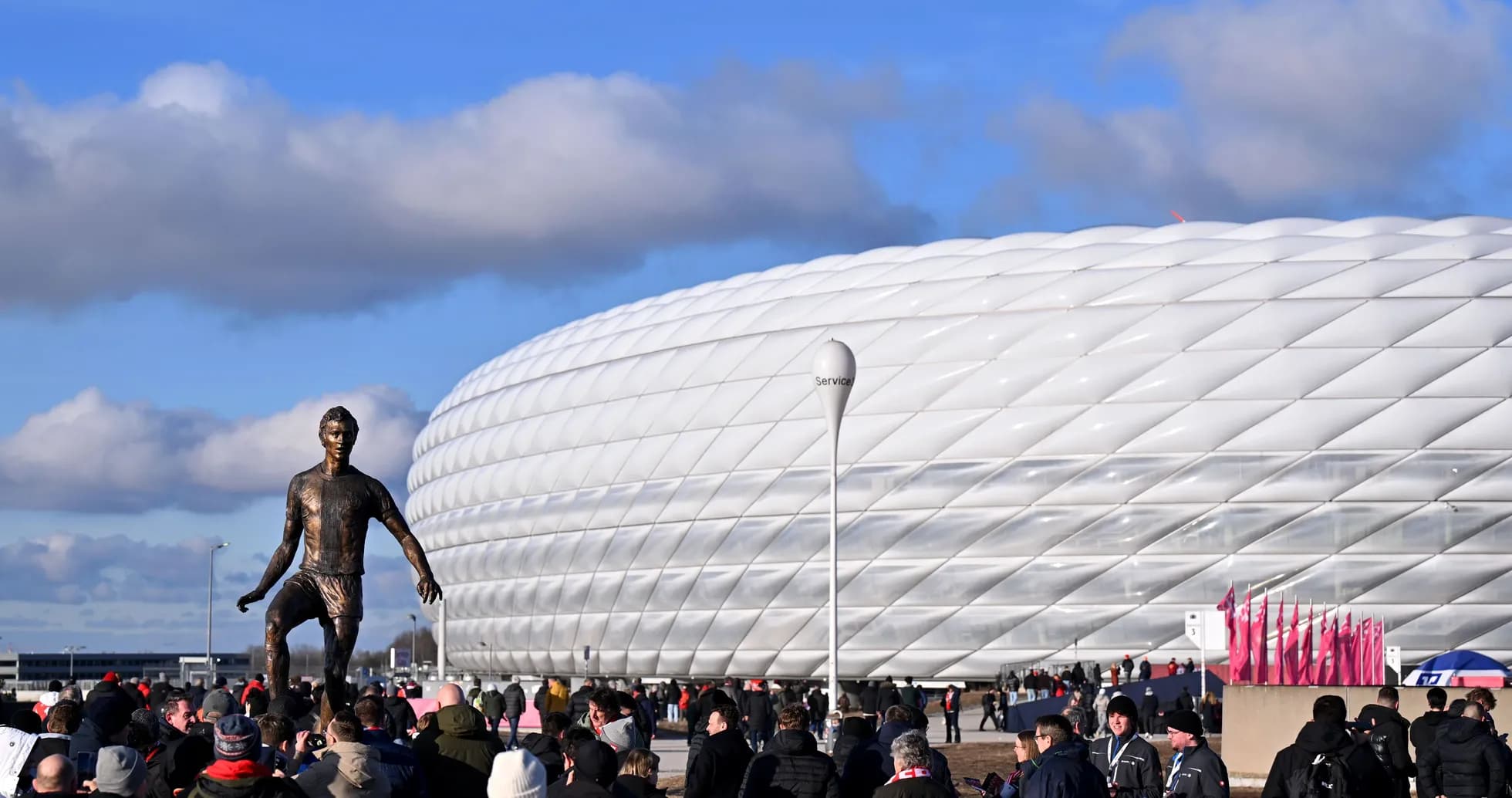
In 2028, the showpiece returns to Munich. The Munich Arena – Bayern Munich’s fortress – will host its first Champions League final since the drama of 2012, when the stadium last stood at the centre of European football’s attention. A familiar stage, but a new era.
One year later, the final heads to a stadium reborn. The 2029 edition will be played at the new Spotify Camp Nou in Barcelona. It will be the first European final at the revamped ground and the first since the iconic 1999 decider. By then, the new Camp Nou will stand as the largest stadium in Europe, a fitting amphitheatre for club football’s most coveted night.
Europa League and Conference League spread the spotlight
UEFA’s other men’s club competitions will also tour the continent.
The Europa League final lands in Bucharest in 2028, at the National Arena. A year later, in 2029, the competition moves to Belgrade, with the Serbia National Stadium taking its turn on the European stage. Two capitals, two football cultures, one trophy that has long thrived on variety in its venues.
The UEFA Europa Conference League continues that spread.
In 2028, the final will be staged at the Juventus Stadium in Turin, a modern ground already steeped in European nights. Then in 2029, the competition heads to Budapest and the Puskas Arena, another venue built with major events in mind and now firmly part of UEFA’s core rotation.
Women’s game and Super Cup step into new arenas
UEFA also set the course for its flagship women’s competition and the traditional curtain-raiser to each European season.
The UEFA Women’s Champions League final will go to Lyon in 2028, specifically the Parc Olympique Lyonnais in Lyon Decines – a venue synonymous with elite women’s football and home to one of the game’s dominant clubs. In 2029, the final crosses the Channel to Cardiff, with the Wales National Stadium selected to host. Another major stage, another statement about where the women’s game now belongs.
The UEFA Super Cup will also break new ground. The Johan Cruyff Arena in Amsterdam hosts in 2027, a nod to a city and stadium steeped in European history. Then comes a bold step east in 2028: the Astana Arena in Kazakhstan. That choice underlines UEFA’s intent to widen the reach of its showpiece events, taking a marquee fixture into a growing football market.
For futsal, the UEFA Futsal Champions League final in 2027 will be played at the Biel/Bienne Arena in Switzerland, giving the indoor game its own dedicated platform in a country with a long administrative, if not always on-pitch, connection to European football.
Nations League: promotion, relegation and a looming reset
The Thessaloniki meeting was not just about venues. It also nudged the Nations League towards its next evolution.
UEFA’s Executive Committee approved a change to the promotion and relegation system for the 2026/27 Nations League season. The adjustment is not cosmetic. It is designed as a bridge to a more radical revamp already on the books.
From the 2028/29 season, the Nations League will shrink from four groups to three. Fewer groups, higher stakes. The aim is clear: sharpen the competitive edge, cut dead rubbers, and ensure that every match carries weight in a more streamlined format.
The 2026/27 tweak to promotion and relegation is there to smooth that transition, so that teams do not stumble into the new structure but arrive in it with a logical competitive pathway behind them.
Belfast on the horizon
UEFA closed the Thessaloniki gathering by confirming the next stop on its political and sporting circuit.
The Executive Committee will reconvene in Belfast, Northern Ireland, on 7 December – the day after the Euro 2028 qualifying draw, which will also take place in the city. One day to map the route to a European Championship, the next to shape what comes after.
With Munich, Barcelona, Bucharest, Belgrade, Turin, Budapest, Lyon, Cardiff, Amsterdam, Astana and Biel/Bienne now locked in, Europe’s finals have their homes. The question, as ever, is who will be good enough to walk into them.