The language could hardly be harsher.
“Criminal mismanagement.”
“A stunning dereliction of duty.”
“A fraudulently off‑market price.”
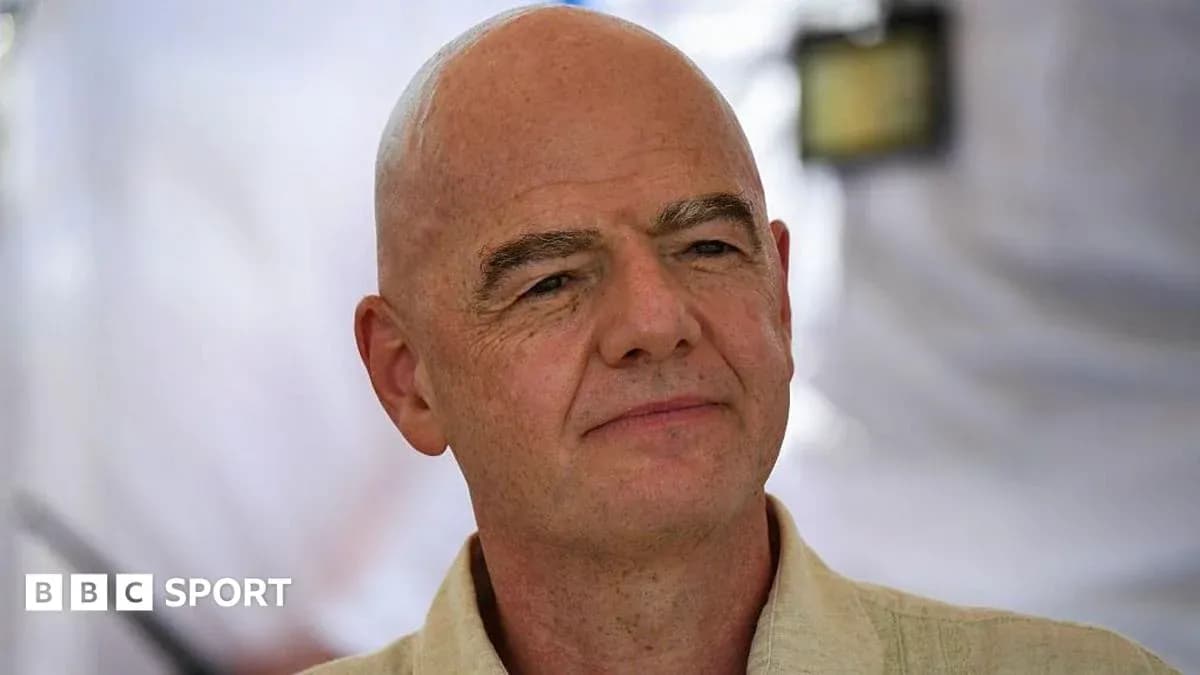
These are not the words of activists or anonymous whistleblowers. They are the accusations levelled by Uefa’s own lawyers at Fifa president Gianni Infantino in legal filings in the United States, the latest volley in a feud that has split football’s corridors of power wide open.
At the heart of the storm sits the now‑abandoned Fifa Forward Enterprise plan (FFE) – a proposal to sell stakes in Fifa competitions to private investors. Uefa claims the scheme placed an “absurdly low enterprise value” on the World Cup, around £15bn, a figure it says was neither tested by an independent valuer nor subjected to an open, competitive auction. In its telling, the deal was hatched “under a veil of secrecy” and caused “direct and concrete injury” to Fifa and its 211 member associations.
This is not a mere political spat. Uefa is asking US courts for access to documents and testimony for use in potential criminal proceedings in Switzerland against Infantino himself.
A civil war with no sign of a truce
More than a month has passed since the FFE plan first surfaced, then collapsed within days under a wave of outrage. The fallout has only intensified.
Infantino has faced unprecedented public pressure: statements from former players, politicians and fan groups; open calls from three confederations for him to step aside; and even lurid personal allegations about an alleged lover and a severance payment during his time at Uefa, claims he has branded “categorically untrue”.
Now comes the threat of legal action.
The new court papers go beyond dry legalese. They talk of Infantino’s “cronies” and “co‑conspirators”, and devote a chapter to “the enduring history of corruption among Fifa officials”. Uefa is effectively inviting a US judge to prise open the black box around FFE and expose its inner workings.
Yet, paradoxically, Infantino has just enjoyed his strongest week since the saga began.
On Thursday, the Saudi Arabian Football Federation offered him qualified support, saying that “at this time [it] supports the continued efforts of Gianni Infantino to restore unity”. Uefa, having previously threatened to boycott Fifa competitions, backed away from that nuclear option after receiving assurances the FFE scheme would not be revived. For Infantino, still refusing to resign, that was another tactical win.
Then Uefa raised the temperature again by signalling its intention to pursue criminal proceedings. The message was clear: this is not over, and it is not just about one shelved commercial deal.
The battle for evidence
Infantino has defended FFE as an attempt to unlock Fifa’s commercial potential, before later apologising for unspecified “errors”. Since the latest legal twist, he and Fifa have stayed silent in public, with officials stressing their focus on staging the U20 Women’s World Cup in Poland next week.
The president, meanwhile, has been on the move. Recent stops in the Dominican Republic and Paris were followed by a “wonderful” visit to Vietnam, part of what now looks like a rolling world tour to shore up support across the global game.
He cannot claim to be blindsided. Uefa warned almost a month ago that it was considering legal action and instructed Fifa to preserve all “relevant materials” linked to FFE. The next phase now depends heavily on how the US courts respond.
Uefa is seeking information from Fifa itself, from Thrive Capital – the venture capital firm lined up as lead investor in FFE – and from its founder Josh Kushner. It also wants material from former Formula 1 chief Greg Maffei, described in the filings as “the key commercial adviser” on the proposed deal.
For Thrive and Kushner, Uefa’s lawyers want subpoenas compelling “the production of documents and communications and for deposition testimony”. Kushner, the brother of Jared Kushner, son‑in‑law of former US president Donald Trump, has not commented. Legal specialists suggest he could fight any subpoena by arguing that disclosure would damage confidential business information and future investments. He has just agreed a record £9.3bn deal to buy the Los Angeles Lakers.
How long this will take is anyone’s guess. Whether Uefa will secure the evidence it needs to support its claim that the World Cup was deliberately undervalued is equally uncertain. So too is its appetite to follow through with a criminal complaint in Switzerland if the disclosure fight drags on or yields less than hoped.
History does not offer easy encouragement. In 2002, several Fifa executive committee members filed a criminal complaint against then president Sepp Blatter in Zurich. The public prosecutor declined to act, and Blatter denied wrongdoing. Last year, the Swiss Attorney General’s long pursuit of Blatter and former Uefa president Michel Platini ended with both men cleared of corruption charges.
Nick De Marco KC, a leading sports lawyer, sets out the immediate hurdle: “What Uefa have to show is that they have an arguable case for criminal proceedings to be brought against Infantino. If they can show that… then they ought to be given disclosure of a lot of the documents.”
He believes Uefa has a strong chance of winning that first fight over disclosure, but stresses that any decision on charges rests with Swiss prosecutors and will take time. His expectation is that “very interesting documents” will emerge and “more light” will be shone on the FFE plan.
Reform, power and the search for an alternative
Perhaps aware of the legal and political obstacles ahead, Uefa is framing its campaign around governance reform as much as around Infantino himself. It has pledged to “secure fundamental reform, restore proper limits on presidential authority and ensure that Fifa is once again governed as an institution – not around one individual”, and is demanding a “genuinely independent external review of FFE”.
The power maths remain stark. Infantino still commands solid backing across South America, Africa and parts of Asia. He has ridden out Uefa’s fury and the public backlash so far. Many within the game expect him not only to survive, but to seek a fourth term when elections come around in the spring.
Uefa has warned that if he runs again, it will “join forces with its partner confederations to ensure that member associations are offered a credible alternative – one committed to integrity, accountability, development and genuine institutional change”.
That is the theory. The reality is trickier. Who can unite such a fractured landscape?
Uefa vice‑president Laura McAllister, speaking in Monaco, sketched the profile of the challenger they want: a candidate who embraces modern governance, accountability to football’s key stakeholders, and a programme of reform. “We would want to have a candidate, obviously, who would champion that agenda,” she said, stressing the need for transparency, independence and rigorous oversight.
“There are lots of credible candidates out there,” she added, but any one of them would need not just a manifesto, but “the credentials and the credibility and the buy‑in” to rally a divided world behind them. Uefa accepts that “change wouldn’t happen overnight”.
A volatile autumn ahead
The calendar now sharpens the drama.
In October, Infantino will sit across the table from some of his fiercest critics at the first Fifa Council meeting since the FFE rebellion – a gathering that could crackle with tension. In November, the window opens for presidential nominations. Then, in March, comes an election that could define the direction of global football for years.
Between now and then, the sport’s governing structures will be tested in courtrooms, council chambers and back‑channel negotiations. Uefa’s legal gamble in the US, its talk of criminal complaints in Switzerland, Infantino’s global charm offensive – all of it feeds into a single question.
Not whether football is in crisis. That much is already obvious.
The question is whether the game can turn this rupture into lasting reform, or whether it is simply watching another chapter in Fifa’s long, bruising power struggle play out in familiar fashion.