
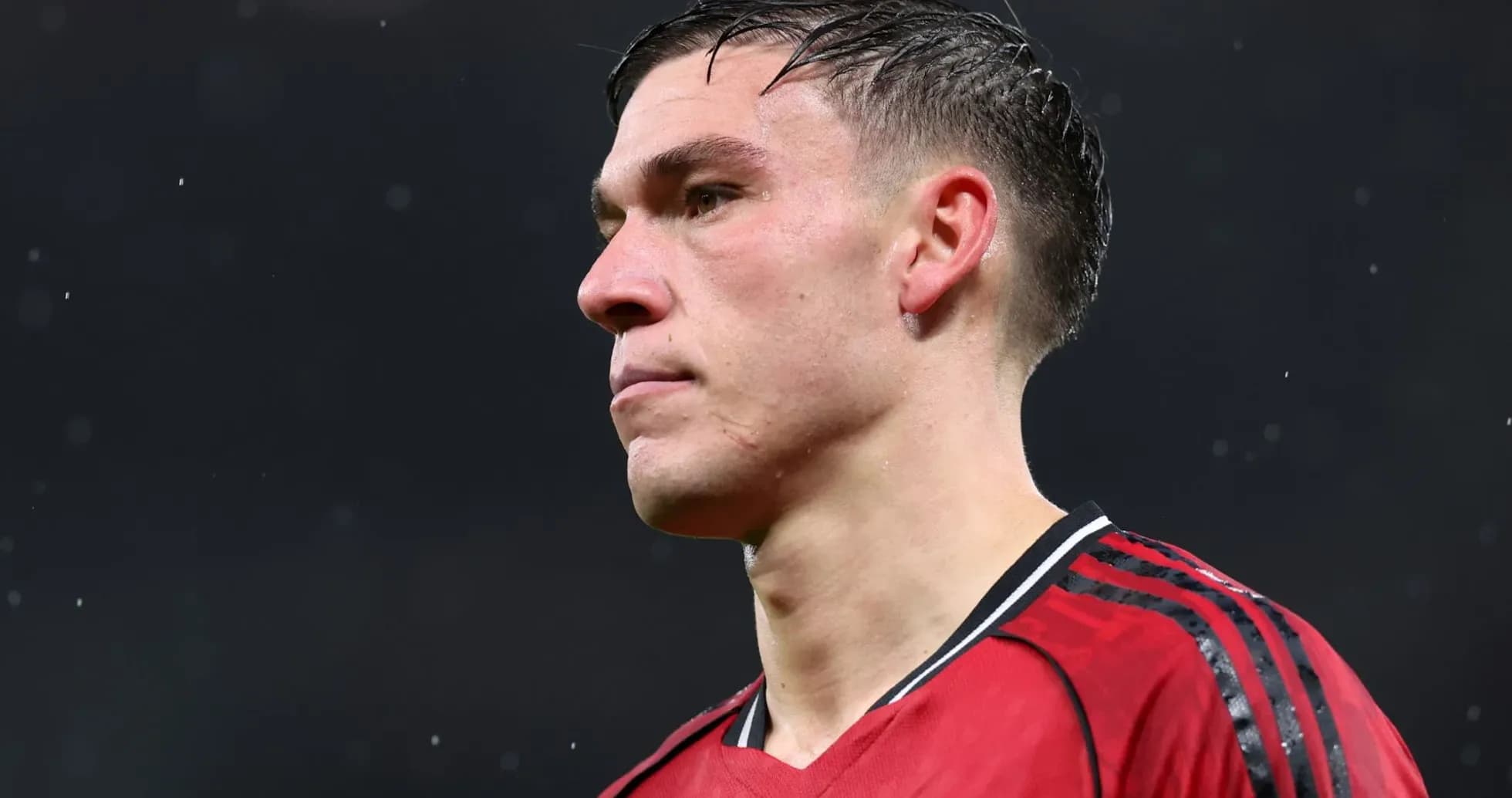
Manuel Ugarte’s Manchester United story is on pause. Not over. Not yet rewritten. Just frozen by injury at the worst possible moment.
His setback at FIFA’s flagship tournament in North America killed any hope of a summer move. No club was going to commit serious money to a midfielder facing months in the treatment room, no matter how combative or industrious his reputation. The summer window closed, and so did the door on a quick escape.
Attention turned to January. If the rehab went well, if the fitness reports looked clean, maybe then a deal could be revived. That was the logic. Inside Old Trafford, though, there was little expectation of a grand Ugarte renaissance under the current regime. His standing had already slipped.
Since arriving from Paris Saint-Germain for £42 million in August 2024, Ugarte has managed just 69 appearances. When United brought him in, they thought they were signing a midfield enforcer built for English football – a tenacious presence to anchor a side still trying to rediscover its identity. On paper, it made sense.
On the pitch, it never fully clicked.
Casemiro, the veteran Brazilian, claimed the holding role and refused to let it go easily. Ugarte drifted down the pecking order, squeezed by hierarchy and circumstance. Then came another wave of midfield signings. Youri Tielemans, Andrey Santos and Carlos Baleba all arrived ahead of the 2026-27 campaign, each one another obstacle between Ugarte and a permanent place in the XI.
United, under Michael Carrick, have remained what they have been for too long: unpredictable, streaky, occasionally impressive, regularly frustrating. That inconsistency has kept the conversation around the dugout alive. If results don’t settle, the man picking the team may not be the same one greeting Ugarte when he finally returns to full fitness.
That uncertainty only deepens the intrigue around the Uruguayan’s future.
Gus Poyet, speaking to GOAL in association with Gambling.com, cut straight to the heart of it when asked what comes next for his compatriot.
“He needs to come back first,” Poyet said.
He reflected on the forked path of Ugarte’s career. “It's incredible because when he left Portugal [at Sporting], he was coming to Chelsea. I was desperate for him to join Chelsea and he went to Paris and then he went to Manchester. Decisions that were made in his career.”
For Poyet, everything now hinges on the basics: fitness, minutes, rhythm.
“I think first he needs to get back. I don't think he will move before playing a few games, or it will be difficult at least. I remember I had a serious injury and the only thing you focus on is to get back on the pitch and prove that you're okay. And then yes, make a decision.”
The former Uruguay international still believes there is a place for Ugarte in this squad, if the cards fall right.
“But obviously, and with all respect to the players at Man United, I would fancy my chances to play. Then it depends on the coach and how he is.
“In this Manchester United, you will fancy Ugarte in the middle of the pitch after getting back to fitness. So, let's wait and see if there's any changes from now to the moment he's back.”
United do not have to rush. Ugarte signed a five-year deal when he moved to Manchester, tying him to the club until the summer of 2029. There is no contractual pressure to sell, no ticking clock forcing them into a cut-price exit.
The pressure is of a different kind.
At 25, Ugarte is entering the years when a midfielder should be at his sharpest. United must decide whether he belongs in their long-term core or on the list of expensive what-ifs. That judgment can’t be made from a medical report or a gym session.
It will be made the moment he steps back onto the training pitch, when the tackles start to fly again, when the legs are tested, and when a coach – whoever that may be by then – has to answer a simple question: is Manuel Ugarte part of the next Manchester United, or just a relic of the last one?





