On the surface, Netflix’s Untold Raygun: Breaking Badly opens like a love story. Not between an athlete and Olympic glory, but between Rachael Gunn, her husband Samuel Free, and the strange, stubborn pull of dance.
Gunn — better known now as Raygun — and Sammy, dubbed “Sammy (Sex)” in the documentary, first connect over that shared obsession. He doesn’t just share it; he shapes it, stepping into the role of coach as she prepares for the biggest stage breaking has ever known. Their wedding footage, threaded through the film, underlines the point. They don’t just dance for a living. They dance to live.
Then Paris happens.
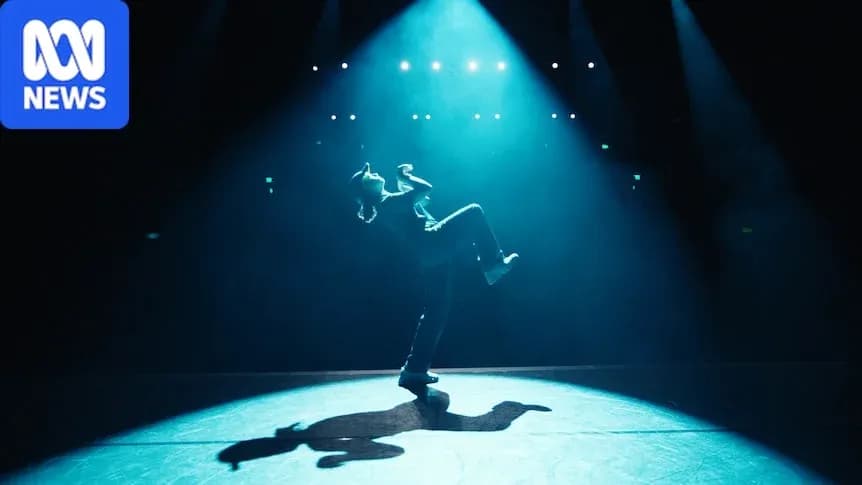
Raygun arrived at the 2024 Olympics as an academic turned B-Girl, relatively anonymous outside breaking circles. She left as a viral lightning rod. Her routine, a mash of unorthodox moves including the kangaroo and the sprinkler, detonated online. Memes, comedy skits, and conspiracy theories swarmed her name. Snoop Dogg weighed in. So did Adele. Overnight, a niche breaker from the suburbs became a global punchline, cult hero, or both, depending on who you asked.
The documentary doesn’t flinch from the awkward truth: she looked brutally unprepared for an Olympic Games.
In the countdown footage, that lack of infrastructure is laid bare. There is no high-performance team around her, no army of specialists. Just a small circle, a husband-coach, and a looming sense that the sport’s Olympic debut has arrived too fast for some of its pioneers and outsiders alike.
Raygun, though, sees the storm coming.
“Right before the Olympics, I went to my therapist and panicked,” she says. The therapist poses the classic question: what’s the worst that could happen? Raygun’s answer is chilling in hindsight. The worst, she says, is that the whole world could laugh at her. Days later, that’s exactly what unfolds.
The film pulls back to her roots. Her parents, Russell and Beverly, sit in front of the camera and shake their heads with a kind of bemused disbelief. “She was just a normal suburban girl,” her mother says, recalling a childhood of ballet, tap and jazz before breaking ever entered the picture. Her father jokes that when he flew to Paris, he thought he was going there to console his daughter, not watch her become a pop culture flashpoint.
Not everyone sees the humour.
Fellow B-Girl Tinylocks, a committed guardian of breaking as an art form, reacts with something closer to horror. “Who could have imagined it would have gone so wrong?” she asks. She never tried out for the Olympics herself, a decision framed as equal parts principle and protection — of herself, of the culture, of the craft.
This is the tension at the heart of the film: breaking’s first Olympic appearance colliding with the raw, messy reality of who gets to represent it.
B-Girl Flix, who has known Raygun for 15 years and once called her a friend, is blunt on camera. She describes feeling “offended” and “embarrassed” by the Olympic routine. That sting is sharpened by the qualifier footage the documentary digs up: Raygun and B-Girl Molly facing off, both looking rigid, both lacking the polish you’d expect from athletes about to carry a new sport into the Games. Neither looks remotely like the finished product the Olympic stage usually demands.
In Paris, the judges are even more ruthless than the internet. Raygun fails to earn a single vote in any of her rounds. For a sport trying to prove its legitimacy to the world, it’s a brutal optic.
The documentary gives Raygun room to answer back. A lot of room. We hear her in voiceover from the outset: “Sometimes this all feels like a really wild dream. It’s like I’ve been charged with some crime.” The film tracks her through the build-up, the performance, and the digital firestorm that followed, letting her unpack how it feels to become a meme before you’ve even processed your own disappointment.
There’s no neat redemption arc. No last-minute medal, no triumphant return to the scene. Instead, there’s a quieter, more unsettling revelation: she has left her job in academia. The safety net is gone. The future is deliberately left hanging.
Breaking got its Olympic debut. Raygun got her notoriety. The culture got a fierce internal debate about who should carry its flag when the world is finally watching.
What it gets next — and who dares to step up for the second act — is the question the film leaves hanging in the air.