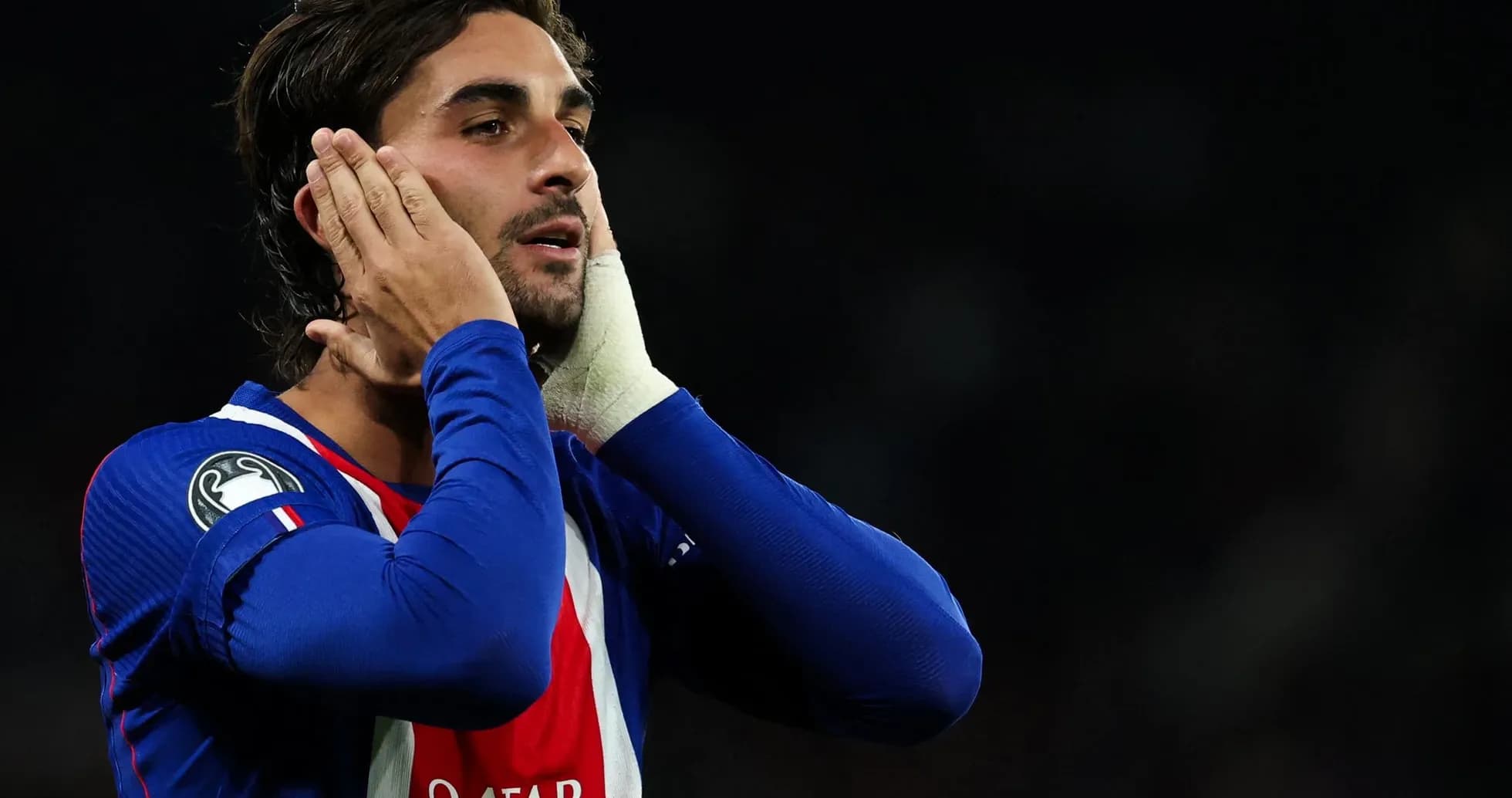
The move away from Catalonia was always going to sting. Not on the pitch – that part has looked effortless – but in everything that wrapped around it: the language, the streets, the routines that quietly shape a footballer’s life.
At 26, uprooting in the summer window meant starting again. New country. New habits. New noise. The football came naturally; the rest demanded patience.
What eased the shock was what he found when he walked into the Parc des Princes. The dressing room was not a cold, anonymous place but a room with familiar voices. Luis Enrique was there, the coach he openly treats as a father figure in football. Fabian Ruiz was there too. Dro Fernandez, another who grew up in the Barcelona academy system, completed a small Spanish enclave inside the back-to-back European champions’ squad.
The transfer itself hit like a sprint. One moment, Barcelona. The next, bags packed and a new life in Paris. He described the switch as the pure chaos of modern football business – deals that materialise overnight and careers that turn on a phone call.
"It’s difficult: one day you’re here and the next you’re packing your bags," he said, summing up the brutality of the market in a single line. He still found room for a joke, though. When asked about what – or who – he missed from La Liga, he quipped: "The only one I can’t bring with me is Pedri."
If there were doubts about how long he would need to adapt, he has shredded them. Seven goals in his first six matches for PSG is not a gentle introduction; it is a statement. He has become a central piece in Enrique’s attacking puzzle almost instantly, stretching defences, finishing ruthlessly, and giving Paris a new edge in the final third.
This surge in form did not come out of nowhere. It follows a summer that already belongs to his personal history. On the biggest stage of all, he scored the decisive goal in Spain’s 1-0 win over Argentina in the World Cup final, the strike that sealed the trophy and etched his name into national folklore.
That combination – a World Cup-winning goal and a flying start in club colours – has pushed him into the game’s elite conversation. His name sits on the 30-man shortlist for the Ballon d'Or, alongside fellow Spaniards Lamine Yamal, Pau Cubarsi, Marc Cucurella, Rodri and PSG team-mate Ruiz.
The noise around the award has grown, but he refuses to play the campaign game. No speeches, no self-promotion. Asked about the Ballon d'Or, he kept it simple: "Whoever’s meant to win it will win it; it’s not up to me." Then came the only preference he allowed himself: "If a Spaniard wins it, so much the better."
For now, his priorities are sharper than any awards debate. He has forced his way into Enrique’s plans; the challenge is to stay there. To do that, he must keep scoring at this pace, keep driving PSG’s attack in Ligue 1 and in Europe, keep turning a rapid transfer into a long-term success story.
If he sustains this level, the question in Paris won’t be how he coped with leaving Catalonia. It will be how far he can push a team already used to conquering Europe – and how high he can climb in the game’s individual hierarchy.