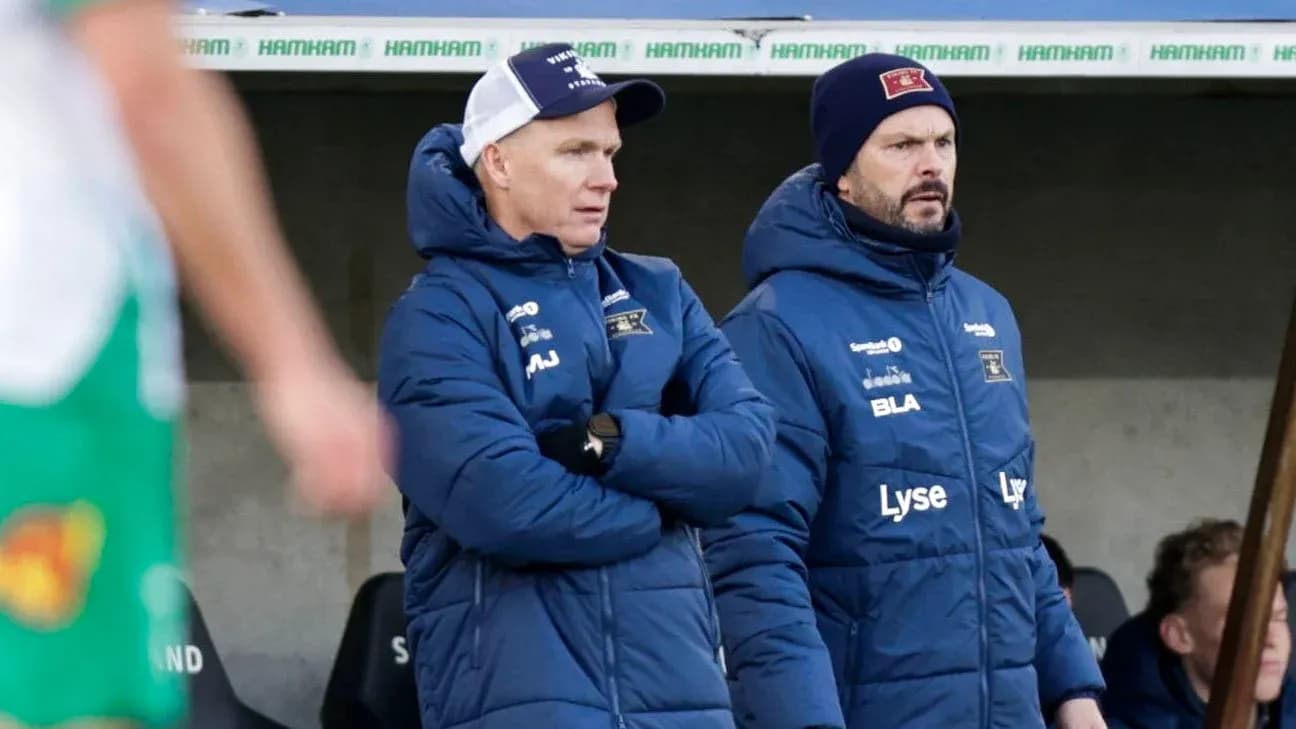
Norwegian champions Viking FK walk into the MHP Arena on Wednesday carrying one of European football’s most intriguing experiments: a club run not by one head coach, but two.
Morten Jensen and Bjarte Lunde Aarsheim have shared the reins in Stavanger since January 2021. Not as the familiar manager-and-assistant pairing, but as genuine equals. Same authority. Same responsibility. Same pressure.
It is no gimmick. No stopgap.
The co-management model has reshaped Viking, turning a sleeping giant into a modern force at home and a growing threat abroad. Under the joint command of Jensen and Lunde Aarsheim, Viking climbed back to the summit of Norwegian football and, in 2025, finally ended a 34-year wait for an Eliteserien title.
That breakthrough did not arrive in isolation. The dual structure has delivered something Viking had long craved: consistency. Season after season, they have stayed in the thick of the title race, trading blows with Bodo/Glimt rather than watching from a distance.
Two Voices, One Message
On matchdays, the split is total. Jensen and Lunde Aarsheim share everything: tactical planning, in-game adjustments, substitutions, media duties. There is no “number one” lurking behind the job titles.
It works in part because both men are steeped in Viking’s identity. Lunde Aarsheim, in particular, is woven into the club’s fabric, sitting eighth on Viking’s all-time appearance list. The dressing room knows his history. The stands remember his playing days. That buys trust, but it also demands standards.
The payoff came in Europe when Viking edged past Dinamo Zagreb in the play-offs to book a return to the Champions League main stage for the first time since 1992. The achievement hit Jensen hard. He called it “overwhelming and everything we've ever dreamed of,” a rare glimpse into the emotional strain behind the shared touchline.
The Captain as Conduit
If the two coaches provide the blueprint, Zlatko Tripic brings it to life.
The captain stands as the on-pitch extension of this unusual regime, the player tasked with translating two voices into one coherent performance. His influence in the Dinamo Zagreb tie underlined that role: Tripic scored in both legs, dragging Viking over the line and into the group stage.
In a setup where decisions are made collaboratively, the captain’s clarity becomes vital. Tripic is the bridge between the meeting room and the midfield, the one who must make the co-coaches’ plan feel simple when the pressure rises.
From Stavanger to Stuttgart
Now comes a different kind of examination. A 1,150-kilometre journey from Stavanger to Stuttgart, and a Champions League night against VfB Stuttgart at the MHP Arena that will test the theory as much as the team.
This is the stage Jensen and Lunde Aarsheim have been building toward since they agreed to share the job. The lights, the noise, the tactical demands of a high-level German opponent – all of it will probe whether two minds can stay aligned when the game begins to twist.
Viking arrive as Norwegian champions, but also as a curiosity. A club that has rejected the traditional hierarchy in favour of something more democratic, more collaborative, and, so far, highly effective.
Now they must show that their dual-coaching framework can travel. That the same shared vision which carried them past Dinamo Zagreb and to the top of the Eliteserien can withstand the power and pace of Stuttgart.
If they execute the gameplan as cleanly as their coaches have drawn it up, Viking won’t just be defending an idea. They might be redefining what a successful European bench can look like.