Why the Pistons Invested $200 Million in Jalen Duren Despite Playoff Setbacks
At just 22 years old, Jalen Duren has become an All-NBA center and secured a $200 million contract with the Detroit Pistons. Yet, questions about his playoff performance linger.
The Pistons committed to a five-year deal well below the $287 million maximum Duren could have received. They bet on his talent after a strong season where he averaged 19.5 points and 10.5 rebounds, helping Detroit boast the league’s second-best defense.
What Makes Duren Valuable?
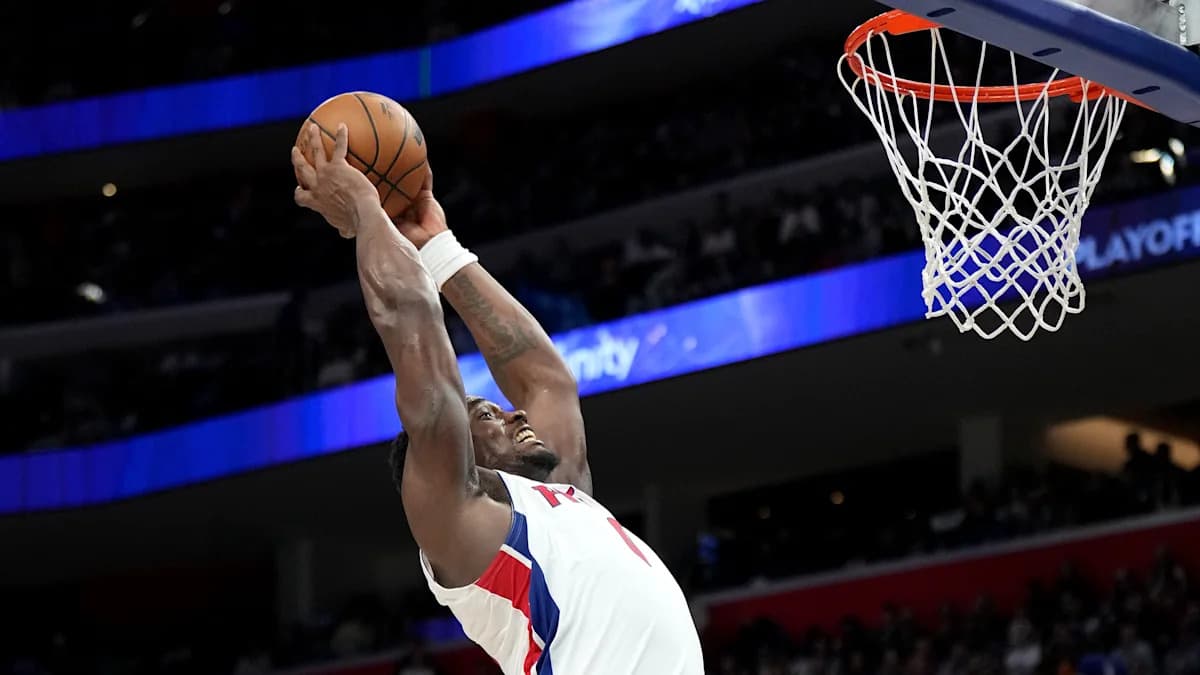
Duren provides a big target for teammate Cade Cunningham around the rim. He can finish lobs, fight through contact, run the floor, and dominate offensive rebounds without needing plays designed specifically for him. Last season, he improved by reducing turnovers and expanding his role as a ball handler, passer, and screener. Without Cunningham on the floor, Duren showed off a growing face-up post game, which doubled his free-throw attempts per game.
Playoff Struggles and Concerns
Then came the playoffs. Duren was outperformed by Wendell Carter Jr. in the first round and then struggled significantly against Evan Mobley and Jarrett Allen in Round 2. His scoring dropped to 10.2 points per game and his shooting percentage fell from 65% during the regular season to 51.4% in the playoffs. He appeared to struggle with even basic role-player tasks.
"I'm man enough to acknowledge my flaws and that I'm not perfect. I'm also man enough to get my ass in the gym and work on those things and get better," Duren said. "I'm not trying to run from anything. I know I will make things better in the future."
Reasons Behind Inconsistency
These playoff issues partly explain why Detroit did not offer him the full max deal. Over his first three seasons, Duren has been inconsistent—showing moments of dominance but also stretches of lackluster defense and limited offensive impact. Some scouts attribute this to focus or mentality, while others point to conditioning. The Pistons even tried to include weight clauses in his contract during talks. Likely, it's a combination of factors, including natural growth as he matures from a teenager into a serious professional.
Looking Ahead: Expectations and Growth
Duren must prove his improvements weren’t a one-season fluke and show they can carry over into playoff situations. He also aims to develop further versatility. "I try to be a tool that my coaches and teammates can use to do anything," he said.
Last season, he took more pull-up jumpers off the dribble than in all previous seasons combined, making 48.4% of them. He also shot efficiently in post-ups (54.5%) and isolations (46%), albeit on small sample sizes. If these glimpses of skill become consistent weapons, it explains why Detroit avoided trading him for older players like Domantas Sabonis or health-risky options like Anthony Davis.
The Need for Spacing and Team Fit
Duren remains a player with potential rather than a finished product. What the Pistons truly need is for him to develop a reliable spot-up three-point shot—a skill that may still be years away.
This is important because of how Duren fits alongside Ausar Thompson. Both are non-shooters, which cramped spacing during the playoffs. With Thompson on the court and Duren off, the Pistons outscored opponents by 11.2 points per 100 possessions. But with both on together, the team had a -0.9 net rating. With Duren without Thompson, Detroit was -1.7. The lack of floor spacing was a major factor in the struggles.
Adjustments and Roster Moves
Having two non-shooters like Duren and Thompson alongside streaky shooters Cade Cunningham and Tobias Harris proved ineffective. To address this, the Pistons added shooters John Collins, Isaiah Joe, Taurean Prince, and drafted Ebuka Okorie—all providing reliable shooting options.
Team Youth and Future Outlook
The Pistons exceeded expectations last season, winning 60 games despite playoff disappointment. Cunningham is only 25, Thompson 24, and Ron Holland 21. Many key players are still developing, so the core group has time to grow.
Duren has already contributed to this success, but Trajan Langdon faces the challenge of deciding how much of Duren’s potential will unfold alongside Detroit’s evolving roster. The contract is manageable enough to allow flexibility if Duren doesn’t progress as hoped.
The ideal scenario includes Duren or Thompson becoming consistent three-point threats, Okorie or Holland stepping up, and Cunningham continuing his rise. Still, the league’s landscape can shift quickly, and another tough postseason might force Langdon to rethink patience.
"I want to be a Detroit Piston for life," Duren said. "Making that happen will take more than becoming a better individual player. I have to become a better fit."