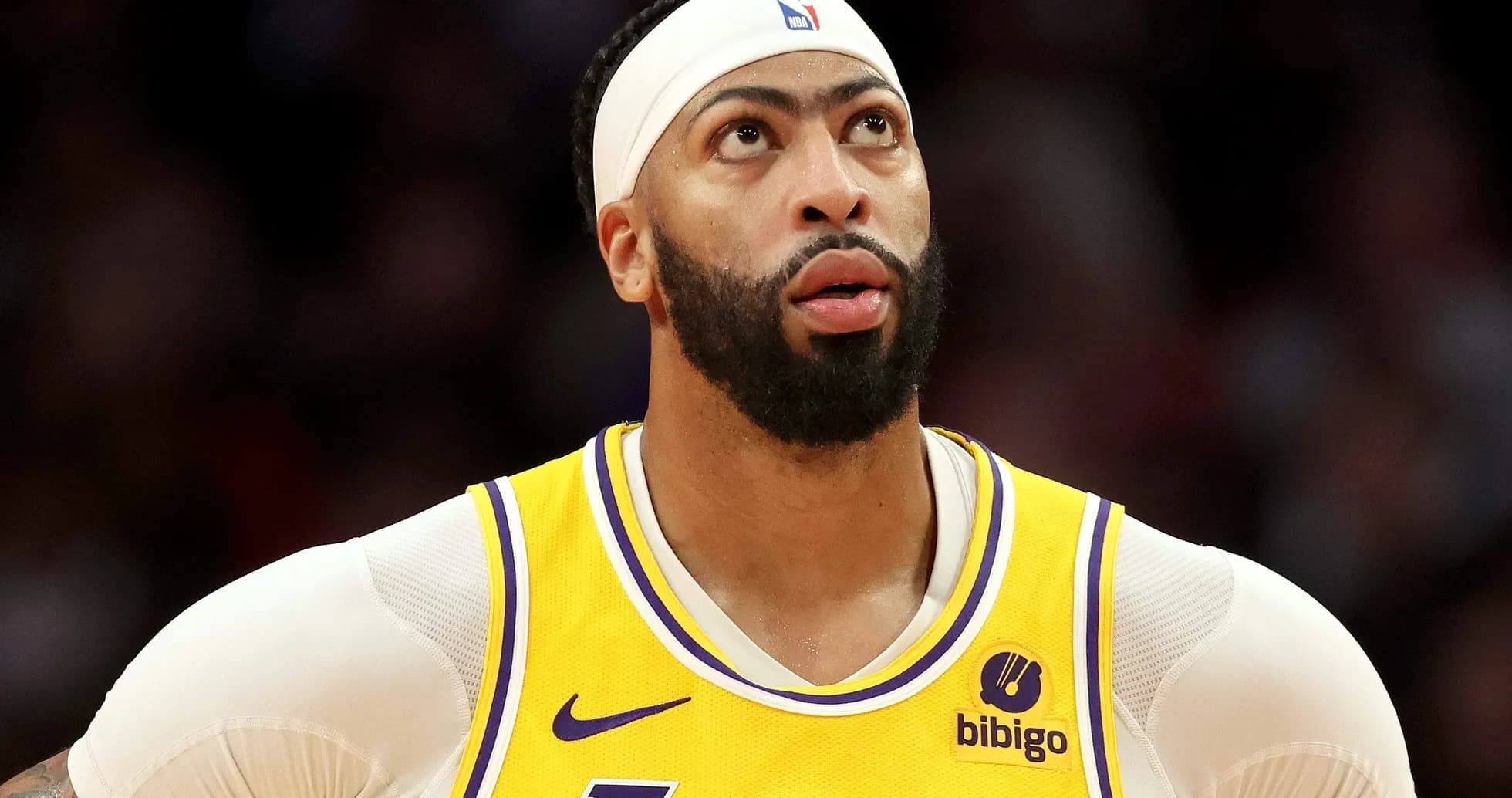
The Wizards’ Gamble: Keep Anthony Davis or Trade for Future?
The Washington Wizards have become one of the league’s great curiosities. Not because they’re bad. Because no one’s quite sure what they want to be.
On one hand, they’re built around 19-year-old phenom AJ Dybantsa, the No. 1 pick and the kind of wing prospect front offices dream about for a decade. On the other, they’ve pushed their chips in on two established stars in Anthony Davis and Trae Young, players who expect to win playoff series, not lottery odds.
That tension is the story in Washington. And Davis sits right at the center of it.
A Star in the Middle of a Timeline Tug-of-War
The front office jolted the NBA earlier this year when it pried Trae Young from Atlanta. Young is only 27, but he arrives with the résumé of a franchise centerpiece and the baggage of a messy exit from the Hawks.
Then Washington went bigger.
Anthony Davis, 10-time All-Star, former champion, still one of the most devastating two-way bigs when healthy, landed in D.C. from Dallas. For a team supposedly on a youth-driven climb, adding a 33-year-old on a three-year deal worth roughly $175 million was less a gentle nudge forward and more a declaration.
They weren’t just collecting prospects. They were trying to compete.
Yet Davis remains extension-eligible without a new deal. That silence hangs over everything. For a player of his stature, that’s not a minor detail. That’s a flashing light.
The Boston Question
If the Wizards ever decide to test the market, they won’t have to wait long for suitors. One name keeps coming up: Boston.
The Celtics, fresh off moving on from Jaylen Brown, are built around Jayson Tatum and a win-now window. Davis would fit that window perfectly. He’d give Tatum a big man unlike any he’s played with — a legitimate MVP-caliber force who can anchor a defense and still carry stretches of offense.
A proposed framework has already been floated:
- Wizards receive: Paul George, Baylor Scheierman, Jordan Walsh, and a 2031 first-round pick
- Celtics receive: Anthony Davis
For Washington, that’s not a teardown. It’s a retool. Scheierman and Walsh slot neatly into a growing pool of young talent around Dybantsa and Young. The 2031 first-rounder adds another long-term asset.
George, at 36, would be a different sort of piece. Not a future pillar, but a bridge. His playoff showing last season proved he can still swing big games. The Wizards could showcase him, inflate his value, and flip him again before the February deadline to a contender desperate for one more scorer and defender on the wing.
Boston, meanwhile, would be betting big on health and ceiling. If Davis stays on the floor, he changes the geometry of the Eastern Conference. Tatum with a fully engaged, fully available Davis behind him is a problem for everyone.
That’s the attraction. That’s also the risk.
Why Keep Davis at All?
Strip away the hypotheticals and the question is blunt: why would a franchise building around a 19-year-old hang on to a 33-year-old star on a massive contract?
There’s at least one clear answer inside the building: belief.
General manager Will Dawkins has been vocal about how he sees this group, and especially the Davis–Young pairing. He sees edge. He sees motivation. He sees two stars with something to prove in a city that’s been starved for relevance.
Davis has bounced from the Lakers to the Mavericks and now the Wizards in a short span. Young, once the unquestioned face of the Hawks, saw his tenure in Atlanta fray and end. He managed just five games for Washington last season before being shut down, a brief cameo that only hinted at what this backcourt–frontcourt partnership might look like.
Dawkins’ view is simple: these are players who want to be in D.C., who are angry enough and talented enough to drag a young roster forward. Around them, a coaching staff and a group of developmental players all trying to climb at the same time.
It’s not a slow rebuild. It’s a storm.
Trade Chip or Cornerstone?
Davis’ recent years have been turbulent, his name a constant in rumor mills and trade machines. Yet when he’s locked in and healthy, he still warps a game in ways very few bigs can. That’s exactly why teams like Boston would line up if Washington ever opens the door.
For the Wizards, the decision cuts both ways.
Keep Davis, and you’re sending a message to the locker room and the league: this isn’t a long, patient tank. You’re trying to win, to grow Dybantsa and the rest of the young core in meaningful games with real stakes, under the protection of a star big and a star guard.
Move him, and you lean fully into the Dybantsa era, stack more picks, more youth, more flexibility. You accept that the next few years are about development, not contention, and trust that Young and a wave of prospects can carry you into the next decade.
The intrigue around Washington is real because both paths make sense. Both are defensible. Both are bold.
The Wizards can’t walk both at once.
At some point, probably sooner rather than later, they’ll have to decide: is Anthony Davis the anchor of this rise, or the trade that finally launches it?