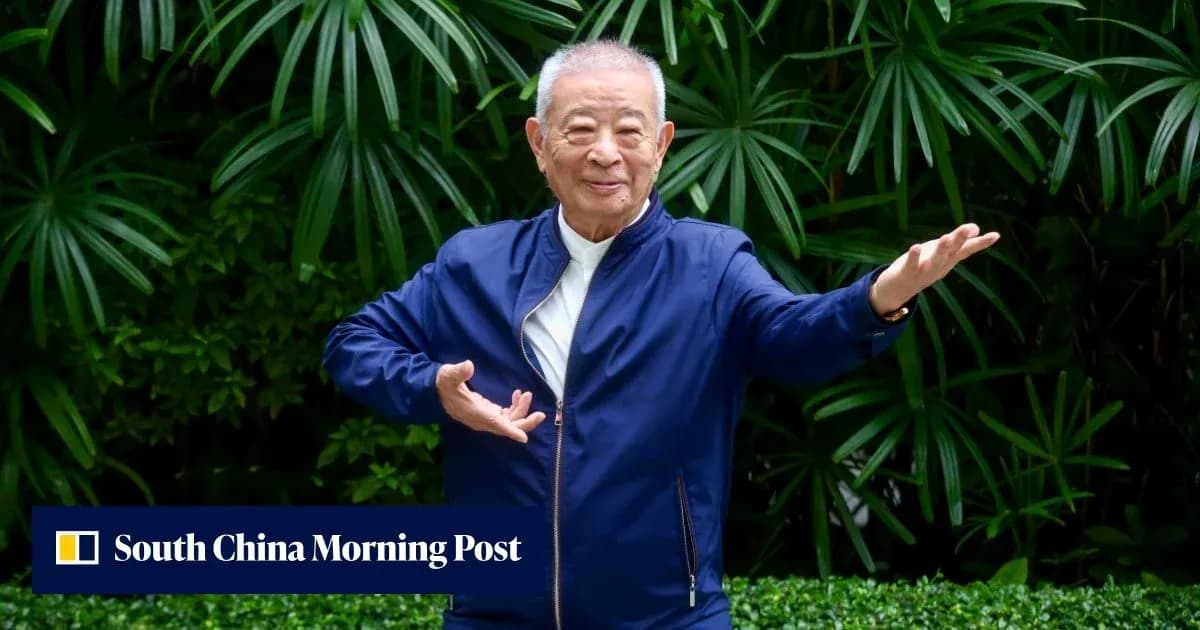
At 89, Wu Bin still runs.
Not shuffles. Runs. He laces up, heads out, and later joins regular football games, moving with the sharpness that once shaped champions. No glasses. No hearing aids. Just the same iron routine that carried him through decades on the wushu mats and into the folklore of modern martial arts.
Wu is best known as the man who spotted an eight-year-old boy in 1971 and changed the course of martial arts on screen and off it. The boy was Jet Li. Wu’s eye for potential, and his ruthless insistence on discipline, turned a talented child into a national wushu star and, eventually, one of cinema’s defining action figures.
But his story stretches far beyond one superstar.
As a founder of the Beijing Wushu Team, Wu stood at the crossroads of tradition and modernity. He helped drag wushu from temple courtyards and local exhibitions into the realm of elite sport, where precision, difficulty and performance could be measured, judged and refined. Under his guidance, the art form hardened into something sharper, faster, built for podiums and pressure.
Championships followed. Medals stacked up. The Beijing Wushu Team became a factory of excellence, and Wu’s reputation grew with every routine, every perfectly timed landing, every title. Li’s mastery of Chinese martial arts pushed him onto international stages, and then onto cinema screens around the world, but behind the choreography and the camera angles lay the same thing Wu preaches at 89: habits.
Good ones. Daily ones. Non-negotiable ones.
He treats his own life as proof. While many of his peers slow down, Wu travels. Recently, he presided over the 18th Hong Kong International Wushu Competition, walking into the arena not as a retired relic but as a living reference point for three generations of athletes.
There, another thread of his legacy stepped into the light.
Dragon He, the son of Jaden He Jingde – one of Wu’s former students – competed under the gaze of the old master. The moment carried a quiet symbolism: Wu’s influence no longer runs just from teacher to pupil, but from teacher to pupil to the pupil’s child. A third generation now grows inside the framework he built.
He could have stepped away years ago, content to let his former students coach, judge and perform. Instead, he boards planes, attends events, and encourages those who still see him as the standard. The body that once drilled national squads now serves a different purpose: it shows what a lifetime of structure can do to time itself.
For Wu Bin, wushu was never only about medals or movie careers. It was about what remains when the lights fade, the crowds thin, and the stage belongs to someone else – the habits that keep an 89-year-old running while others sit and watch.