
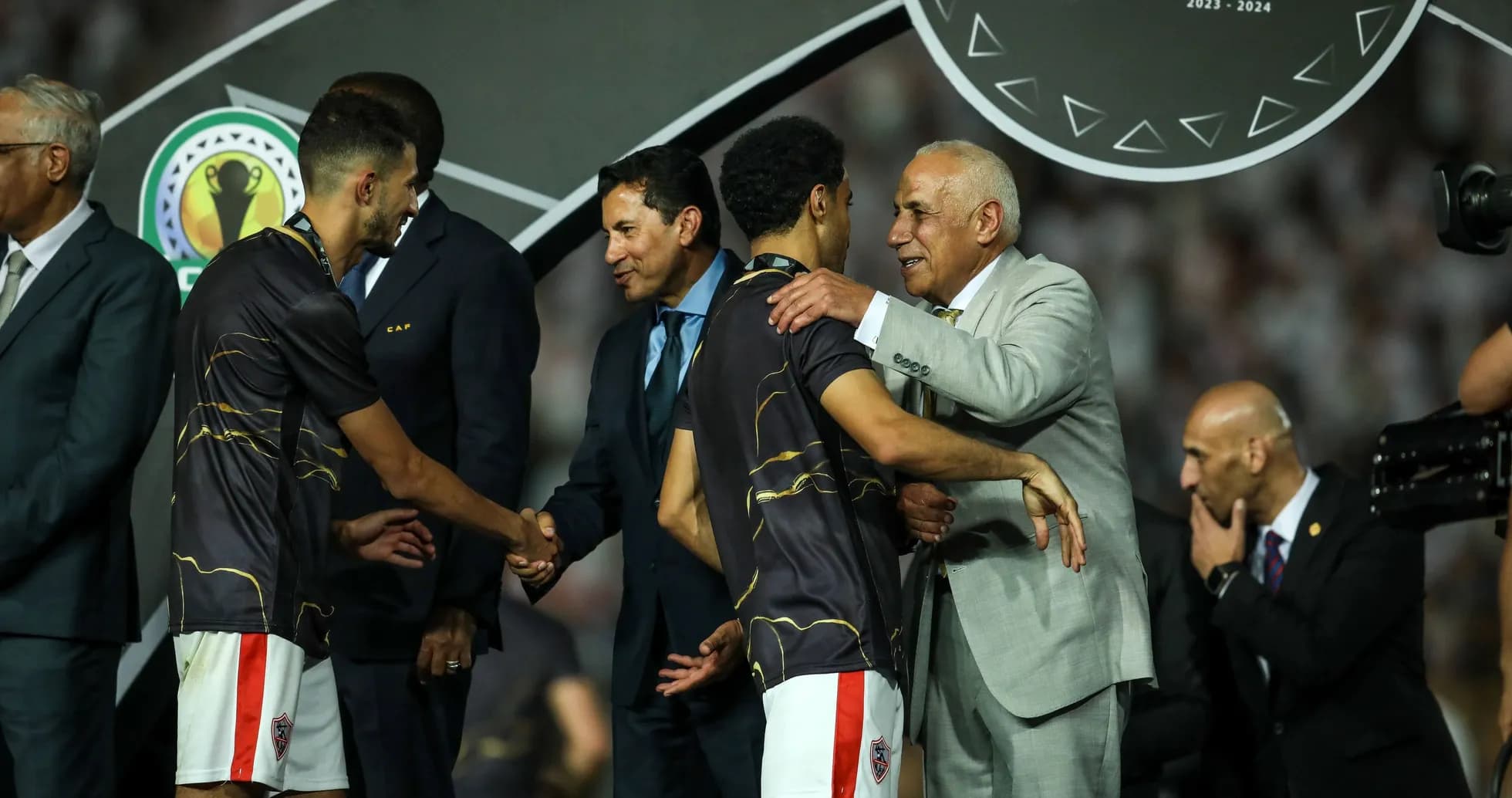
In a rare, unvarnished appearance on “On Sport”, Zamalek president Hussein Labib did something few club leaders in Egyptian football ever dare to do on live television.
He scored his own board a four out of ten.
No excuses. No spin. Just a stark assessment of an administration battling on every front: legally, financially and politically inside the White Castle.
The Maaly Case: More Than a Translation Error
Labib began by dismantling one of the most persistent narratives around the Abdel Hamid Maaly case.
The crisis, he insisted, did not erupt because Zamalek failed to translate a FIFA letter. The club had already appealed the penalty, then reached a settlement with the player and sent that agreement to the Court of Arbitration for Sport, asking for the disciplinary sanction to be frozen.
CAS said no.
That rejection came even after Maaly’s dues were paid, and, crucially, Labib stressed that the issue of translation “was never raised in the case”. The popular explanation, the easy one, simply doesn’t hold.
The legal battle is far from over. Zamalek are now pushing to have the disciplinary transfer ban lifted before the upcoming winter window. The administration is working intensely on that front, but CAS has yet to set a hearing date. Every week of silence tightens the pressure on a board that knows its next moves will define the club’s immediate future in the market.
Inside the Boardroom: Regrets and Fractures
Then came the most telling admission of the night.
If he could go back, Labib said he would change the composition of his board.
It was a quiet line, but a loud message. Internal disputes have dogged this administration, eroding harmony and slowing decision-making at a club that can ill afford paralysis. Labib spoke of “one or three members” who were not in alignment with the rest, a diplomatic phrasing that still made the fractures clear.
His self-rating of the administration’s performance — no higher than 4 out of 10 — underlined the depth of his dissatisfaction. For a sitting president to put a number on it like that is rare. For it to be that low is damning.
The Worst Day: Losing the October Land
Asked about his hardest moment in office, Labib didn’t hesitate.
The withdrawal of Zamalek’s land in 6th of October City was, in his words, the worst day of his presidency. That plot was more than real estate; it was a cornerstone of the club’s future financial planning.
Its loss continues to ripple through the balance sheet. It also shapes how the board now views risk, investment and long-term strategy.
On the footballing side, Labib named Imam Ashour as the biggest loss among the departures of Ashour, Ahmed Sayed Zizo and Achraf Bencharki. That choice says plenty about the profile and energy the president feels the squad is missing most.
Yet he shut the door on a Zizo return, and made it clear he did not attempt to sign any Al-Ahly player as a reaction to Zizo’s move to the Red Castle. No revenge signing, no emotional market moves. At least not from his side.
Seven Million Dollars in New Debt
Then came the numbers.
Labib openly acknowledged that his own board has added fresh debts of between 6 and 7 million dollars. This is not historical baggage; it is new weight on an already strained structure.
He reminded viewers that the administration inherited a club in an “extremely difficult” financial situation, with obligations exceeding two billion Egyptian pounds. Around half of that, close to one billion, has been paid off under the current board.
The story, though, is not one of clean recovery. It is one of firefighting.
Some of the new debt is tied to contractual obligations and financial plans that simply did not unfold as projected. Labib pointed to the agreement with Bizerte club and the valuation of that deal, explaining that Zamalek had banked on revenues expected from the October land. Once that land was withdrawn, the financial equation collapsed, and with it, parts of the club’s strategy.
The search for alternatives is ongoing. The administration has yet to secure the necessary approvals to acquire a new plot in the Fifth Settlement, a move intended to cushion some of the damage from losing the October land. For now, that plan remains stuck in the pipeline.
Abbas, Donations and the Balance of Power
Labib also moved to cool one of the more sensitive debates around the club: the influence of former president Mamdouh Abbas.
He rejected the idea that Abbas interferes in board decisions, describing their relationship as one of discussion and exchange of views between people who care about Zamalek. No orders, no imposed choices, according to Labib.
He went out of his way to thank Abbas for what he described as large financial donations, stressing that these contributions are not debts owed by the club. In a climate where every pound is scrutinised and every benefactor’s role is questioned, that clarification was deliberate.
Indoor Games, African Ambitions
Away from the spotlight of the first team, the president admitted to failure in indoor and other sports.
When this board took charge, he said, there were no teams, no coaches and no youth sector in the shape required. Mistakes followed in appointing some coaches and signing certain players, and the results showed.
Steps to restore Zamalek’s stature in these disciplines have already begun, he insisted, but the climb back will not be instant.
On the football side, Labib described Zamalek’s group in African competition as “difficult”, yet he expressed confidence in the squad’s ability to reach the final. It was one of the few moments on air where optimism clearly outweighed caution.
Squad Needs, Elections and the Al-Ahly Line
Turning to the current team, Labib was specific about what he feels is missing: reinforcement in midfield and on the wings, and a shift in the style of play itself.
He noted that head coach Moatamed Gamal prefers to conduct training sessions away from the club’s headquarters, a choice Labib framed as entirely within the coach’s authority. No hint of interference there, at least publicly.
On politics inside the club, he drew a line in the sand. Talk of upcoming elections is premature, he said. No board member has yet asked for his counsel on the matter, and he will announce his stance on the presidential candidates only at the appropriate time.
The rivalry with Al-Ahly, inevitably, surfaced before the end. Labib insisted there is no rupture in relations between the two boards. The bridges, at least administratively, remain intact.
But he was clear on one point: he does not wish to repeat the experience of signing a player from the Red Castle. Too many of those who crossed the divide, he argued, failed to shine in their new colours.
For now, Zamalek stand at a crossroads: a president who openly concedes mistakes, a board carrying both old burdens and new debts, and a fan base that demands titles, not explanations. The next transfer window, and the fate of that CAS appeal, will show whether this candid self-critique is the start of a reset — or just another chapter in a cycle the club cannot seem to break.





