
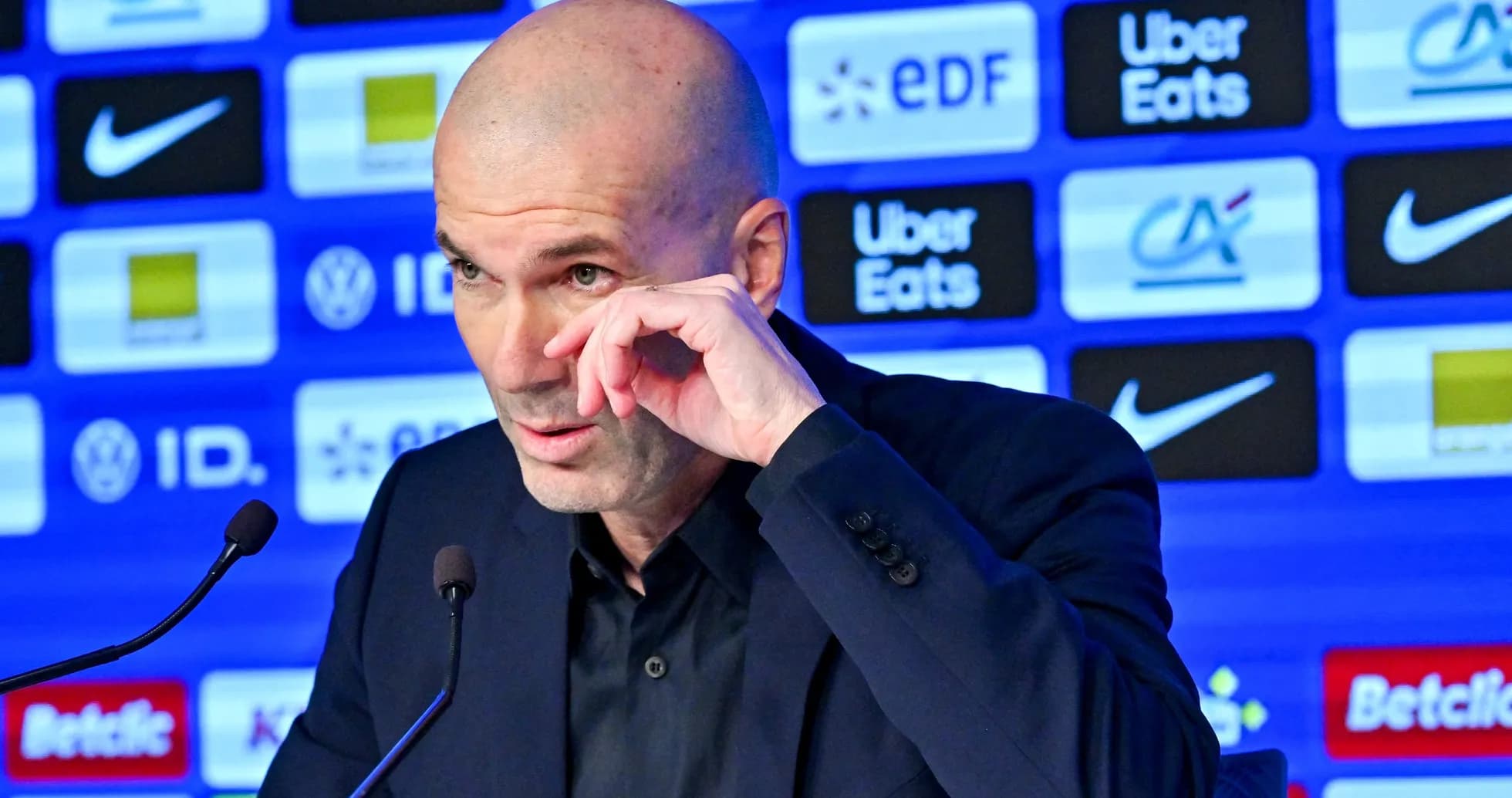
The room fell quiet before Zinedine Zidane had even finished his first sentence.
France’s head coach sat down on Friday to unveil his latest squad, but the usual back-and-forth over tactics and selections felt secondary. Football, for once, was pushed to the edge of the conversation.
At the centre of it all was Jesús de Miguel.
A press conference overshadowed by loss
The 30-year-old CD Tenerife forward died on November 3, a day after suffering a fatal chest injury in a Segunda División match against FC Andorra. Late in the game on November 2, De Miguel collided with goalkeeper Jesús Owono. The impact caused a blunt cardiac injury and cardiac arrest.
Medical staff resuscitated him on the pitch and rushed him to the University Hospital of Nuestra Señora de Candelaria in Santa Cruz de Tenerife. Hopes flickered for a few hours. By morning, they were gone.
A preliminary autopsy confirmed accidental chest trauma as the cause of death. Spanish police and judicial authorities have opened a routine investigation into the non-natural fatality, looking at potential involuntary manslaughter and the pitchside medical protocols followed that night.
Those are the cold, procedural details. Zidane’s voice carried the human cost.
Having joined Spain coach Luis de la Fuente and Real Madrid president Florentino Pérez in honouring De Miguel ahead of the player’s funeral in his hometown of Navahermosa, the France boss struggled to hide how deeply the incident had shaken him.
“I’m saddened by what happened, deeply affected. It even gives me goosebumps, because you never want to see something like that on a football pitch,” he told reporters.
The words were simple, but the pause that followed said more than any extended statement could.
Zidane then turned his thoughts to those closest to the player. “Above all, I feel sad for the family. I hope I never see anything like that again on a football pitch for the rest of my life.”
No one in the room rushed to the next question.
Nations League business resumes
When the conversation finally moved back to football, it did so gently. France have a job to finish in the UEFA Nations League, and Zidane still had a 23-man list to present for the November window.
There was one name everyone expected — and needed — to hear.
Kylian Mbappé, the captain and figurehead of this France side, returns from injury to lead the group in their final two fixtures of the calendar year. His comeback is timely. Les Bleus sit on top of their group and are closing in on a place in the knockout stages, but the margin for error is thin at this stage of the competition.
Zidane will lean heavily on his skipper’s presence, on and off the ball. In a squad packed with talent, Mbappé remains the reference point, the one who bends tight games his way and drags standards up around him.
Alongside the familiar faces, there was a fresh story too. Pablo Pagis, rewarded for his club form, has earned his first senior international call-up. For the attacker, it is the kind of moment every young professional imagines: your name read out by a coach of Zidane’s stature, your career suddenly framed in a new light.
Pagis steps into a dressing room that knows the stakes. France’s group lead sets up a decisive double-header, the sort of window that can define an entire Nations League campaign. Qualification for the knockout rounds is within reach, but not guaranteed. One misstep, and the equation changes.
The task is clear. The mood, after this week’s events in Spain, is anything but straightforward.
As Zidane left the podium, the contrast hung in the air: a squad strong enough to chase another trophy, and a sport still coming to terms with the fragility exposed by a single, tragic collision.





