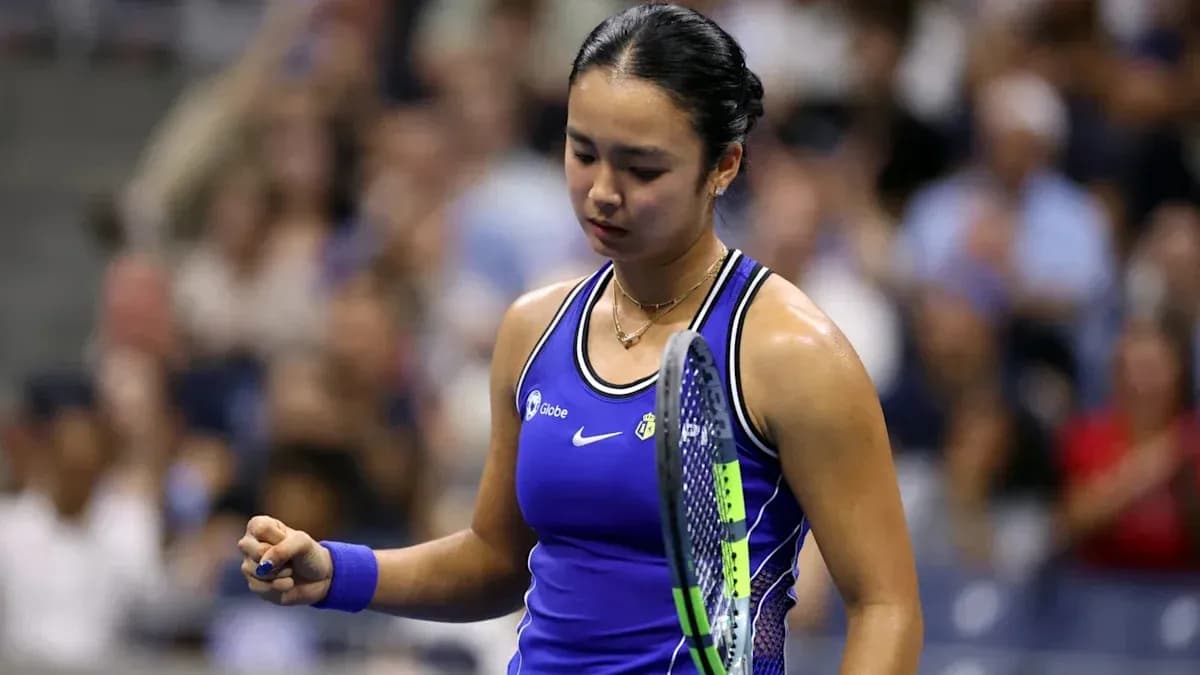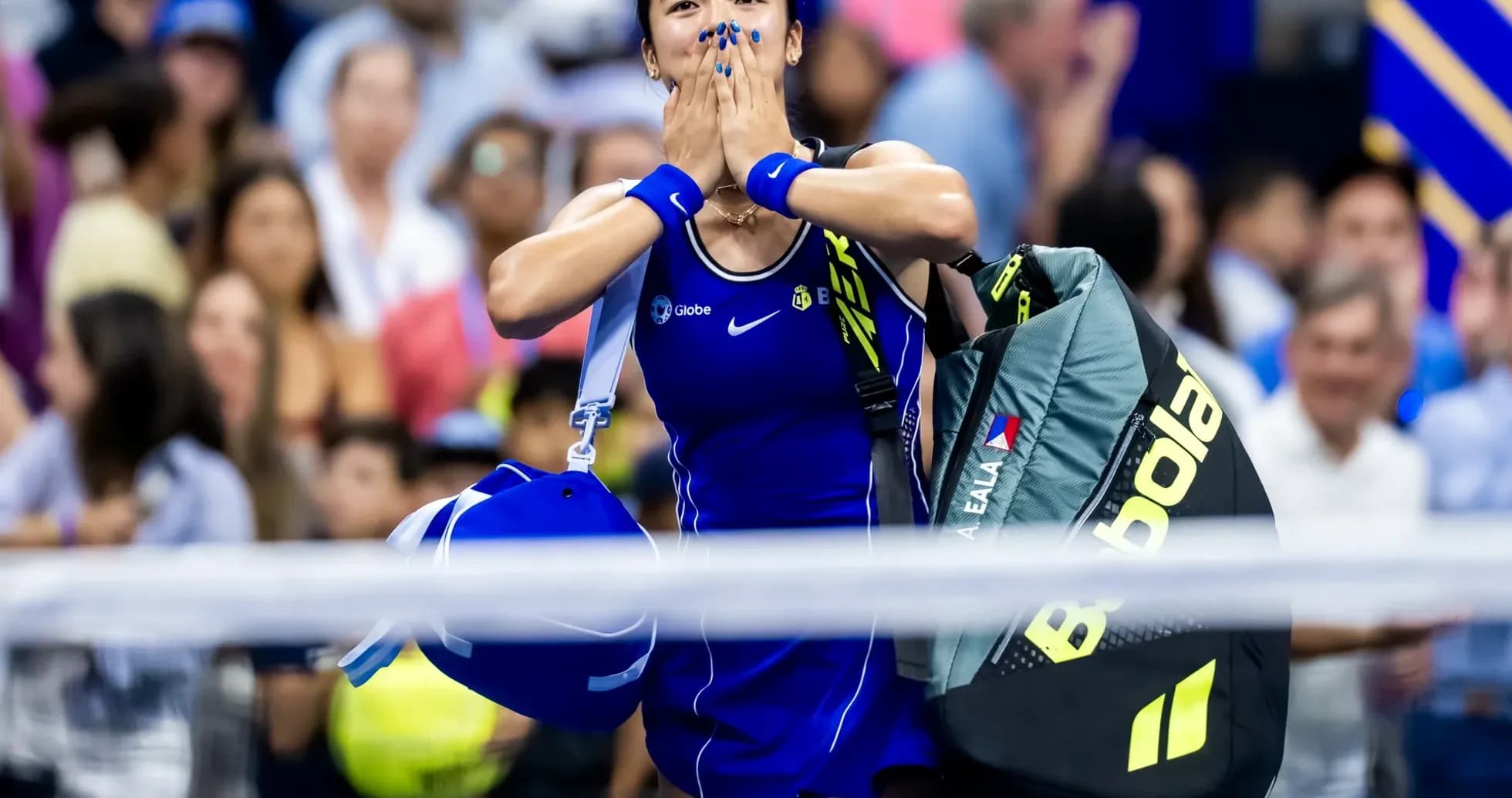
Alex Eala walked out of Arthur Ashe Stadium with her head high, even as the scoreboard told a brutal story.
The 21-year-old Filipina, now one of the most closely watched young names in the women’s game, had just lost a three-hour marathon to close friend and long-time rival Iva Jovic. A noisy, flag-waving Filipino contingent had filled pockets of the vast arena, hoping to see Eala stretch her US Open run. Instead, they watched the 18-year-old American edge her 7-5, 3-6, 7-5 in a gripping third-round duel.
It stung. Of course it did. But Eala has already moved on to the next fight.
From New York heartbreak to Singapore reset
There will be no extended post-mortem, no dwelling on missed chances. Eala has confirmed that her next stop is the upgraded Singapore Open, now a WTA 500 event, running from September 21 to 27.
That gives her two weeks. Two weeks to flush out the disappointment of New York, rebuild the body after a draining hard-court swing, and sharpen the mind for a different kind of test in Asia.
She will need every bit of it.
Singapore’s entry list is stacked. Jessica Pegula brings top-tier experience and relentless baseline pressure. Amanda Anisimova offers first-strike power and a point-shortening game that can blow opponents off the court. Mirra Andreeva, one of the most precocious teenagers on tour, adds another layer of danger. For Eala, it is exactly the kind of company she must keep if she wants to turn promise into presence at the top level.
A rivalry that’s getting real
The defeat to Jovic cut deeper because of their history. The American now leads their head-to-head 3-0, a clean sweep on paper, but the numbers hide the nuance. This was the closest, most fiercely contested chapter of their rivalry so far.
Eala went toe-to-toe with Jovic, created chances, and wrestled momentum back after dropping the opening set. She forced a decider, then pushed it to the edge again in the third. The margins were razor-thin.
“I do think that I’ve grown as a player since the last time that we played each other,” she said afterwards, refusing to let the loss define her night. She spoke of setting herself up for opportunities, of taking the initiative in key moments. This wasn’t hollow consolation. It was a player tracking her own evolution in real time.
“I’m happy with the match I think in general,” she added. “Of course there is disappointment in losing, but yeah trying to see the positive side. I think it was a really good match, I think the level was really high, so yeah congrats to Iva for pushing through.”
The respect between the two is clear. So is the competitive edge. If this is what their rivalry looks like at 18 and 21, the women’s tour may be watching the early stages of something that lasts a decade.
Home colours, different stage
Once Singapore is done, the jersey changes and so does the mission.
Eala will then turn to the Asian Games, with the tennis event scheduled from September 27 to October 3 in Japan. The shift from tour life to multi-sport, national-team duty is one she embraces.
When asked if she would be playing the continental showpiece, she did not hesitate: “Yes, before that I believe I will be in Singapore.
“I love playing and competing with the Philippines team and in the SEA, the Asian Games I’ve also done, I think it’s a really fun environment, I love being with the team.”
For a player who spends most of the year in the individual grind of the tour, the Asian Games and other non-WTA events near home offer something different: a reset, a reconnection, and a chance to channel pressure into pride. They also give her a quicker path to wash away the sting of New York, in front of fans who see her not just as a rising star, but as a flag-bearer.
The schedule is tight. Singapore ends the same day the Asian Games tennis event begins. The travel will be demanding, the surfaces and conditions another variable to manage. Yet Eala has chosen the harder path, the one that keeps her in the fight on multiple fronts.
She leaves the US Open with a painful loss, yes, but also with proof that her game can live at that level for three hours on one of the sport’s biggest courts. Now the question shifts: how quickly can she turn that proof into wins against the same calibre of opposition, in Singapore, in Japan, and beyond?