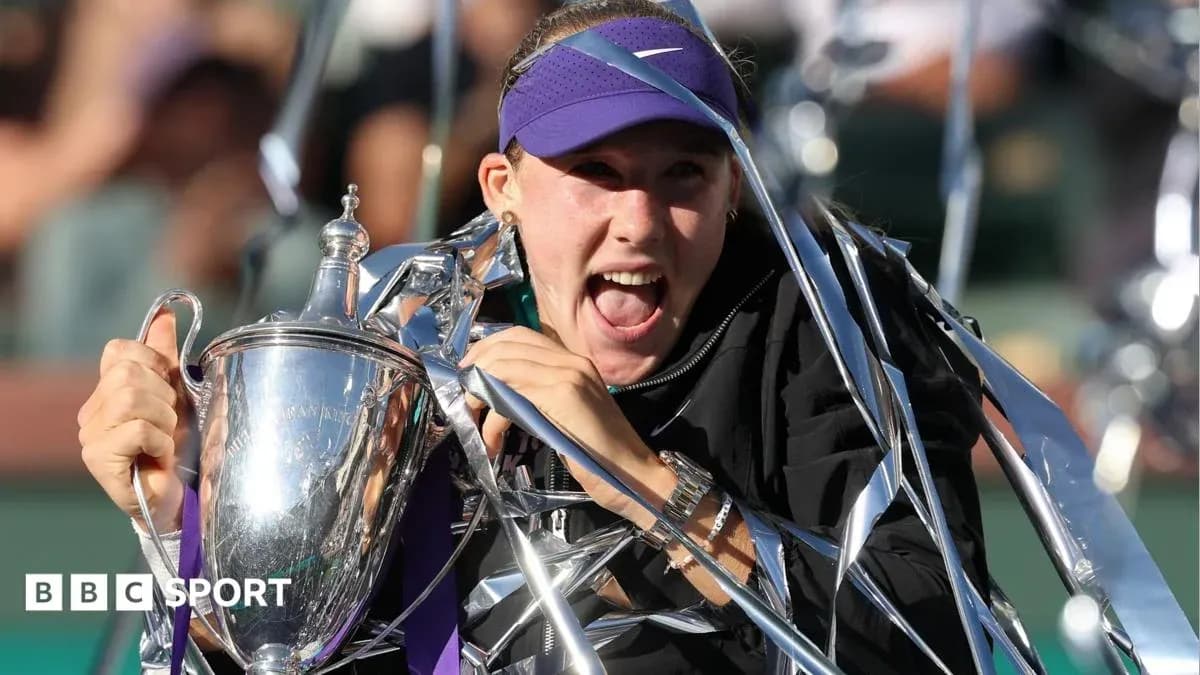
Mirra Andreeva arrived in the desert on the verge of tears. She leaves it as the undisputed star of the WTA Finals.
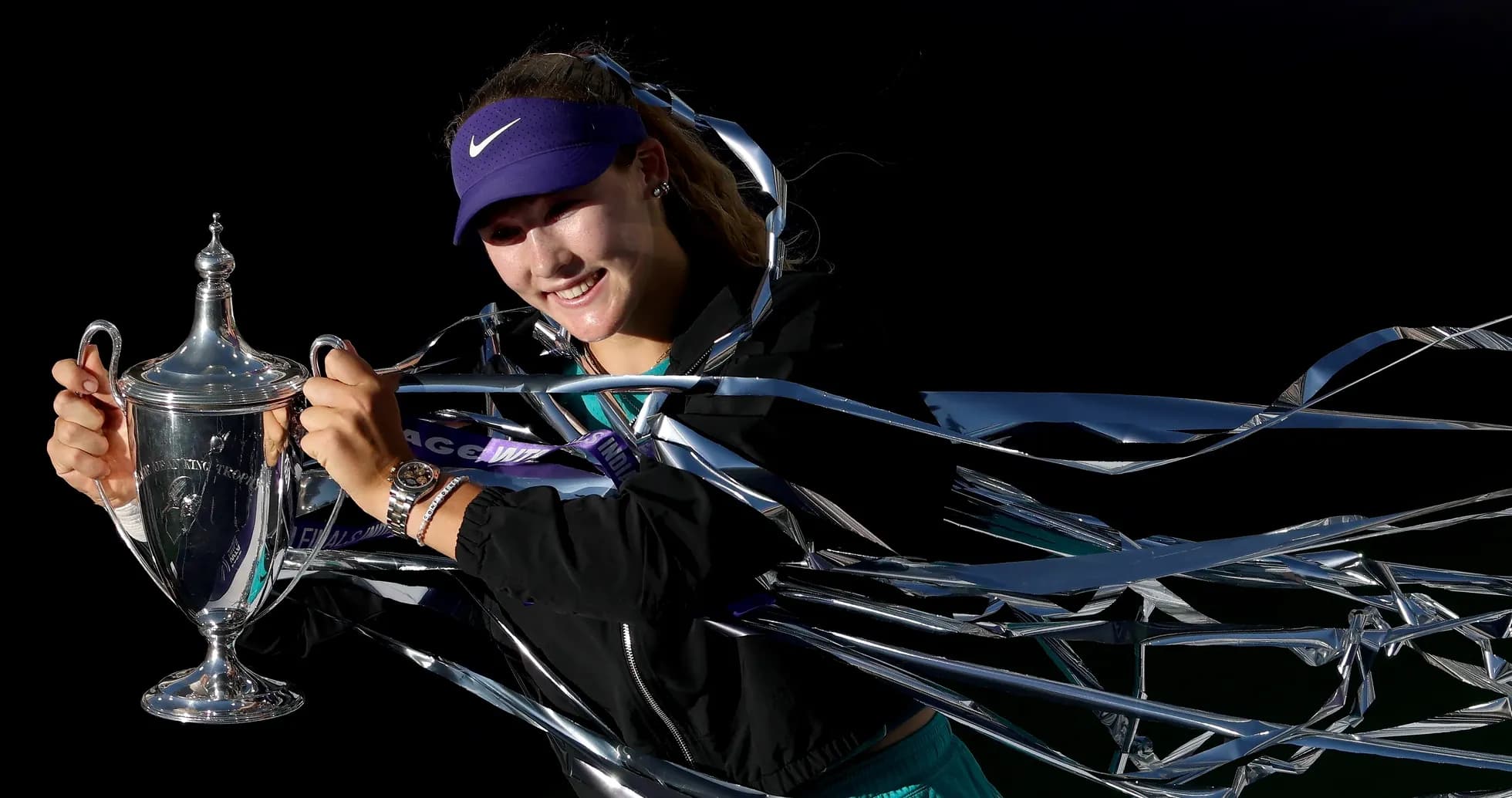
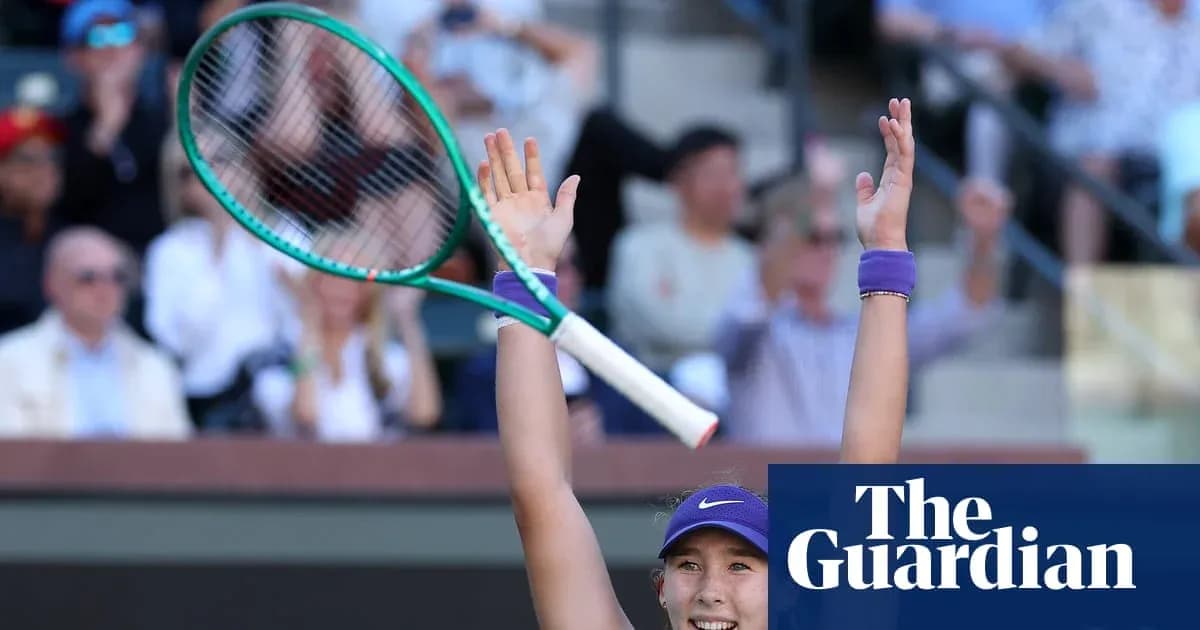
What began with what she called “a little breakdown” on the practice court ended with a teenager standing alone at the top of the week’s field, arms raised to the sky at Indian Wells after a 7-5 6-3 win over Elina Svitolina that felt like a statement as much as a scoreline.
From nerves to domination
At 19, the French Open champion has already lived a lot of tennis lives. This one might be the most significant yet.
She came into her first WTA Finals singles campaign openly stressed by the format, terrified of leaving with three group-stage defeats on her record. Instead, she walks away as the youngest champion in 22 years, having not dropped a single set and conceding just 26 games in five matches. In a tournament designed to expose weaknesses, she barely showed one.
The numbers tell one story. The body language told another.
When the final point against Svitolina flew long, Andreeva didn’t collapse or roar. She lifted her arms, almost in disbelief, then sprinted to the box where Conchita Martinez – the 1994 Wimbledon champion and the calm voice behind this surge – waited with the rest of her team. This was a group victory, and she knew it.
“I am super thankful to my team for pushing me to my limits, for forcing me to do stuff when I don't want to do anything,” she said on court, before adding with a smile: “Thanks for fighting with me, thanks for forcing me to do everything that I have to do and not asking any questions!”
The gratitude was genuine. So was the edge.
A different Mirra
Back in March, on these same Indian Wells courts, Andreeva’s frustration boiled over in an early defeat. She swore at the crowd, a flash of teenage temper that fed the narrative of a prodigy still wrestling with her emotions.
That version of Andreeva never showed up this week.
Against Svitolina, one of the most stubborn competitors on tour, Andreeva saw a break lead disappear three times across the two sets. Each time, she recalibrated. No theatrics, no long stares at her box. Just a tightening of patterns and, crucially, a bolder backhand that began to pin Svitolina deeper and deeper behind the baseline.
The defining passage came early in the second set. Andreeva played a brutal nine-minute service game, only to be broken at the end of it. That kind of swing has broken more seasoned players on this stage.
She didn’t sulk. She stomped back to her chair, reset, and then tore the momentum away again, breaking Svitolina from 40-0 down in the very next game. That was the hinge of the match, and she slammed it shut.
Her serve misfired at times, but the rest of her game more than covered for it. She faced 12 break points and saved nine. She struck 19 winners to Svitolina’s 10, and when the rallies grew tight, she was the one taking the ball early and dictating.
“This fighting mindset helped me to get more brave and aggressive in the important moments,” she told Sky Sports. It showed.
From breakdown to belief
The contrast to how this week started could not be sharper.
“This is just a dream,” Andreeva said. “I had a little breakdown in my practice just before Indian Wells because I was so stressed. I didn't want to lose a match in the group. It's amazing.”
Those fears now look almost quaint. She arrived having won only one of six matches against top-10 opponents in 2026. She leaves having beaten three of them in a single week, including a ruthless dismantling of four-time major champion Aryna Sabalenka on Wednesday that turned heads across the locker room.
This was not a lucky run through a soft draw. It was a direct assault on the top tier.
The rewards are already visible. The Russian climbs to No. 2 in the world rankings and will start the 2027 season just 293 points behind Elena Rybakina. The gap is small enough to feel real, large enough to keep her hungry.
There are tangible prizes too. A cheque for £2.55m and a custom purple Mercedes, which she joked she is happy to enjoy as a “passenger princess” until she passes her driving test. The line drew laughs, but it also fit the theme of the week: a teenager comfortable enough in this rarefied air to poke fun at herself.
Owning the narrative
Andreeva has spent much of the year learning how to handle everything that swirls around elite tennis – the cameras, the scrutiny, the whispers. She even turned a potentially awkward moment into a punchline when private comments from Jessica Pegula, including calling her a “diva,” were accidentally live-streamed before the tournament. She laughed it off, another sign that the noise no longer rattles her as it once did.
What she does take seriously is the work. As she did after winning Roland Garros, Andreeva closed her victory speech by borrowing – and now almost owning – a line she “stole” from Snoop Dogg.
“I want to thank myself for always doing the hard work and for never quitting,” she said. “For not taking the days off, for working every day and committing to what I have to do – just thanks to myself.”
It sounded less like a gimmick this time and more like a mission statement.
The teenager who arrived in California afraid of losing a group match leaves it as the most dangerous player in the women’s game, chasing down the No. 1 ranking with a trophy in her hands, a hardened mindset in her head, and the sense that this, astonishingly, might only be the beginning.