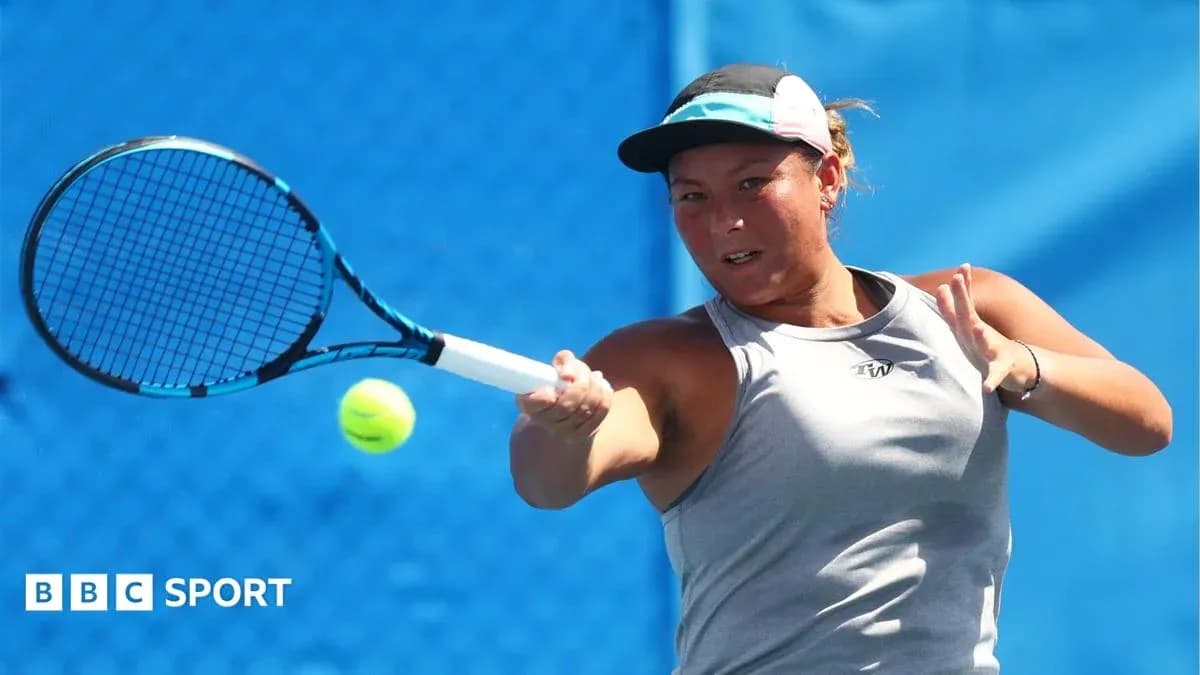
Tara Moore’s £15m damages claim against the Women’s Tennis Association has been thrown out by a United States court, drawing a stark legal line under one of the most bruising doping sagas in recent tennis history.
The 34-year-old Briton, once the country’s leading women’s doubles player, had sought at least $20m in compensation, arguing the WTA failed in its duty of care by not warning players about the risk of contaminated meat at a tournament in Colombia.
The United States District Court in New York disagreed. Judge Andrew Carter dismissed Moore’s motion and ordered the case closed, ruling her legal challenge was “not justified” in law.
For Moore, it is another heavy blow in a fight she insists was never about cheating, but about a system that she believes failed her.
“This case has been a nightmare,” she told BBC Sport after the decision, adding: “It just shows how broken the anti-doping system is in tennis.”
The story began in Bogota in April 2022. Moore tested positive for the anabolic agents nandrolone and boldenone at a WTA 250 event in the Colombian capital. An independent tribunal later accepted that contaminated meat was the source of the substances and found she bore “no fault or negligence”.
That ruling, delivered in December 2023, should have been her lifeline. Instead, it became another battleground.
The International Tennis Integrity Agency appealed to the Court of Arbitration for Sport. Cas sided with the ITIA, and Moore was handed a four-year ban, ruling her out of the sport until 2028. Her career-high doubles ranking of 77, reached in 2022, now feels a world away.
Moore then turned her fire on the WTA. In proceedings before the American Arbitration Association, she argued the governing body’s “failure to warn against eating meat in Colombia was a direct cause of her positive test result and the harm that followed”.
The claim was stark. In her motion, Moore alleged the WTA “stayed silent in the face of a known and specific danger and then shifted the blame for its own negligence” onto her shoulders.
The arbitrator rejected that argument and backed the Cas decision, dismissing the case against the WTA. Moore responded by taking the fight to federal court in New York, claiming she had been denied a fair hearing in arbitration.
That route has now closed as well. Judge Carter’s ruling leaves the Cas verdict and the four-year ban intact, and Moore’s attempt to secure major financial damages from the WTA dead in the water.
The WTA and the ITIA have been approached for comment. Their silence, for now, sits alongside a judgment that leaves Moore banned, embittered, and asking where a player turns when every door in the system has already been slammed shut.