Alex de Minaur has been searching all year for a spark. He found it at home.
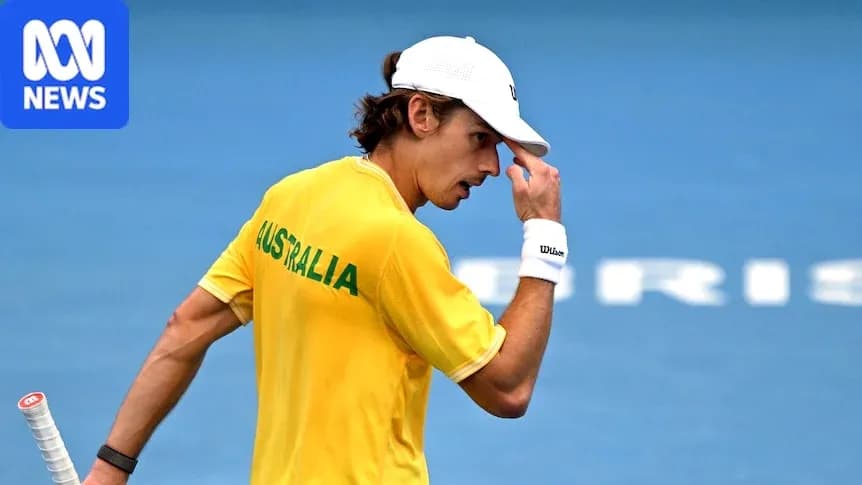
On a warm afternoon at Pat Rafter Arena, the Australian No.1 ripped through Poland’s Maks Kasnikowski 6-3, 6-0 to give Australia the ideal start in their Davis Cup tie and, perhaps more importantly, to remind himself what it feels like to dominate.
For 35 minutes, Kasnikowski, ranked 231 in the world, hung around. He traded from the baseline, stayed with de Minaur in the rallies, and looked comfortable enough under the Brisbane sun. The scoreboard read 6-3, but the contest still felt alive.
Then the switch flipped.
De Minaur tore through the second set in 20 brutal minutes, reeling off games with a clarity and aggression that’s been missing too often in 2026. Returns landed deep, forehands pinned Kasnikowski in the corners, and any hint of resistance vanished under a wave of Australian intensity.
Each time he landed another blow, de Minaur turned to the stands, arms raised, shouting to the crowd. Not showboating. Demanding more noise, more energy, feeding off the packed stadium that has been a rare luxury in a season spent mostly on the road.
“We play outside Australia for 10 months of the year, so we don't really get too many chances to play back here in front of a packed crowd,” he said afterwards. “It was a great atmosphere and one that I've missed.”
A brutal year behind the ranking
On paper, de Minaur is still a top-10 player. Ninth in the ATP rankings, the number beside his name carries the weight of consistency and class.
The reality of 2026 has been far harsher.
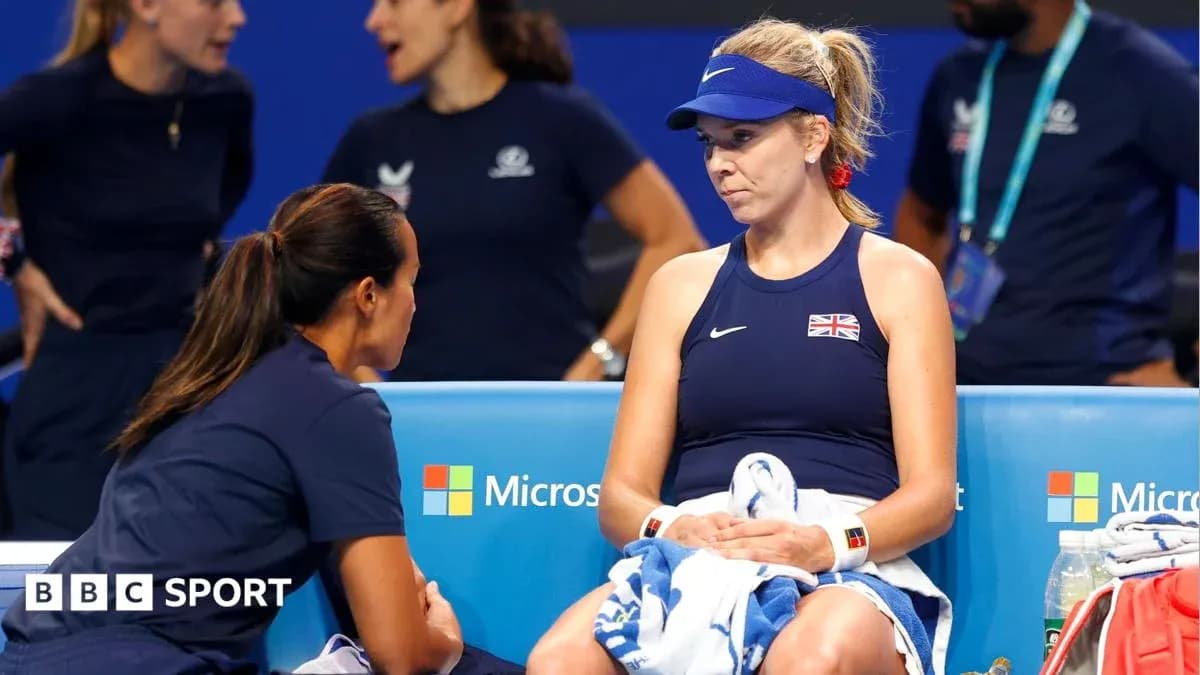
He sits 13th in the race to the year-end ATP Finals, a blunt indicator of a season that never quite caught fire. There has been joy off the court — his wedding to British player Katie Boulter a clear highlight — but on it, the margins have cut against him.
At the majors, he only reached one quarterfinal, at his home Australian Open, where he fell to eventual champion Carlos Alcaraz. After that, the story turned sour. In Paris, London and New York, lower-ranked opponents picked him off, the kind of losses that sting a little longer when you’ve spent recent years as a regular in the last eight.
The US Open defeat to world No.70 Botic van de Zandschulp underlined the slide. It was just his second second-round exit at a slam since 2023, and it came in a draw missing world No.1 Jannik Sinner, with Alcaraz only just returning from a wrist injury. The door was open. De Minaur couldn’t walk through it.
He left New York looking flat, again, a familiar figure in the press room trying to explain another early exit in a season that has felt out of rhythm from the start.
The Masters events offered no real refuge. Three times he lost in his opening match. The one time he did reach a quarterfinal, against Valentin Vacherot, he still went backwards in the rankings, unable to defend the semifinal run he’d produced in 2025. Progress on paper, regression in reality.
A reset in green and gold
That’s why this Davis Cup week matters. Not as a cure-all, but as a reset.
The long break after the US Open — longer than many expected him to take — has clearly sharpened both body and mind. Against Poland, de Minaur looked lighter on his feet, freer in his swings, and fully engaged in every point. The match felt less like a routine win over an outmatched opponent and more like a player reconnecting with his own identity.
He knows it, too.
“I know the tennis is there, it hasn't gone anywhere. I've just gotta step up and keep doing what I'm doing,” he said. There was no sense of reinvention in his words, just a belief that the level still lives inside him, waiting for the right stage.
Team competitions have always been that stage.
“It's a different environment and I think I thrive in these types of environments, team competitions. It's a little bit different to your day to day on tour,” he said. “The pressure is different. I'd say it's probably more in team events because you're not just playing for yourself, you're playing for the boys around you and I think that brings out the best in me.”
You could see that in the way he roared after routine holds, in how he lingered a second longer after big points, soaking in the sound. The match was about more than a point for Australia. It was about momentum for himself.
London calling
The schedule offers him no time to dwell, which might be exactly what he needs.
Once the Davis Cup duties are done, de Minaur heads to London for the Laver Cup, where he will lead Team World against Europe. It’s another team week, another chance to play with others on his shoulders, another environment he believes can “springboard me back to where I wanna be.”
That phrase hangs over the closing months of his season. Back to where he wants to be. Not just in the rankings, but in the thick of the biggest matches at the biggest tournaments, no longer explaining early exits but dictating late-stage battles.
For now, he has something solid to cling to: a ruthless Davis Cup win on home soil, a crowd back at his side, and a reminder that his best tennis hasn’t disappeared.
The question is no longer whether the level exists. It’s whether this week in green and gold becomes the moment he finally turns a rough year into a launching pad.