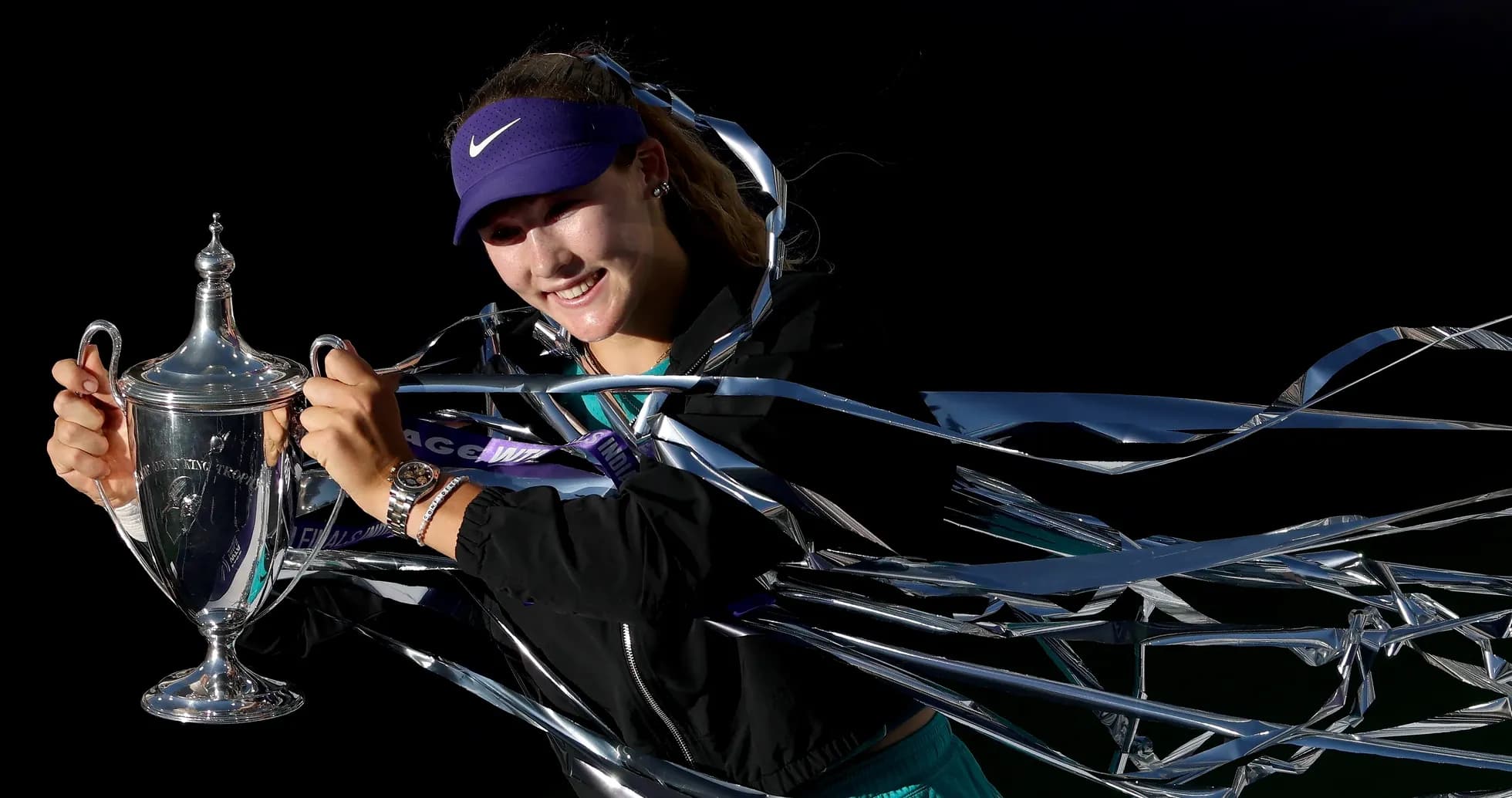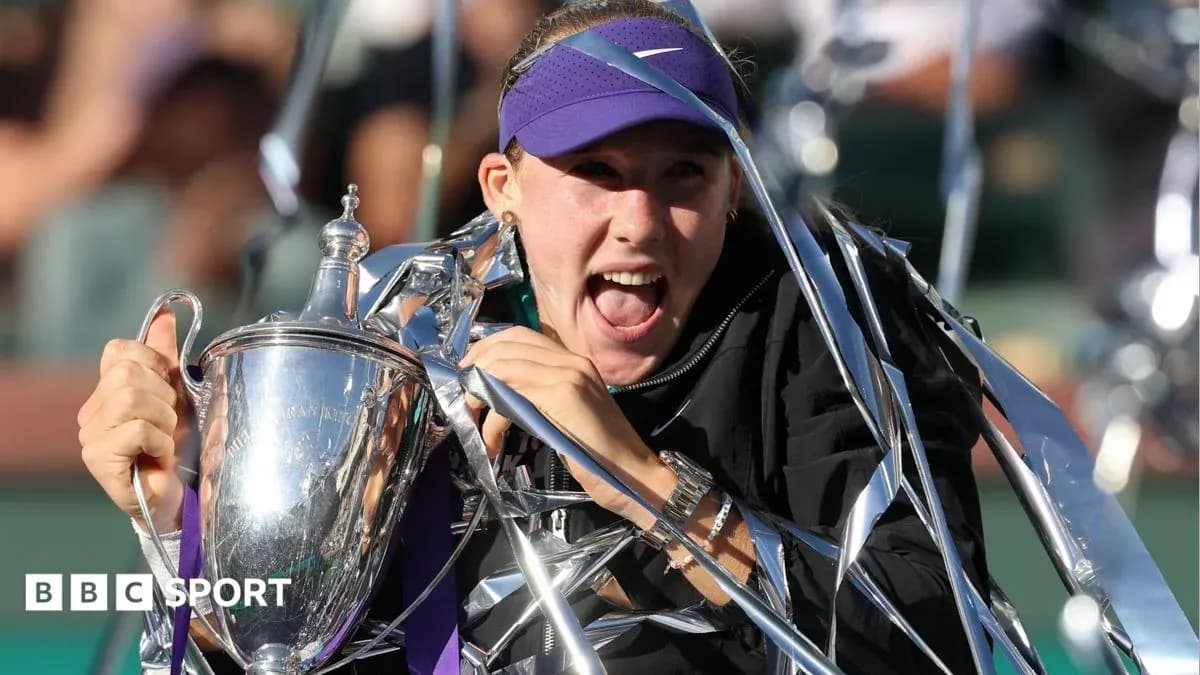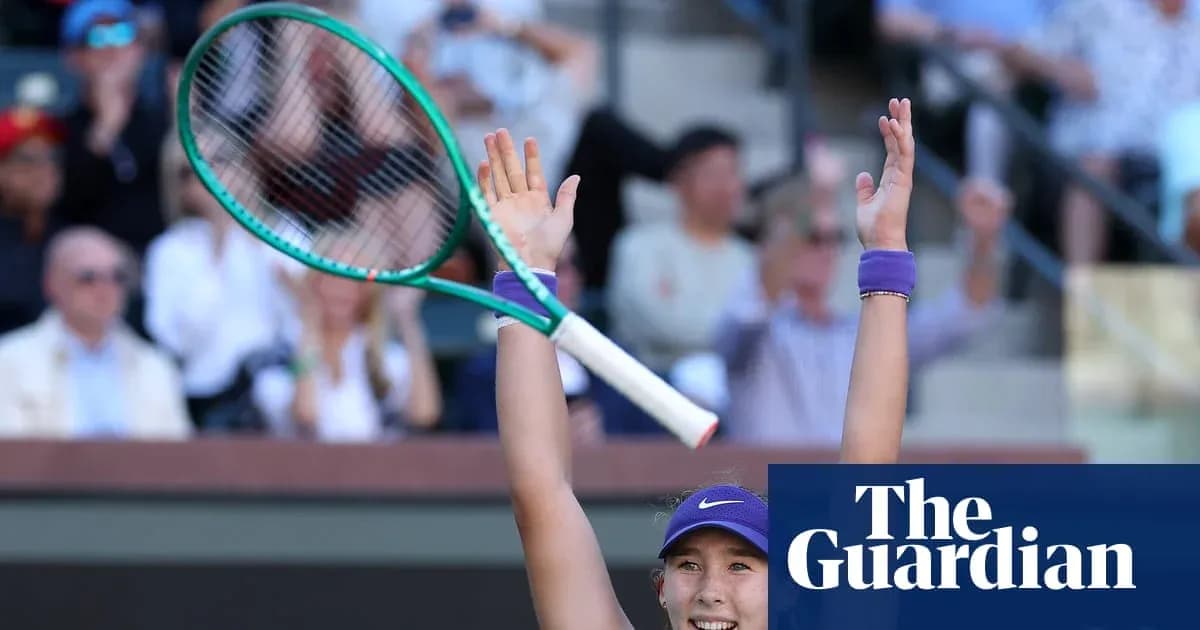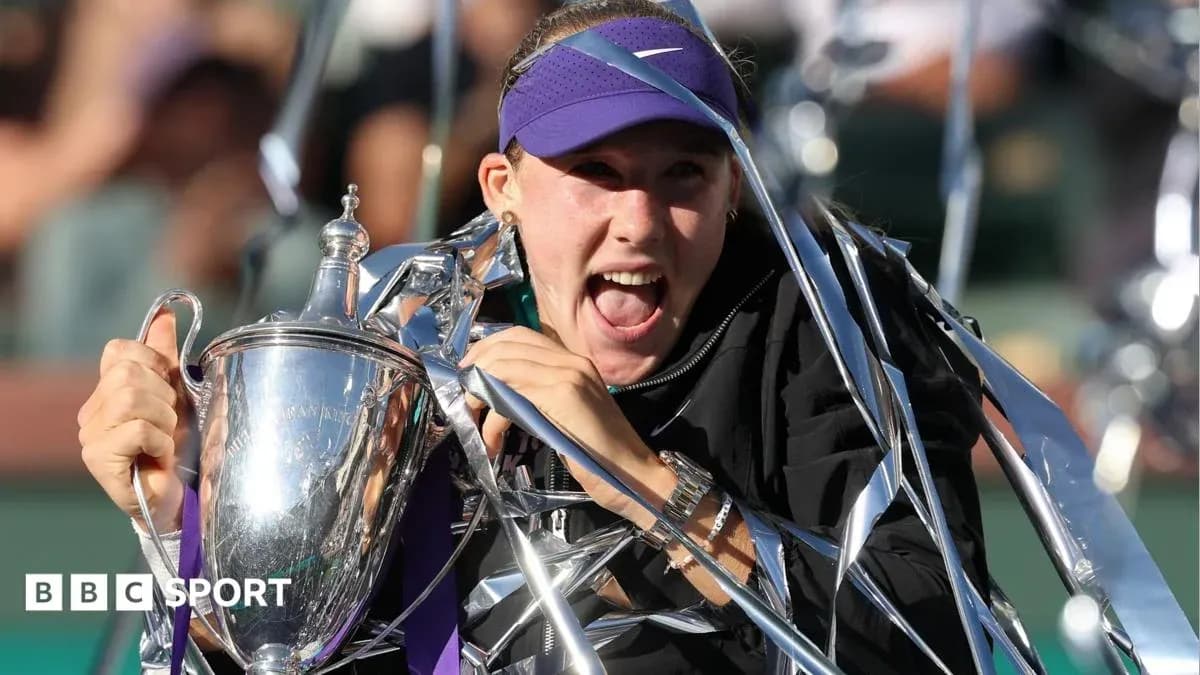
Mirra Andreeva arrived in the desert on the brink of tears. She leaves it as the queen of women’s tennis.
The 19-year-old Russian, who admitted a “little breakdown” on the practice court before her first WTA Finals singles campaign, walked out of Indian Wells on Sunday night with the trophy, a purple Mercedes, £2.55m in prize money and a statement that echoed far beyond the California air.
She didn’t just win the title. She owned the week.
A Champion Forged Under Pressure
Andreeva’s 7-5 6-3 victory over Elina Svitolina in the final capped an unbeaten run in which she did not drop a set and lost only 26 games across five matches. In a field packed with established stars, the French Open champion looked like the most complete player on court from day one.
The reward is enormous. She climbs to No. 2 in the world rankings and will start the 2027 season just 293 points behind world No. 1 Elena Rybakina. The chase is on, and it no longer feels premature to talk about Andreeva as the sport’s next long-term standard-bearer.
On Sunday, though, this was about surviving Svitolina and her familiar brand of stubborn resistance.
The Ukrainian, one of the tour’s toughest competitors, refused to fold. She repeatedly dragged Andreeva into heavy, attritional baseline rallies, testing both legs and nerve. Three times across the two sets, Svitolina clawed back a break of serve. Three times Andreeva absorbed the blow, reset and hit back harder.
The pressure finally told.
Serving at 4-5 in the opening set, Svitolina blinked. Andreeva, who had been steadily leaning on her backhand throughout the contest, stepped in and began unloading off that wing, changing direction, flattening out, and forcing errors. The teenager snatched the set 7-5 and let out a roar that sounded less like celebration and more like release.
The New Edge: Control, Not Chaos
What stood out was not just Andreeva’s shot-making, but her composure. Only a few months ago at the same venue, she left Indian Wells in a very different mood after an early defeat in the regular WTA Tour event, swearing at the crowd and struggling to keep a lid on her emotions.
This time, the volatility was gone. The fire remained.
In the second set, she played one of the defining games of her season. Serving at 3-2, she was dragged through a nine-minute ordeal, eventually losing serve after a string of deuce points. The old Andreeva might have unraveled. The new version marched back to her chair, stared straight ahead, and came out swinging.
In the very next game, Svitolina raced to 40-0. Andreeva refused to yield. She tightened her returns, attacked second serves, and turned the game on its head to break back. The message was blunt: you can’t shake me anymore.
Her serve was far from flawless, but the numbers underlined her grit. She faced 12 break points and saved nine of them. She hit 19 winners to Svitolina’s 10, consistently taking the initiative when it mattered.
“This fighting mindset helped me to get more brave and aggressive in the important moments,” she told Sky Sports afterwards. It sounded simple. On court, it looked ruthless.
From Breakdown to Breakthrough
The backdrop to this triumph makes it even more striking. Coming into the WTA Finals, Andreeva had won just one of her six matches against top-10 opponents in 2026. This week she beat three of them, including a demolition of four-time major champion Aryna Sabalenka in the group stage.
The mental strain was real. She admitted that the thought of losing even a group-stage match had weighed on her so heavily that she broke down in practice before the event began.
“I didn’t want to lose a match in the group,” she said. “It’s amazing.” The contrast between that anxious teenager on the practice court and the composed champion on Sunday night could hardly be sharper.
Her off-court poise has sharpened as well. When private comments from Jessica Pegula to her coach — including calling Andreeva a “diva” — were accidentally live-streamed before the tournament, the Russian could easily have turned prickly. She laughed it off instead, turning a potential flashpoint into a footnote.
Around her, the team that has helped shape this rapid rise watched on. Conchita Martinez, the 1994 Wimbledon champion, has clearly added layers to Andreeva’s game and mentality. When the final point was won, Andreeva’s first instinct was to throw her arms up, then sprint to the box that has pushed her, challenged her, and, in her own words, “forced” her to do what she didn’t always want to do.
“I am super thankful to my team for pushing me to my limits, for forcing me to do stuff when I don't want to do anything,” she said on court. “Thanks for fighting with me, thanks for forcing me to do everything that I have to do and not asking any questions!”
Then came the line that has already become part of her signature.
Just as she did after winning Roland Garros, Andreeva closed by thanking herself, a playful twist on the Snoop Dogg quote she has “stolen” and made her own.
“I want to thank myself for always doing the hard work and for never quitting,” she said. “For not taking the days off, for working every day and committing to what I have to do – just thanks to myself.”
It was half-joke, half-manifesto. And it fits a player who has turned self-belief into a weapon.
Svitolina’s Resistance and Revival
Across the net, Svitolina walked off in tears, but this defeat still capped a remarkable season.
She had been thrashed 6-4 6-0 by Andreeva on the opening day of the tournament, a bruising loss that could have set the tone for a short week. Instead, she regrouped, battled through the field, and came within a set and a half of turning the narrative on its head in the final.
Fatigue eventually crept in. Those long rallies that had initially dragged Andreeva into uncomfortable territory began to drain Svitolina’s legs instead. The timing on her counterpunching slipped, the depth on her groundstrokes shortened, and the teenager took full advantage.
Still, Svitolina finishes the year back at No. 6 in the world, her highest ranking since 2021. For a player who returned from maternity leave in 2022 and has juggled elite sport with motherhood and the emotional weight of representing Ukraine during war, it is a powerful resurgence.
“She's probably still awake and is going to ask me why I didn't win today,” the 32-year-old said of her daughter Skai, managing a smile through the disappointment. She spoke of hoping her comeback “inspires some ladies and athletes around the world to believe that it's possible,” and again thanked those in Ukraine for standing behind her.
There was pain in the loss, but no hint of regret in the journey.
A New Era Closing In
For Andreeva, the spoils extended beyond the trophy and the cheque. She also claimed a custom purple Mercedes, joking that she is happy to remain a “passenger princess” until she passes her driving test.
The nickname may stick, but it already feels at odds with what she represents on court. There is nothing passive about a teenager who walks into the sport’s biggest stages, stares down top-10 players, and leaves with titles.
From breakdown in practice to dominance in the desert, this week in Indian Wells felt like a turning point. Not just another title, but the moment Mirra Andreeva stopped being a prodigy and started looking like the player everyone else will have to chase.
The gap to Rybakina is 293 points. How long that gap survives is now one of the most compelling questions in tennis.