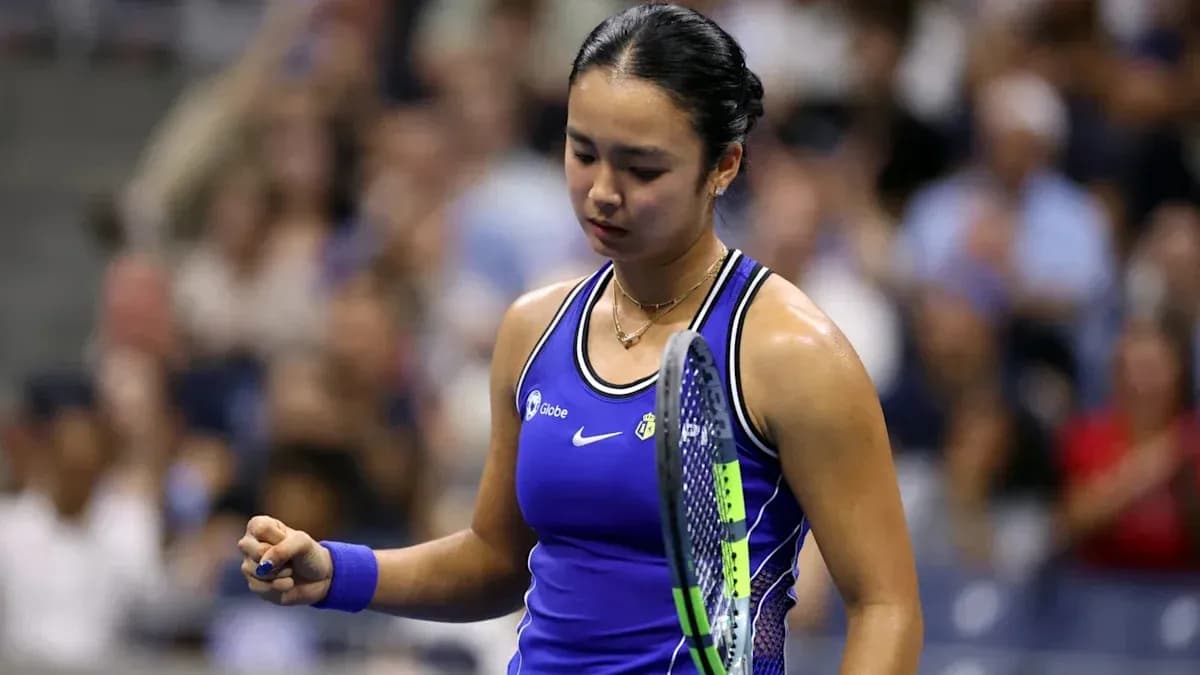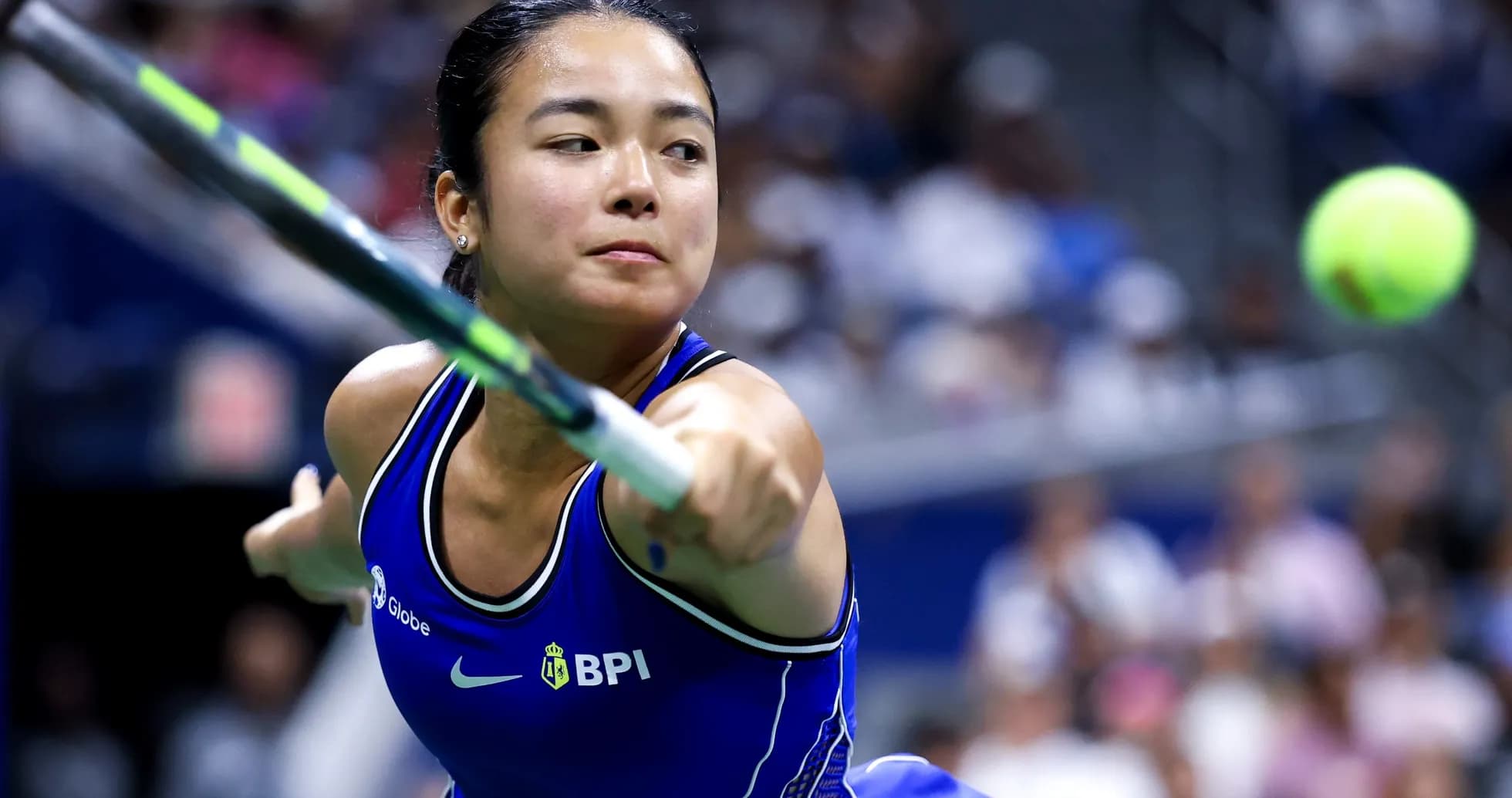
The practice courts at the U.S. Open are usually background noise – a low hum of bouncing balls and half-interested spectators drifting past. Not when Alex Eala walks on.
The 21-year-old from the Philippines has turned routine sessions into events. Courtside railings are lined three and four deep with Filipino flags, phones held aloft, kids in Nike gear craning for a glimpse. It looks less like a warm-up and more like a home game.
That’s not just atmosphere. That’s market power.
And one of tennis’ most influential dealmakers believes it’s about to explode.
A Projection That Stopped the Room
Max Eisenbud, the man who helped turn Maria Sharapova into a global brand and now manages Coco Gauff’s commercial rise, doesn’t deal in timid forecasts. As head of client representation at WME Sports and IMG Tennis, he has seen the very top of the women’s sports economy.
His view on Eala?
“I feel very confident that by 2027, she will be the second-highest-paid female athlete in the world, behind Coco [Gauff],” he told Forbes.
Strip that down. Not “one of.” Not “among the best.” Second. On the planet.
Given where the money currently sits, it’s a staggering call. Yet the numbers already attached to Eala suggest Eisenbud isn’t talking into the wind.
Seven Figures, Before She Serves
Over the last 12 months, Forbes estimates Eala has earned more than $5 million off the court, before taxes and management fees, on top of $1.7 million in 2026 prize money.
This is no overnight sensation. Her endorsement roster has been built layer by layer.
- Globe Telecom signed her when she was just eight years old.
- Babolat backed her through her junior days.
- Nike came in back in 2019, sensing where this was going.
- Bank of the Philippine Islands joined the portfolio in 2022.
- Locally followed in 2025.
- Milo made her a brand ambassador in February 2026.
Those logos are no longer cheap real estate.
Forbes reported that Globe and BPI each agreed new four-year deals at the start of 2026, worth more than $1 million annually, simply to put their patches on Eala’s Nike kit. Eisenbud says seven figures is now effectively the entry fee for brands that want in.
Nike, for its part, has leaned into her identity. The company has rolled out Filipino-themed campaigns, including sampaguita-inspired designs and apparel, tapping into a national story that travels.
The result: an athlete whose shirt space is as contested as her service games.
New York Gets a Glimpse
The balance sheet only tells half the story. The rest is written in the stands.
During U.S. Open Fan Week, Eala’s practices have drawn some of the biggest crowds on site. Fans arrive early, many draped in the Philippine flag, and stay late. They roar for winners in a practice set as if she’s serving for a major.
Then came the Stars of the Open exhibition at Arthur Ashe Stadium. Eala shared the stage with American rising star Iva Jovic, but the night doubled as a test: would the fans show up in tennis’ largest arena for a player whose global breakthrough is still in motion?
They did. Loudly.
Tournament organizers noticed. When the draw placed Eala against American qualifier Mary Stoiana, the U.S. Open didn’t tuck the match away on an outside court. Her opener on Tuesday night goes to Louis Armstrong Stadium, the second-biggest venue at the USTA Billie Jean King National Tennis Center.
Tournament director Eric Butorac has been clear: the reaction during Fan Week forced their hand. Eala had to be on a major court. Ticket prices have followed the demand.
For a player trying to convert national adoration into global stardom, that kind of stage isn’t a luxury. It’s the launchpad.
Chasing Gauff, Chasing the Summit
The financial mountain in front of Eala is steep and clearly defined.
Forbes pegs Coco Gauff’s off-court earnings at $25 million in 2025. Freestyle skiing star Eileen Gu sits at $23 million, Chinese tennis standout Qinwen Zheng at $21 million. Aryna Sabalenka and Iga Swiatek are each estimated at $15 million.
Eala is not in that bracket yet. She is, however, already No. 18 in the world rankings and rising, fresh off a season in which she captured her first WTA singles title in Washington. That victory carried history: she became the first Filipino to win a WTA Tour-level singles championship.
On paper, she’s a top-20 player with a single tour title. On the ground, she’s something else entirely.
Filipino fans have turned her schedule into a traveling festival. They packed courts in Washington. They’ve followed her to New York. They’ve swarmed practice sessions, lifted exhibitions and helped push her U.S. Open debut onto one of the sport’s grandest stages.
That organic, mobilized audience is the piece brands can’t fake and can’t easily buy. They either attach themselves early, or they end up paying a premium later.
Former world No. 1 Andy Roddick told Forbes that Eala is pulling a massive new audience into tennis. Eisenbud, who has guided the commercial arcs of Sharapova, Gauff and Emma Raducanu, sees the familiar signs: youth, results, charisma, and a fanbase that behaves more like a movement than a mailing list.
The Missing Ingredient
There is, of course, one element still to come.
To justify Eisenbud’s 2027 prediction, Eala has to turn momentum into majors. Deep runs at Grand Slams, title threats on the biggest weekends, her name on the business end of draws – that’s the currency that multiplies everything else.
The attention is already there. The endorsement market has responded. The crowds in New York are acting as if they’re watching the start of something that will stretch far beyond this fortnight.
If Eala can add sustained Grand Slam success to this mix, those packed practice courts at Flushing Meadows may one day look like a prologue – the moment the global sports business finally saw what Filipino fans have been shouting for years.