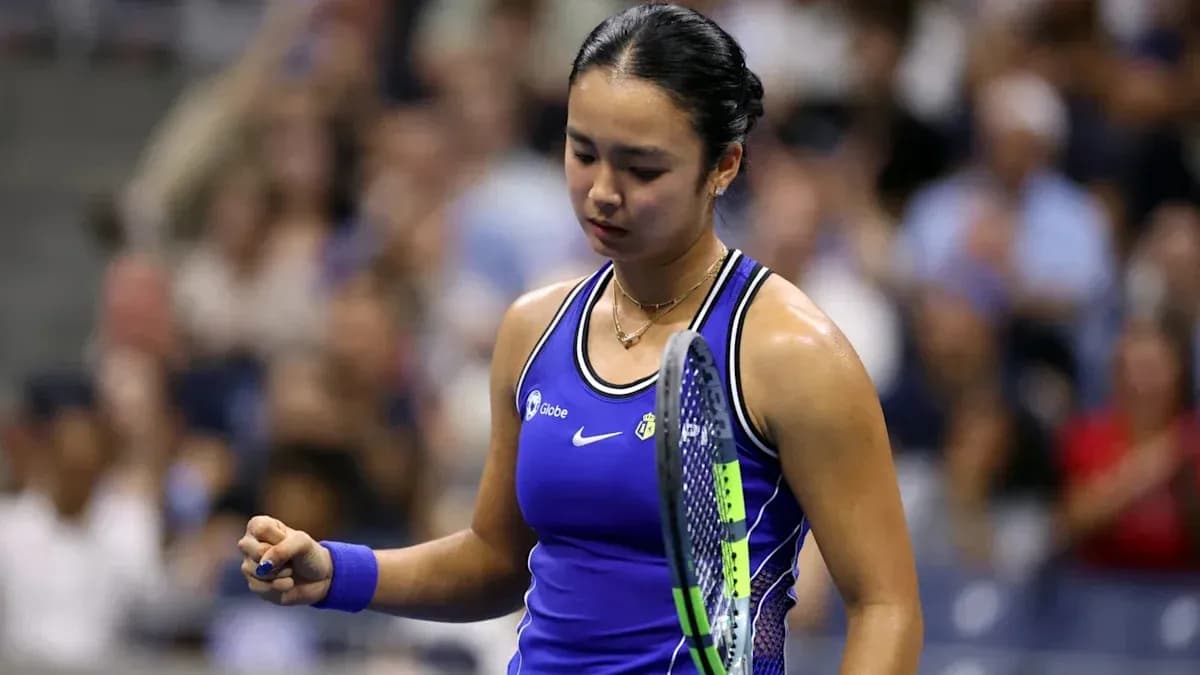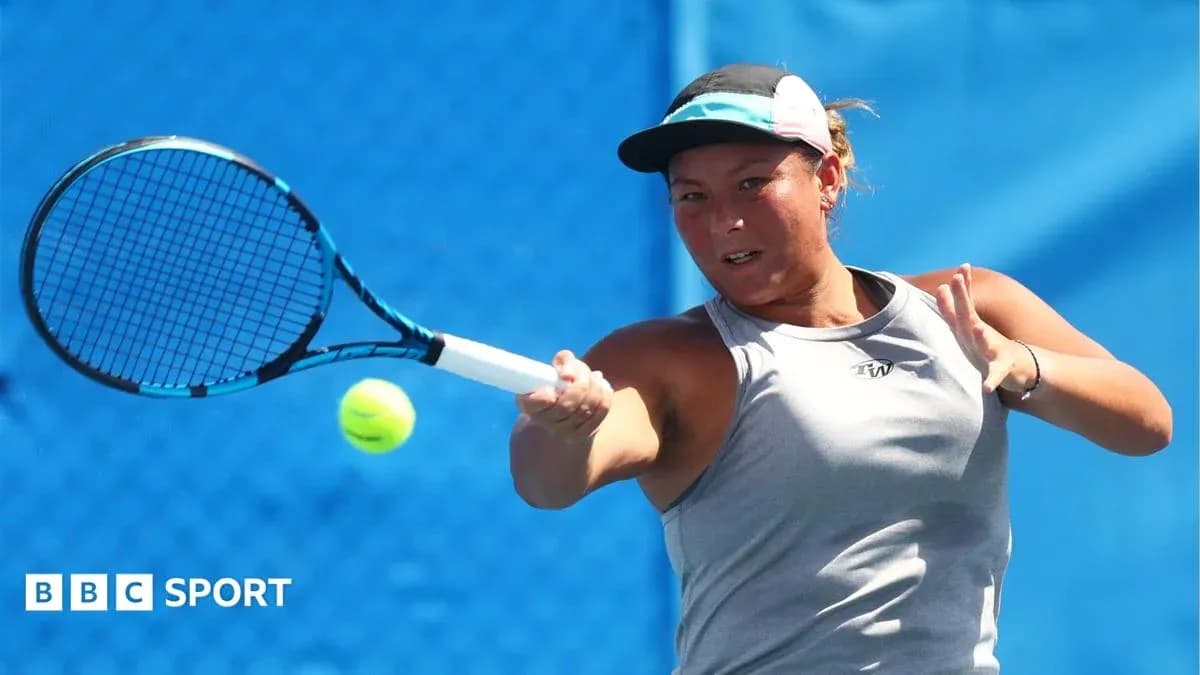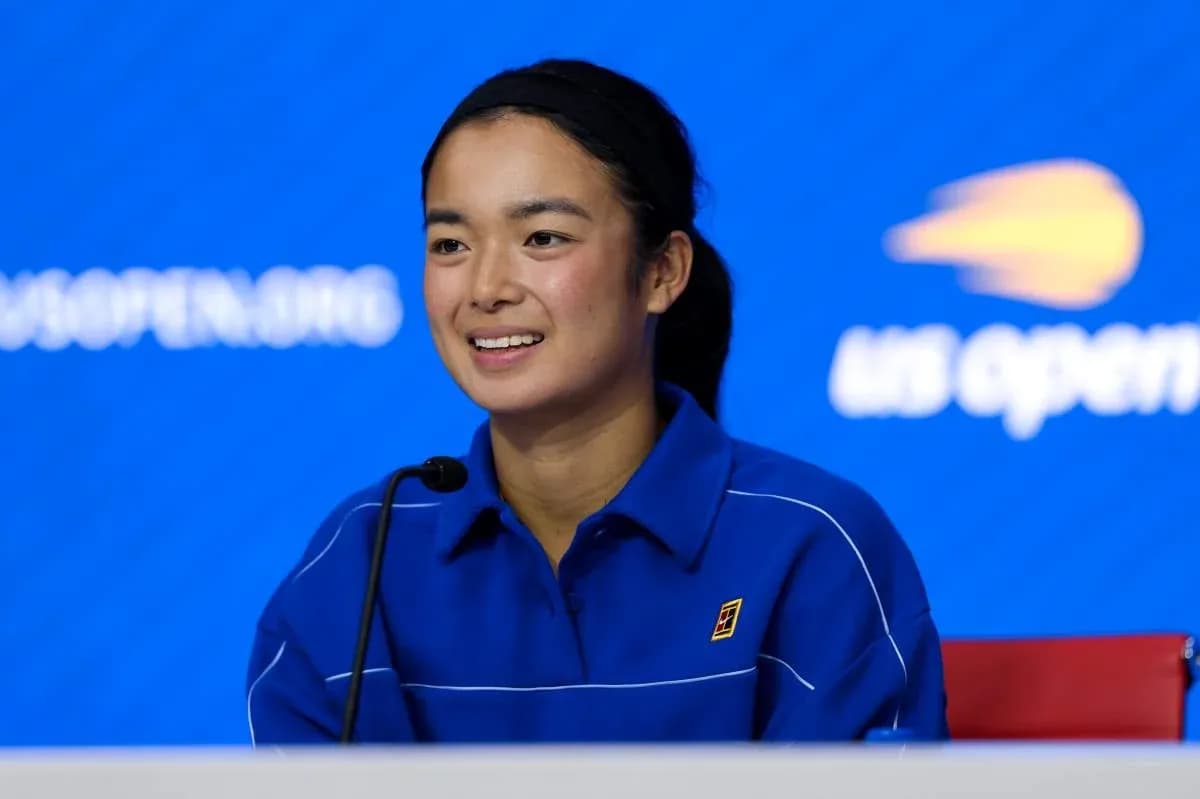
Alex Eala knows the joke. She just doesn’t share the punchline.
On US Open media day, the 19-year-old Filipino star sat in front of the microphones and was asked about the viral nickname for her second serve — “Fookelya” — a word pulled from Filipino gay slang, laced with a vulgar reference to female genitalia, and now splashed across social media and fan shirts.
She laughed at first. Then she asked what it meant.
“Hindi siya masyadong positibong salita ’yon,” she said. Not exactly a term of endearment.
The room chuckled. The story, though, cuts a little deeper for her.
A Joke That Hits a Nerve
The nickname grew out of a shared understanding among Filipino fans: Eala’s second serve isn’t the heaviest on the WTA Tour. It floats. It dips. It arrives slower than the cannons launched by the game’s biggest servers. Yet it keeps fooling opponents who expect pace and instead receive a riddle.
A Filipino reporter framed it as a reclamation project. What others might see as a weakness, fans had turned into a secret weapon. The meme jumped from local timelines to international tennis chatter, picking up enough momentum to land on shirts and into conversations far beyond Manila.
Eala listened as the explanation unfolded. She understood the affection. She still winced at the word.
“Hindi ko alam kung ano ’yung pakiramdam ko sa salitang ’yon kasi it’s not a very positive term,” she said. She repeated the thought in English: she doesn’t quite know how to feel when she hears it, because of how much she has struggled with the serve, how many hours she has poured into repairing it.
“And I love my serve,” she added, quietly staking out her line.
This isn’t a player shrugging off a meme. It’s a player defending a part of her game she has chosen to nurture rather than mock.
From Local Meme to Global Talking Point
“Fookelya” didn’t stay in its original corner of the internet for long.
Broadcaster Blair Henley picked it up on the Love All Podcast, describing Eala’s delivery as unconventional but effective and noting that it doesn’t need to resemble Serena Williams’ thunderbolt to hurt opponents. The term, once an inside joke in Filipino tennis circles, suddenly had a global audience.
The attention gave Eala a chance to respond on her own terms. She did not scold fans. She did not accuse them of disrespect.
“I think I would appreciate a more positive term,” she said. “But I don’t think they mean it in a bad way.”
Her coach, Joan Bosch of the Rafa Nadal Academy, has tried to reshape how she sees that vulnerable part of her game. He tells her to treat the serve like a little brother — raw, needy, and in constant need of guidance and protection. In that metaphor, she is the “ate,” the older sister.
“Like my coach says, it’s like my little brother,” Eala said. “Parang ate ako sa serve ko.”
That framing matters. To Bosch, the serve is not a flaw to be mocked. It is family. You don’t turn your little brother into a punchline. You protect him while he grows.
Why a Slower Serve Bothers the Best
The debate around Eala’s delivery isn’t just about language. It’s about results.
Her second serve, the very one that spawned the meme, has already unsettled some of the best returners in the world.
Before facing her in the Washington final, Jessica Pegula reportedly asked a practice partner to slow down his serve to mimic Eala’s tempo. Pegula understood the trap: players who feast on pace can struggle when they suddenly have to generate their own.
At Wimbledon, Iga Swiatek ran into the same puzzle. After losing to Eala, Swiatek noted that the Filipino star began serving “slower and slower,” dragging her into a rhythm she rarely sees on tour. The usual script — absorb pace, redirect it with interest — no longer applied.
Former world No. 1 Andy Roddick later broke it down. Eala, he argued, can “get away” with a slower serve because it doesn’t have to finish the point. It only has to start it on her terms. If the return comes back short, tentative, or off the strings, her groundstrokes take over. She steps in, takes the ball early, and redirects with pace. The serve becomes a question, the forehand and backhand supply the answer.
Not everyone is content with that equation.
Renowned coach Rick Macci, who helped shape Serena and Venus Williams, praised Eala’s movement and early ball-striking but delivered a blunt verdict on the serve before her US Open opener. Biomechanically, he wrote, it “has to be rewired” for her to reach the next tier of her potential.
He also forecast a different kind of pressure: nerves. With her ranking rising and her profile exploding, Macci predicted an “Eala Earthquake” of expectation rumbling around her first-round match.
Roddick sees why the serve works now. Macci sees what it could become. Both can be right.
A Serve Under the Brightest Lights
Eala arrives in New York carrying a career-high ranking of No. 18 and the No. 17 seed in women’s singles. She opens against American qualifier Mary Stoiana, whom she beat 7-5, 6-2 at the W100 event in Landisville, Pennsylvania, earlier this year.
Every delivery she hits at the US Open will be scrutinized — its speed, its placement, its quirky cadence. Cameras will zoom in. Analysts will slow it down. Fans will clip and share it in real time.
The nickname will almost certainly trail her onto the grounds as well. It has become part of the folklore around her rise, whether she likes the word or not.
But Eala has drawn a clear boundary. She isn’t asking fans to stop loving the serve or to stop celebrating the way it confounds opponents. She is asking for something subtler, and more personal: that the little brother of her game be given a name that matches the affection she feels for it.
The serve is still growing. So is she. The question now is whether New York will remember the joke — or the shot that keeps surviving it.