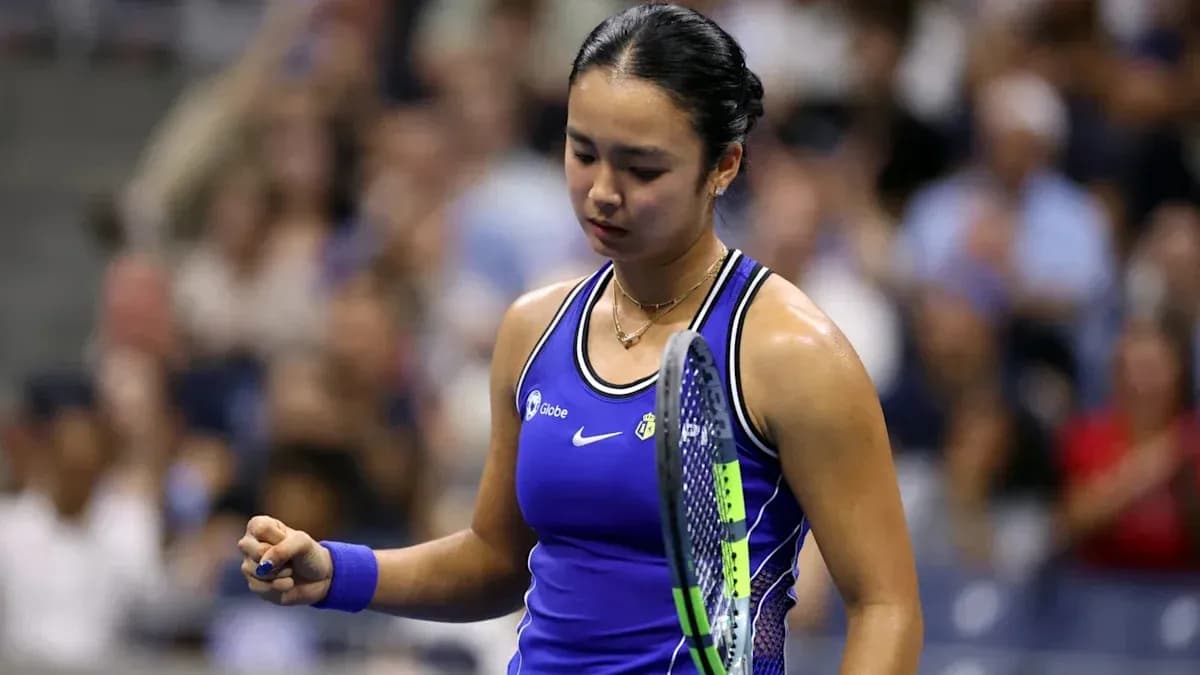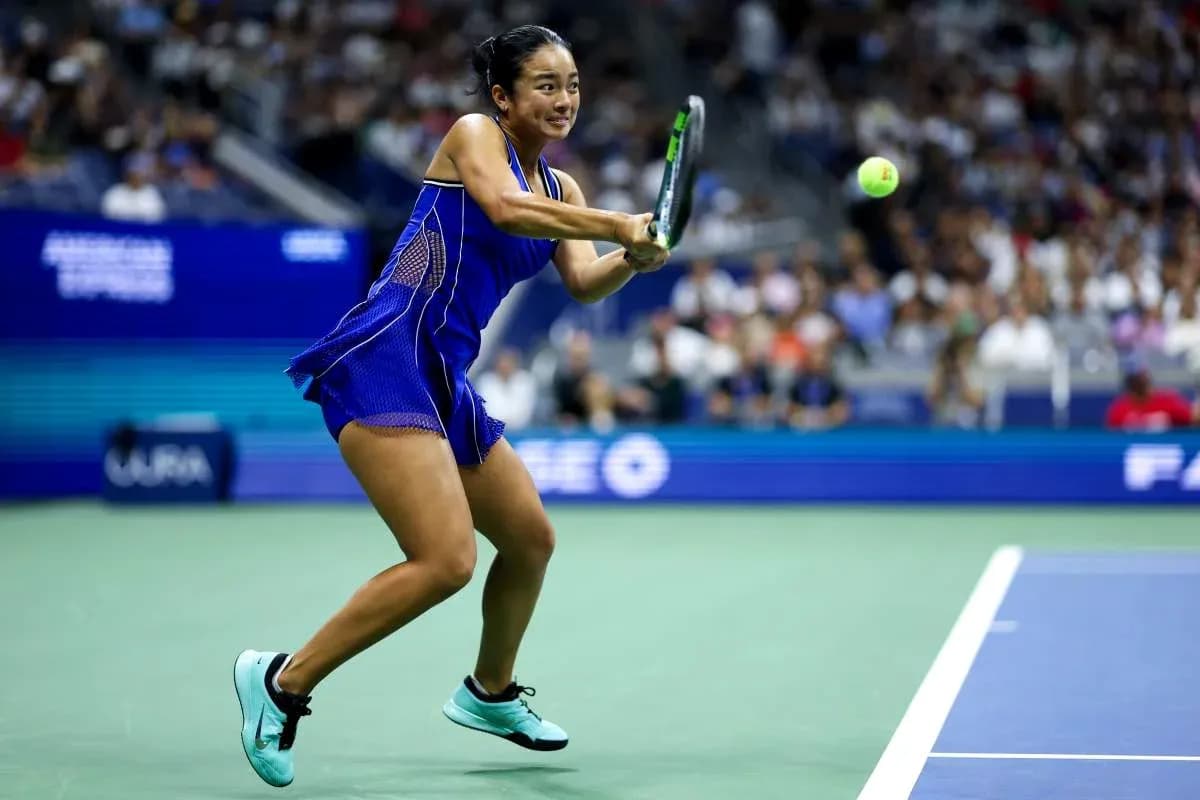
On Tuesday night in Queens, Alex Eala finally gets the stage that has been chasing her for a year.
Not a side court. Not a tucked-away outer ring. Louis Armstrong Stadium. The second-biggest arena at the US Open, 14,000 seats, a roof that traps every shout and drumbeat, and a night session built for stars.
The 17th-seeded Filipina will make her 2026 US Open singles debut there against American qualifier Mary Stoiana, the second match of the evening slate at the USTA Billie Jean King National Tennis Center. Adolfo Daniel Vallejo and Gael Monfils open the night at 7 p.m. ET; once their best-of-five contest ends, Eala and Stoiana walk on.
The projected start time hovers around 8:40 p.m. ET, though New York tennis rarely obeys estimates. For fans in the Philippines, that means an early alarm: roughly 8:40 a.m. on Wednesday, Sept. 2. The official order of play only guarantees one thing—Eala is second on in the Armstrong night session. The rest is up to the length of Vallejo–Monfils and the rhythm of the evening.
For a player whose practice sessions now draw crowds like a late-round match, the assignment feels less like a nod and more like crowd management.
A Seeded Star, a Hungry Qualifier
Eala arrives in New York at a career-high world No. 18, carrying the momentum of a breakthrough summer. Her first WTA Tour singles title in Washington did more than pad her résumé; it announced her as a serious threat on hard courts.
That week in D.C. was no soft run. She took out Zheng Qinwen, Leylah Fernandez, Elina Svitolina, Naomi Osaka and Jessica Pegula in succession, a gauntlet of Slam champions, finalists and top-tier contenders. Those names now sit behind her, part of the growing mythology around a 19-year-old whose ceiling keeps rising.
Across the net Tuesday stands Mary Stoiana, ranked No. 122, who has already survived New York’s first test: qualifying. The former collegiate No. 1 played her way into the main draw with three wins, sealing her spot by outlasting Yuan Yue 6-3, 4-6, 6-4 in the final round.
They know each other’s games. Their lone previous meeting came at the 2024 ITF Landisville tournament, where Eala won 7-5, 6-2. That result now sits in the rearview mirror; both players have climbed since then, both hardened by bigger stages and higher stakes.
This time, the rematch comes with 14,000 witnesses and a global audience.
Fan Week Turns Into an Alex Eala Festival
Eala’s placement on Armstrong answers a very public plea.
“The USTA better make sure they put her on big courts,” ESPN analyst Patrick McEnroe warned during the network’s US Open preview call. He cautioned against hiding her on a side court and predicted New York would be “wild for her.”
Mary Joe Fernandez backed that up with evidence from ground level. The former world No. 4 described Eala’s following as “off the charts,” pointing to fans who now show up early not just for her matches but to watch her practice.
That forecast played out across Fan Week.
Spectators jammed into viewing areas around her training sessions, phones raised, flags waving. Then came the ticketed Stars of the Open exhibition inside Arthur Ashe Stadium, where Eala faced close friend Iva Jovic in front of a packed crowd splashed with Philippine flags.
Jovic won the single-set exhibition 6-3, but the score faded the moment Eala and Jovic pulled their fathers onto the court for a playful doubles segment. The rally of cheers that followed said more about Eala’s connection with the crowd than any stat sheet could.
Her bond with New York was forged last year. Over 8,000 spectators flooded Grandstand to watch her claw back from 5-1 down in the third set and beat Clara Tauson, becoming the first Filipino in the Open Era to win a Grand Slam singles main-draw match. That night felt historic. It also felt like a beginning.
Twelve months later, the audience is bigger. So is the expectation.
From Prospect to Phenomenon
The media treatment around Eala’s arrival this year leaves no doubt: she has crossed over.
Forbes put her on its Daily Cover, dissecting not only her rise on court but also her commercial pull. Sports Illustrated splashed her across its digital cover under the headline “Pinoy Power,” calling her “tennis’s next great superstar.”
The New Yorker took a different angle, tracing how she has become a symbol of the Philippines itself, weaving her ascent into themes of culture, identity and national pride.
ESPN, which has leaned into her story as a central thread of its US Open coverage, went deep in “Inside the Raucous and Rapid Rise of Alex Eala.” The piece framed her as part Manny Pacquiao, part Maria Sharapova—an athlete carrying both the weight of a nation and the game to justify the hype, a player capable of a deep run in New York.
Few players without a single Grand Slam quarterfinal to their name receive that kind of simultaneous spotlight from Forbes, Sports Illustrated, The New Yorker and ESPN. That list is short. Eala is on it.
Add in the packed practices, Fan Week cameos and a vast digital following, and the picture sharpens: she is no longer just an intriguing prospect. She is one of tennis’s most marketable young stars.
Her days leading into the tournament have reflected that status. She took part in US Open Media Day, filmed tournament promos, and moved through the grounds in a swirl of interviews and fan encounters. One of the most shared moments came when she met New York Knicks guard Jordan Clarkson, a fellow Filipino sporting icon, the two of them trading stories and smiles for the cameras.
Queens as a Second Home
For Eala, Queens is not just a venue; it is a ready-made home crowd.
An Asian American Federation demographic study estimated that about 94,000 Filipinos lived in New York City as of 2023. Nearly 49,500 of them were in Queens—more than any other borough.
Just a few miles west of the National Tennis Center lies Woodside’s Little Manila, a dense strip of Filipino life along Roosevelt Avenue near 69th and 70th streets. Restaurants, bakeries, groceries, remittance centers, small businesses—an entire ecosystem of homesickness and heritage.
A New York City neighborhood study suggests Filipinos make up roughly 16% of Woodside’s population. In 2022, the city made it official by co-naming the intersection of 70th Street and Roosevelt Avenue “Little Manila Avenue.”
Those numbers do not count the fans crossing state lines from New Jersey, Long Island, Connecticut and Pennsylvania, or the supporters flying in from the Philippines. Eala’s crowd is local and regional and global, all at once. Louis Armstrong will feel like neutral ground on paper. It will not sound like it.
Gauff, Zverev on Ashe; Eala Owns Armstrong
On Tuesday, Arthur Ashe Stadium keeps its marquee shine.
World No. 4 Coco Gauff opens the night session there at 7 p.m. against Turkey’s Zeynep Sonmez, a prime-time showcase for the American star. Top seed Alexander Zverev follows against Italian veteran Lorenzo Sonego.
The Ashe day card starts with Madison Keys facing Alina Korneeva, then Taylor Fritz taking on 18-year-old American wild card Darwin Blanch.
Across the grounds, Louis Armstrong begins its day at 11 a.m. with fifth seed Flavio Cobolli against Francisco Comesana, followed by fifth-seeded Mirra Andreeva versus Indonesian qualifier Janice Tjen. Once the sun sets, Vallejo and Monfils step in, then, when they are done, the noise will build again for Stoiana and No. 17 seed Alex Eala.
ESPN’s coverage kicks off at 11:30 a.m. ET and runs through 6 p.m., with “US Open Match Point” from 6 to 7 p.m. Primetime coverage starts at 7 p.m. on ESPN and ESPN2, with every court streaming on the ESPN App for ESPN Unlimited subscribers.
Eala will not walk into Arthur Ashe on Tuesday. That honor belongs to Gauff and Zverev.
But Armstrong, with its 14,000 seats, its lid to trap the sound and one of the rowdiest, most partisan crowds in the tournament, may be where the real Queens party breaks loose. The question now is simple: under those lights, with that noise and that flag-filled sea behind her, how far can Alex Eala push this US Open?