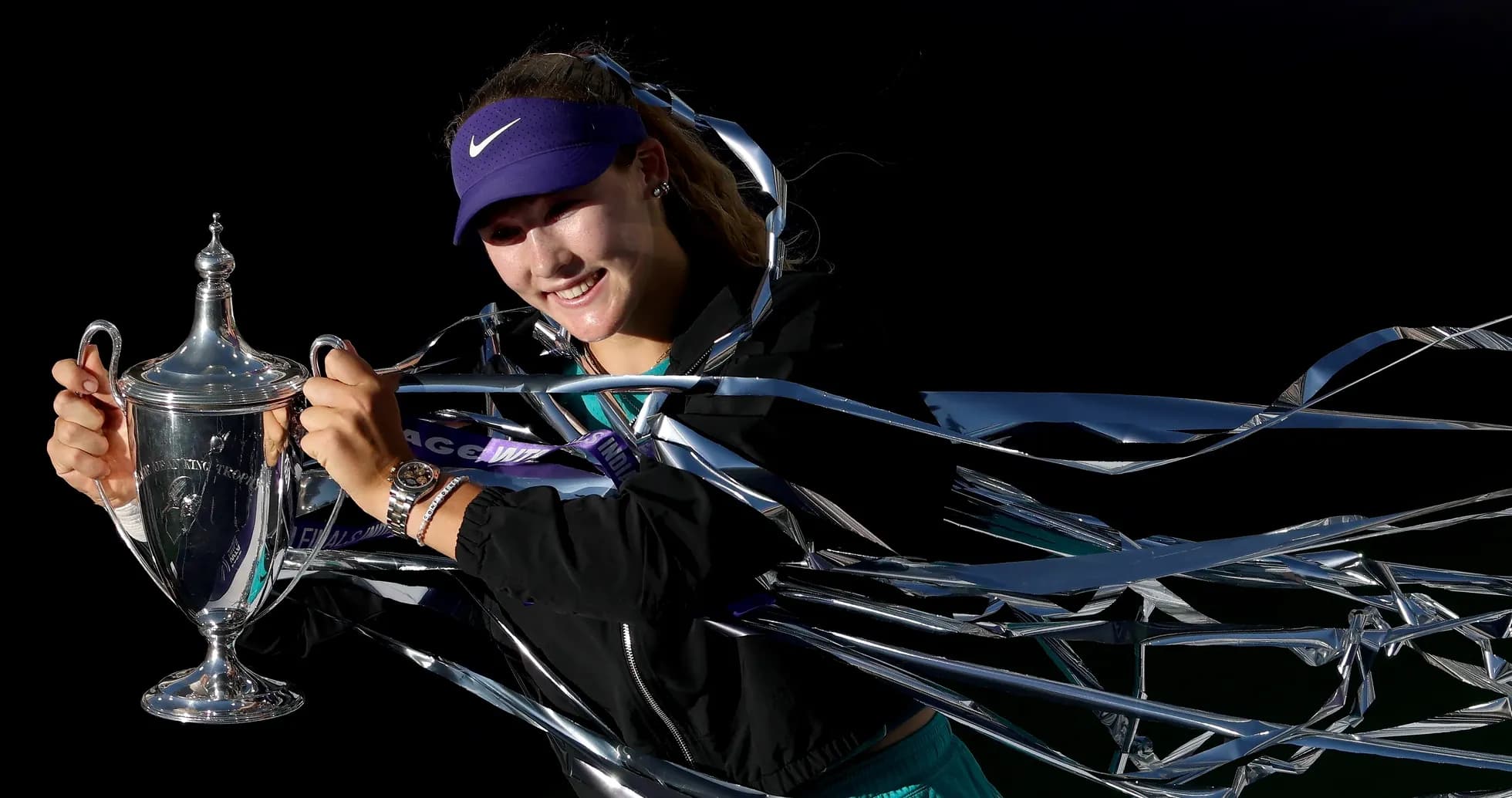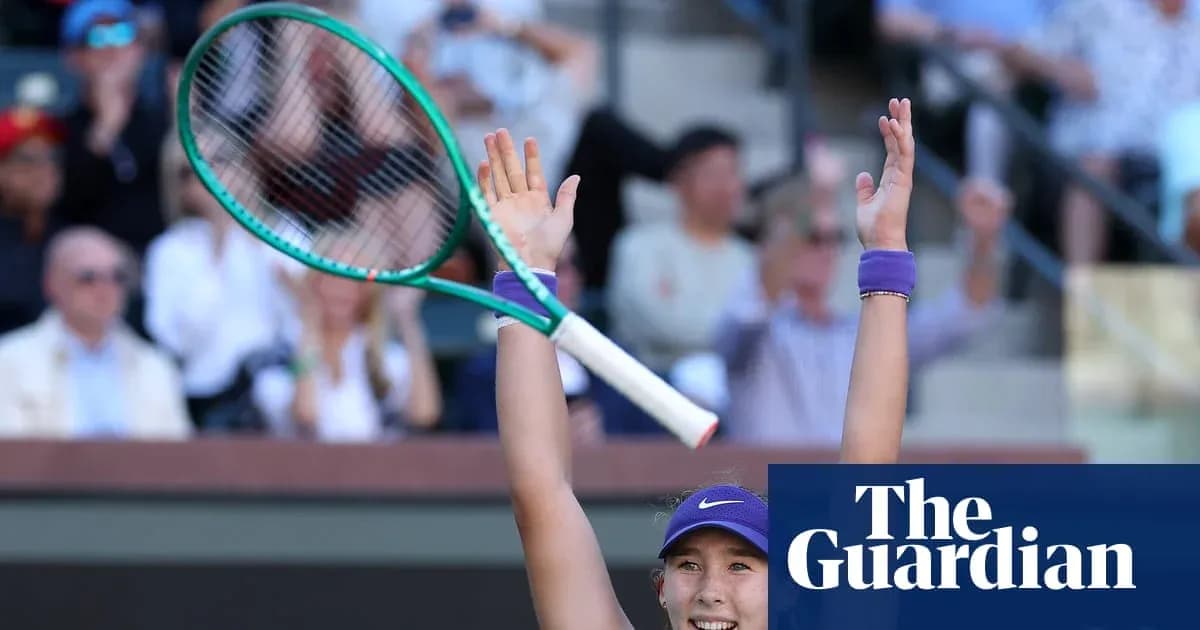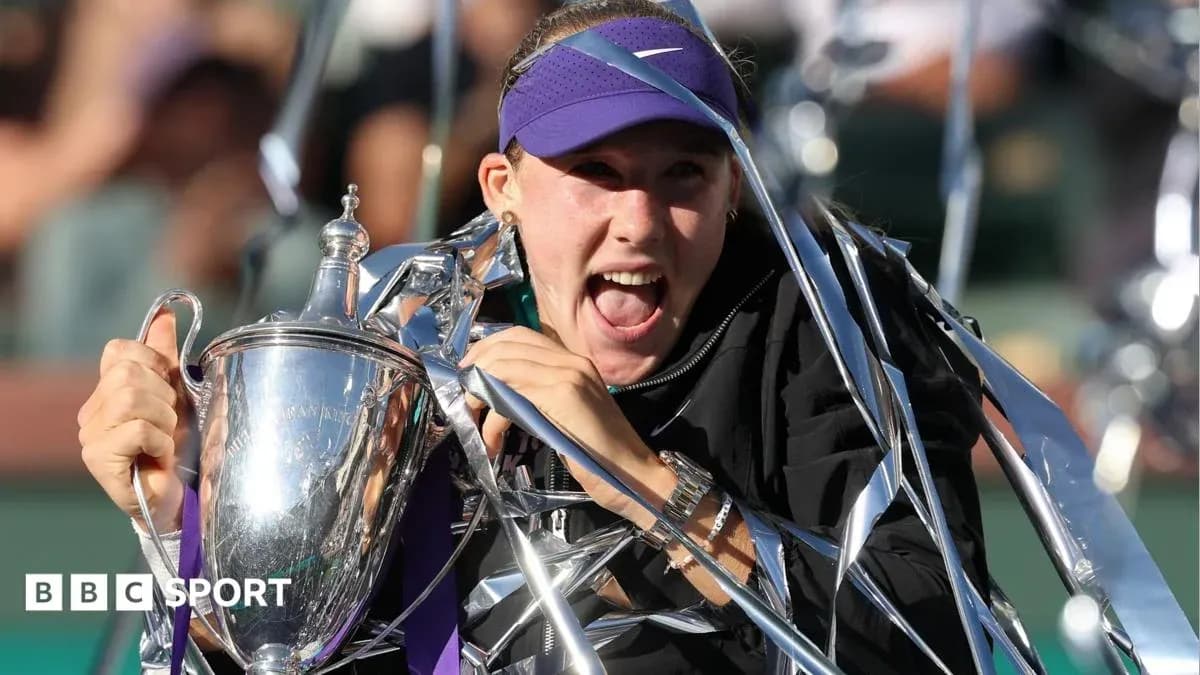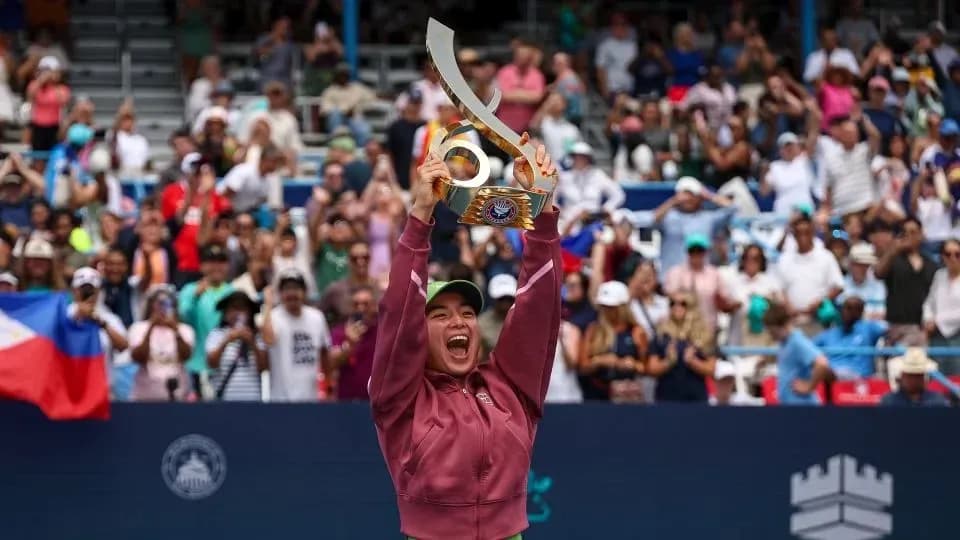
Royal blue, red, white and yellow wrapped around the court like a flag come to life. Every changeover, every point, Alexandra Eala heard it. An island nation scattered across the world, somehow crammed into a tennis stadium.
For a sport constantly hunting for its next generational star, the 21-year-old left-hander from the Philippines has become something more than a promising name on a draw sheet. She has become a rallying point.
A season that changed everything
This year, Eala didn’t just break through. She tore the door off its hinges.
She started the season ranked No. 53 in the world. She ends it at No. 15, a career high, after reaching the final of the Prudential Hong Kong Tennis Open in her last event of the year. That ranking makes her the highest-placed Filipino player and the highest-ranked Southeast Asian in WTA history.
The climb was built on scalps that reverberated across the tour. On the grass of Wimbledon, she stunned defending champion Iga Świątek in the third round, ripping up the script at the sport’s most traditional stage. In August in Washington, she beat Jessica Pegula and became the first player from the Philippines to win a WTA Tour singles title.
Each win raised the volume. Each win raised the stakes.
"I think that the expectation rises, but so does the demand in terms of what the sport demands of you and what the level demands of you," she told CNN Sports. The words were measured. The reality is not. With every match, staying up there gets harder.
Eala knows that. She is still wrestling with the biggest question any rising player faces: can she live not just among the sport’s elite, but among its greats? Her answer, for now, is work.
"I just look forward to having another season full of hardship, full of joy, and hopefully full of success," she said, reflective but assured.
Heartbreak in Hong Kong, but no dimming of the light
Hong Kong was supposed to be the perfect closing chapter. It almost was.
At Victoria Park, in a city that is home to more than 200,000 Filipinos, the atmosphere felt less like a neutral tour stop and more like a homecoming. Every Eala appearance this year has carried that energy. Hong Kong amplified it.
Her run to the final set up a showdown with Claire Liu, a 26-year-old American chasing her first WTA title. Early on, the contest looked like a street fight. Rallies stretched, momentum swung, the noise from the stands surged and dipped with every point.
Then Liu found another gear.
From that tight opening exchange, she ripped off nine straight games, taking full control of the match and closing out a 6-3, 6-0 victory in an hour and 33 minutes. Eala’s bid for a second WTA crown fell away in a blur of winners from the other side of the net.
The defeat hurt. You could see it.
"This season has changed my life," Eala told the crowd, tears in her eyes after the final. "It has changed my life for the better. I am incredibly proud of the work we have put in this year. We are the only ones who truly knew what it took to arrive at this point in our journey."
Liu, sitting in the winner’s chair, underlined just how heavy that journey already feels for opponents.
"I can't speak for everyone, but playing against Alex is one of the hardest things because of the crowd," she said. "No matter where she goes, she always has so many supporters, which I think is really great in general for tennis."
The title went to Liu. The story of the week still belonged to Eala and the sea of flags and faces behind her.
An archipelago in the stands
Wherever she plays now, Filipino fans chase tickets the way others chase rankings points. They bring drums, banners, and a piece of home to the global circuit.
In Hong Kong, that devotion was unmistakable. Domestic workers on their lone day off, young professionals, families, schoolchildren – they all packed into Causeway Bay, staying late on regular school nights just to see another forehand, another fist pump.
"We idolize her for her resilience, same as an OFWs who never give up," said Lids Romero, a domestic worker who chose to spend her only day off at the official fan zone to watch the final.
Moy Volante flew in from the Philippines with his family just to be there. He spoke of Eala’s determination to fight through tough matches, something he hopes his daughter will mirror. "You can really feel the unity and support of Filipinos," he said of the atmosphere that wrapped around the tournament.
The evidence was everywhere. Young girls in the stands, homemade signs in hand – "Let's Go! Alex" – waving colorful, hand-drawn banners as if they were sending a message not just to the court, but back home.
"I love their passion," Eala said of her fans. "They really support me without fail in so many tournaments."
For parents like Marlon Avines, who watched from Victoria Park with his three daughters, the meaning runs deeper than a ranking or a result. "I want them to get inspiration from Alex," he told CNN Sports. "The grit, persistence and giving pride to the country."
Eala has tried to give something back in return. She has urged girls and young women who see themselves in her to chase what matters to them, not what is expected.
"I think it's better to go through the hardships doing what you love, and you can always come back to that when things get difficult," she said.
From “Lolo Bob” to the world stage
The grit did not appear overnight. It started with a preschooler and a grandfather.
Eala’s first coach was her late grandfather, "Lolo Bob," who turned tennis from a family pastime into a serious pursuit. The court became their shared space, the foundation for an obsession she once described on Maria Sharapova's podcast as like having a "crush on perfection."
That obsession quickly found a stage.
In 2018, as a 12-year-old wild card, she won Les Petits As, the prestigious under-14 event that has long served as a launchpad for future stars. Suddenly, she was no longer just a promising junior from Manila. She was a name to track.
A few months later, shortly after turning 13, she left home for Mallorca to train at the Rafa Nadal Academy in Spain on a scholarship. It was a bold move for a teenager, and a necessary one for a player chasing the top of the sport.
The results followed. She flourished on the junior circuit, capturing her first junior grand slam title in girls’ doubles at the 2020 Australian Open. Two years later, she made history again, becoming the first Filipina to win a junior grand slam singles trophy at the US Open in 2022.
By then, she had already turned professional, making the step officially in March 2020.
The trajectory looks smooth on paper. It rarely feels that way on the inside.
Raising the bar, again and again
As her ranking climbs and her profile soars, the constants in Eala’s life are not the cameras or the fashion invitations – though those have arrived as well. In September, she sat front row at New York Fashion Week for Michael Kors and Tory Burch, alongside Anna Wintour, a sign of how her influence now stretches beyond the baseline.
What has not changed is her standard for herself.
"I've learned to push my limits," she told CNN Sports. "I've learned a lot about what my limits are … and the bar can always be raised."
That line could serve as a mission statement for what comes next. Because this season did more than shift a ranking. It reset expectations – hers, her country’s, and a sport’s.
The crowds in royal blue, red, white and yellow will follow her into the new year. The question now is simple, and ruthless, the way tennis always is: how high can she push that bar?