Alfie Hewett arrived in New York with scars. French Open? Lost to Tokito Oda. Wimbledon? Thrashed, two games won, 6-1 6-1 on the lawns of SW19. The Japanese teenager had taken all three majors of the year and was bearing down on a calendar Grand Slam.
On Sunday, Hewett stopped him cold.
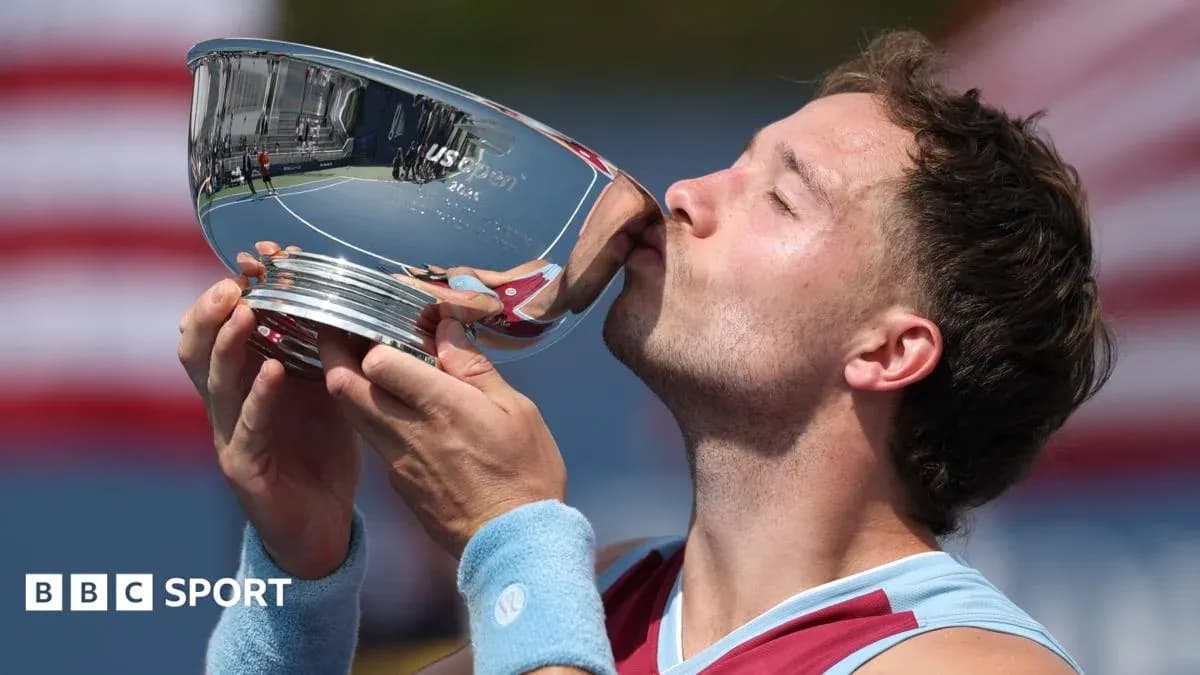
The Briton produced one of the most defiant performances of his career to crush the top seed 6-0 7-6 (7-5) and capture a fifth US Open men’s wheelchair singles title, adding it to the doubles crown he secured with Gordon Reid on Friday. Oda’s clean sweep is gone; Hewett’s reputation as a big-stage fighter is very much back.
This was not just another trophy. It was a response.
After that bruising Wimbledon defeat, Hewett admitted to BBC Sport that he had been forced into uncomfortable self-examination, “looking in the mirror” and realising he had drifted away from the fearless competitor who had already amassed 10 Grand Slam singles titles. He spoke of wanting to “be a little bit more like me” again – the version of himself that relished pressure instead of shrinking from it.
In New York, that version showed up from the first ball.
He had to survive an early test. Oda carved out a break point in the opening game, a chance to impose the same authority that had carried him to six consecutive Grand Slam singles titles. Hewett snuffed it out, and something in the match flipped.
From there, he played the first set like a man, in his own words, “possessed”. He bullied returns, stepped into backhands, and dictated rallies with the aggression that had been missing on grass. Oda, usually so composed and precise, found no rhythm. Hewett rattled through the set 6-0, sealing it with a blistering backhand return winner that summed up the tone: front-foot, unapologetic, ruthless.
Second Set
The second set told a different story. Oda, too good and too proud to fold, finally found his range. He broke Hewett twice, surged into a double-break lead and dragged the contest into the physical, tactical battle that has defined their rivalry all year. For a while, it looked as though the match would stretch into a decider and Oda’s Grand Slam chase would be back on track.
Hewett refused to let it happen.
He clawed back one break, then another. He stared down three set points, each one a lifeline for Oda’s historic bid, and turned them all away. The rallies lengthened, the tension thickened, and the Louis Armstrong Stadium crowd sensed the shift. The player who had been “quiet” and “timid” at Wimbledon, as he put it, was nowhere to be seen.
The set bled into a tie-break. Hewett tightened, Oda blinked. At 7-5, with the match on his racket, the Briton completed a comeback within a set that felt as significant as the straight-sets scoreline suggested. Title number 11 in singles, and perhaps the most emotionally charged of the lot.
Oda, who had swept the Australian Open, Roland Garros and Wimbledon and stood on the brink of a rare calendar-year Grand Slam, was blunt in his on-court assessment. This was “the last part” of that dream, he said, and losing it was “really tough”, but he accepted that “Alfie deserved it today.”
He did, not just for the quality of tennis but for the way he rewrote the narrative of their season. Earlier in the year, Oda had seemed to have his number, particularly on the biggest stages. In New York, Hewett broke that spell with a performance laced with intent and edge, from the first saved break point to the last ball struck in the tie-break.
He leaves Flushing Meadows with both singles and doubles titles, his aura as a serial champion restored, and a rivalry with Oda that feels sharper and more compelling than ever.
The Japanese prodigy’s quest for a calendar sweep is over. Hewett’s statement that he is still very much the man to beat at the majors has only just begun.