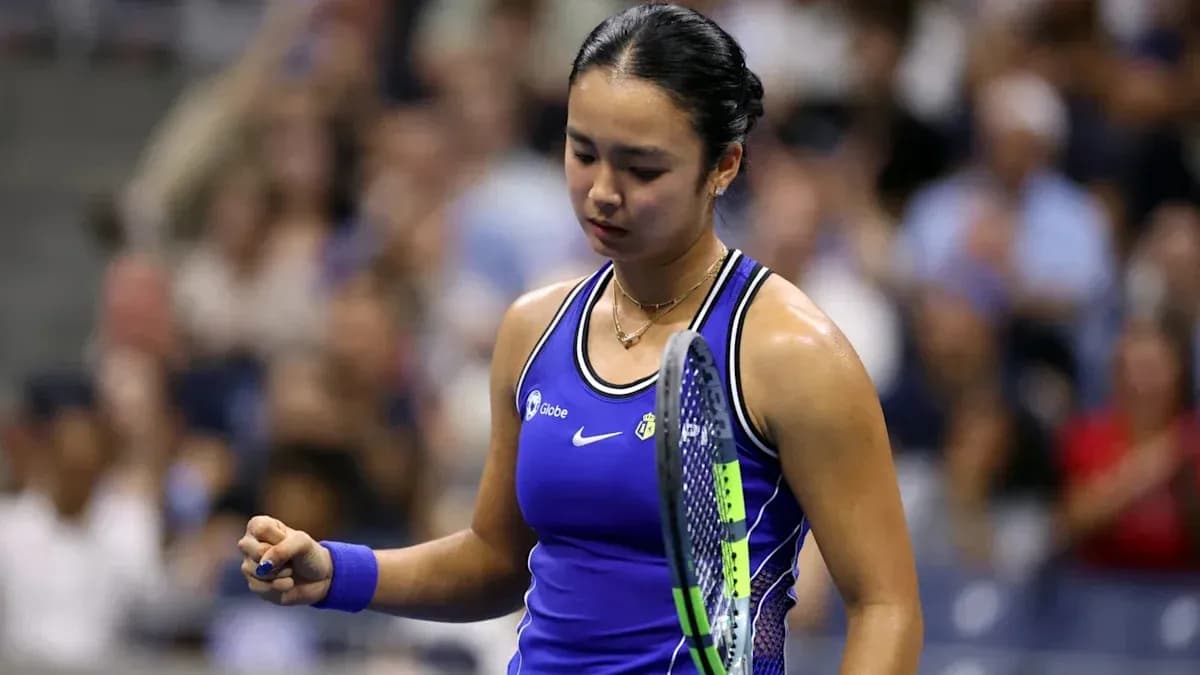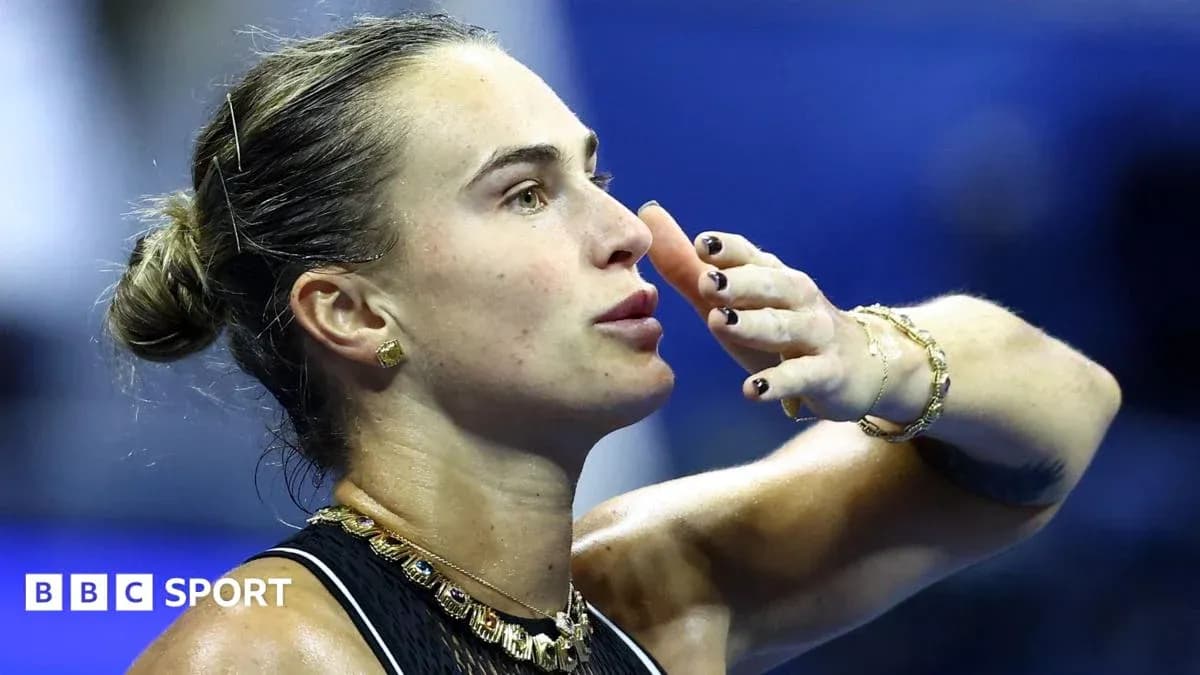
Aryna Sabalenka needed just 53 minutes to remind Flushing Meadows why it has become her personal playground. She walked on to Arthur Ashe Stadium as the two-time defending US Open champion. She walked off having dropped only two games – and with a glare that said the job is nowhere near done.
The world number one crushed qualifier Polina Iatcenko 6-1 6-1 in a second-round mismatch that never threatened to become a contest. The numbers were brutal: 24 winners to 3, pace and depth that repeatedly pinned the 22-year-old Russian to the back fence, and a scoreboard that raced along faster than the New York humidity could settle.
It was one of the quickest Grand Slam wins of Sabalenka’s career. It did not, however, look like one of her happiest.
A rout on court, a sting off it
On court, Sabalenka looked like the force that tore through the first months of 2026. She bullied Iatcenko from the opening game, breaking immediately, dictating with heavy first strikes and barely offering a glimpse of a foothold.
Iatcenko, playing her first US Open main draw and suddenly dropped into the biggest arena in tennis, looked frozen early. The nerves showed in tight swings and short rallies. At 5-0 down, she finally held serve, raising a relieved smile as she got on the board. It was a small victory on a harsh afternoon.
Sabalenka snuffed out any hint of momentum in under 90 seconds, holding to love to seal the first set 6-1. Twenty-four minutes gone. The contest already felt decided.
Iatcenko headed off for a bathroom break, officially to change her kit, unofficially to try to reset. Sabalenka stayed loose, practising serves, keeping the engine running. When play resumed, she immediately tore away again, surging to a double break and a 3-0 lead in the second set.
There was one blip. A sloppy service game handed Iatcenko a break back for 3-1, a reminder that Sabalenka’s season has not been all clean lines and crushing wins. The correction was swift. Two more breaks followed, and with them the match. Lesson delivered, 6-1 6-1.
For Iatcenko, ranked 160 in the world, this will still go down as a milestone: a first taste of Ashe, a chance to face the world number one, and a significant financial boost. She arrived in New York with around $300,000 in career prize money; she leaves with another $190,000, the kind of cheque that can reshape a season and a training schedule.
For Sabalenka, this was business. Efficient, ruthless, largely untested.
A strange season, a tight rankings race
What made her mood interesting was everything around the match.
This has been a strange year for Sabalenka. She started 2026 like a runaway train: Australian Open finalist, champion at Indian Wells and Miami, the coveted Sunshine Double secured. In her first 27 matches of the season, she lost only once – to Elena Rybakina in Melbourne.
Since then, the dominance has frayed. Her win-loss record after Miami slipped to 17-7 heading into New York. Just one WTA semi-final in the past five months. Before the final major of the season, she admitted she had been “dealing with several things” and playing well below her own standards.
Now, even as she chases a third straight US Open title, her number one ranking hangs by a thread.
Sabalenka knows the equation. To have any chance of staying at the top, she must lift the trophy again in New York. Even that might not be enough. If Rybakina reaches the semi-finals, the Kazakh will climb to world number one regardless of what Sabalenka does.
So every match here carries a double weight: the defence of a crown and the defence of a status she once seemed certain to hold deep into the year.
Bristling in the interview room
Perhaps that explains the edge that followed her off court.
In her press conference, Sabalenka was asked about her build-up to the tournament and what a reporter framed as “lots of parties” in the lead-in. The suggestion landed badly.
“What kind of question is that? Just because I posted some activities with brands, you think that I've been partying [and] not training?” she shot back, visibly irritated.
When the same reporter followed up by asking if she was “getting serious” now that the US Open had started, Sabalenka’s sarcasm cut through the room.
“Oh yeah, I wasn't serious before that. Next question.”
She had already said she was “happy with the level I played, happy with the focus and happy to be through this match.” The tone made it clear: she wants the conversation to be about tennis, not about her social calendar.
Her next assignment is Uzbekistan’s Kamilla Rakhimova in the third round, another match she will be heavily favoured to win. The real examination of where her level truly sits will come later in the fortnight. For now, she has what she needed: a quick win, clean ball-striking, and no physical strain.
Pegula, Gauff and a quiet women’s draw
Sabalenka is not the only player eyeing the top ranking this fortnight.
Earlier on Wednesday, third seed Jessica Pegula kept her own bid alive with a commanding 6-3 6-1 victory over fellow American Sofia Kenin. Pegula is still searching for a first Grand Slam singles title, but if she wins this one, she too could end the tournament as world number one.
So could Coco Gauff. The fourth seed, already a US Open champion in doubles and a major champion in singles at last year’s tournament, stayed on track with a 6-3 6-1 win of her own.
Karolina Muchova, runner-up at Wimbledon, moved through in straight sets. Marta Kostyuk, a two-time major semi-finalist, did the same. Teenage American Iva Jovic added another composed performance to her breakout run. Across the first two rounds, the pattern has been clear: few shocks, the big names largely untroubled, the draw settling into shape.
Sabalenka sits at the centre of that picture – chasing history, fighting off rivals, and trying to drag her season back to the heights of its explosive start.
She has already made Flushing Meadows her territory twice. The question now is whether, under heavier pressure and with the rankings race closing in, she can make it hers a third time.