Aryna Sabalenka knew the deal before she even hit a ball in New York.
Win the US Open, or watch Elena Rybakina walk past her into the number one spot. Even then, it might not have been enough. By the time the draw narrowed and the lights sharpened on Arthur Ashe, the maths was already done: Rybakina’s run to the semi-finals guaranteed she would take over at the top.
So Saturday’s final is not a battle for the ranking. That fight is finished. This one is about pride, payback and a champion refusing to slip quietly out of the spotlight.
A dethroning – and a new threat
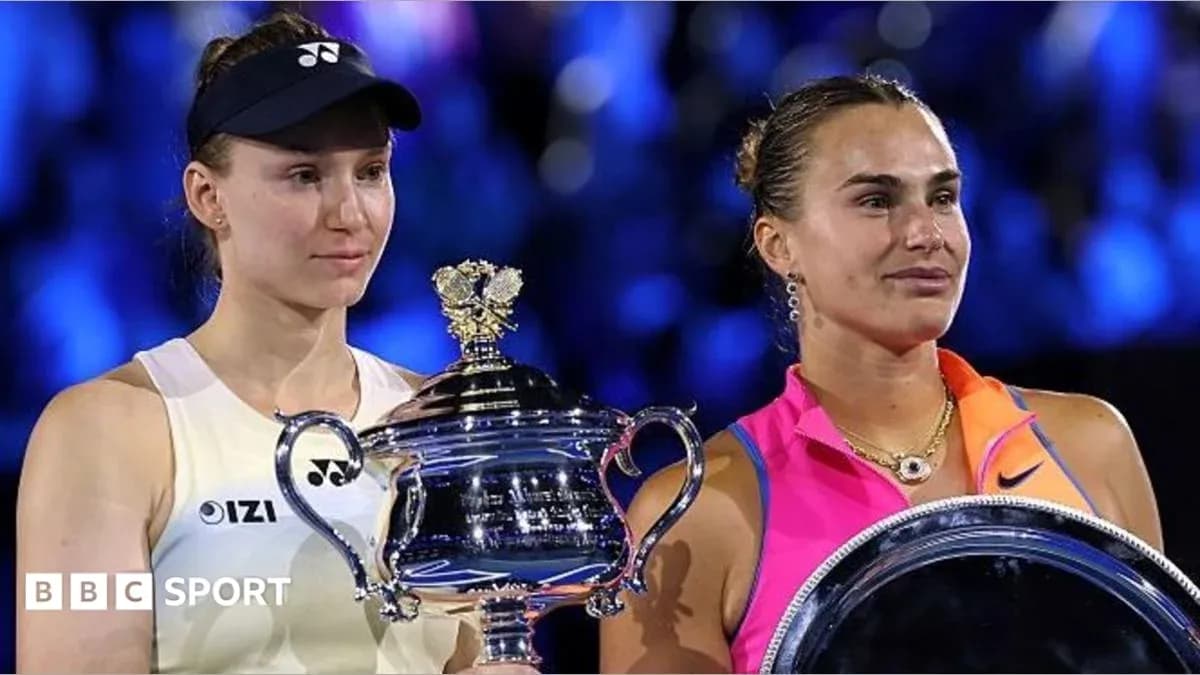
Sabalenka’s 99-week stay at world number one is over. Rybakina, representing Kazakhstan, has made sure of that with a relentless, businesslike march through the tournament. She had already bloodied Sabalenka’s season in January, beating her in the Australian Open final to claim the year’s first Grand Slam.
Now she stands in front of her again, this time with the chance to add a New York title to the ranking coup.
For Sabalenka, it cuts deep. Publicly, she laughed off the loss of the number one spot after her semi-final win over Jessica Pegula, joking that she did not care. Privately, it has been a shadow over her year.
Her coach Anton Dubrov did not bother dressing it up.
“I actually like this [losing the ranking] happened. It’s ended and it’s extra fuel,” he said, outlining the mental weight that had been dragging behind her. “There is no more extra draining or thinking about it. There’s a next chapter right now. You have to chase again. It’s extra motivation for you. Just go and get it.”
The chase starts with Rybakina.
Rivalry with an edge
This is their fourth meeting of the year. Rybakina landed the biggest blow in Melbourne. Sabalenka hit back on the hard courts of Indian Wells and Miami, restoring some balance to a rivalry that is fast becoming one of the defining duels in the women’s game.
Now they bring it to New York, with history and revenge in the air.
“It is going to be red rag to a bull for her – she is not going to be happy,” former British number one Annabel Croft said on BBC Radio 5 Live, sensing the competitive fire that tends to burn hottest when Sabalenka feels cornered. “Now she has the opportunity to end this year on a high.”
That opportunity is huge. Sabalenka is bidding to become only the third woman in the Open era to win the US Open singles title three years in a row. It is the kind of record that anchors a legacy, the sort of achievement that outlives a ranking.
Her semi-final performance suggested she is ready for that kind of stage again. Against Pegula, the American third seed, Sabalenka produced her sharpest, most complete display in months. The serve was heavy, the groundstrokes fearless, the body language loose. The tension that has stalked her season seemed to evaporate under the New York lights.
The four-time Grand Slam champion looked like herself again.
From collapse to clarity
That version of Sabalenka has not always been visible this year. She arrived in New York as a two-time defending champion, but with serious questions hanging over both her game and her mindset.
Across the past five months, she has lost a string of matches from dominant positions against players she was widely expected to beat.
The most brutal collapse came in Paris. In the French Open quarter-finals, Sabalenka led 25th seed Diana Shnaider by a set and a double break. She was cruising. Then the match flipped. Shnaider clawed her way back and Sabalenka folded, losing 3-6 7-5 6-0 in a defeat that sent shockwaves through her camp.
The warning signs had already been there. On the clay in Madrid, Sabalenka squandered six match points against Hailey Baptiste. In Rome, she let a first-set lead slip against Sorana Cirstea. Both defeats hinted at a fraying focus, a mental fragility that had rarely surfaced during her rise to the summit of the WTA Tour.
Even on the North American hard courts, surfaces that usually suit her power game, the pattern lingered. At the Cincinnati Open, she built clear advantages against 20-year-old Czech Sara Bejlek, only to unravel and lose in straight sets. Another match that should have been routine, another night spent searching for answers.
Yet inside the Sabalenka camp, there was no sense of crisis.
“We all understand that this is just part of the thing,” said her high performance coach Jason Stacy. The message was simple: give her room, not panic. “We just give her space to be herself, help her figure out what might work for her right now. Giving her that freedom, but also knowing that she has the guidance of all of us, I think that just gives her a power that few are lucky enough to have.”
That trust, that refusal to overreact, now looks well judged. The New York version of Sabalenka is not the player who froze in Paris or blinked in Madrid. She is playing with the kind of fire that first took her to number one.
A final with layers
So here it is: Rybakina, the incoming world number one, carrying the authority of a new ruler. Sabalenka, the dethroned champion, chasing both history and redemption.
The ranking story is already written. The title is not.
Rybakina has the chance to stamp her new status with a second major of the year and a statement win over the woman she has just replaced. Sabalenka has the chance to turn the pain of losing top spot into the fuel for one of the great New York three-peats.
She has been told to chase again.
On Saturday night, under the noise and glare of Arthur Ashe, we find out how hard she runs.