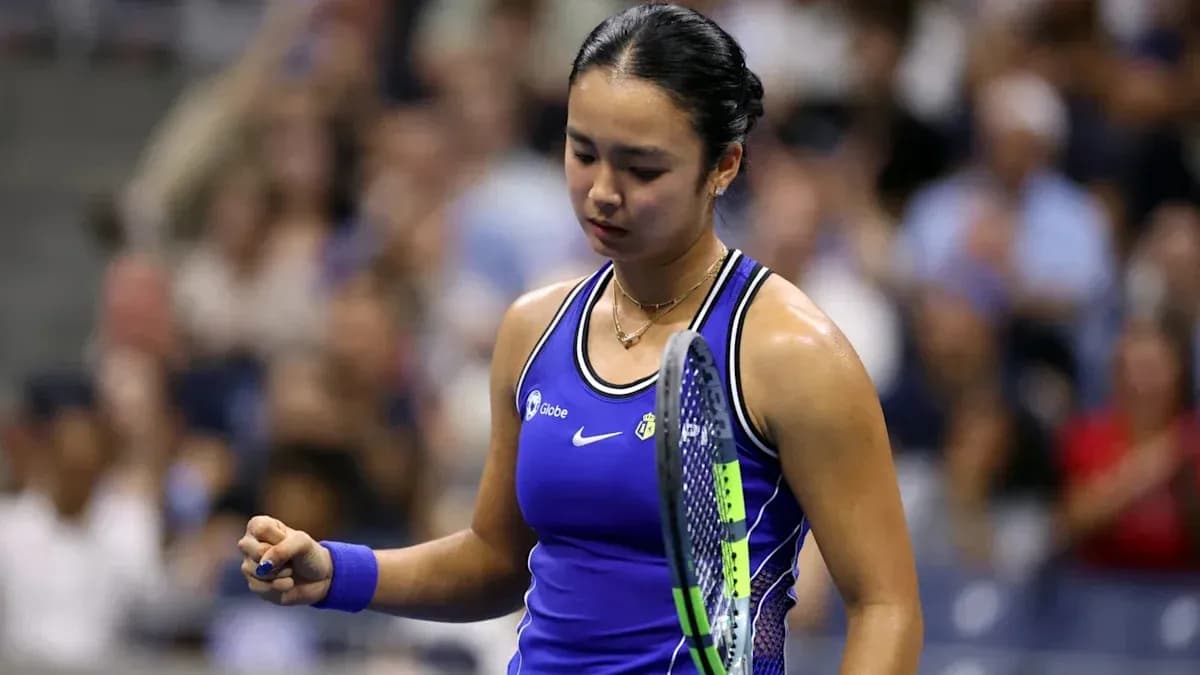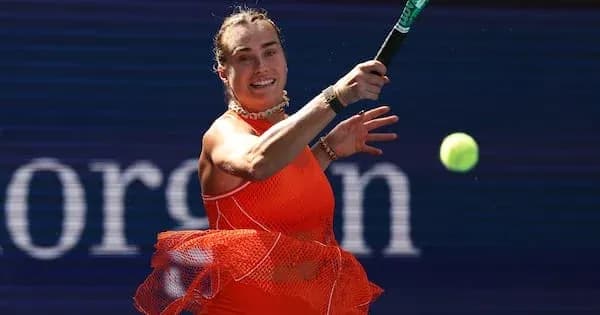
Aryna Sabalenka has bulldozed just about everything in her path at the US Open over the past two years. On Friday in Louis Armstrong Stadium, something finally made her stop.
The smell of marijuana.
The top seed and two-time defending champion was cruising through her third-round match against Kamilla Rakhimova when, early in the first set, she suddenly aborted her service motion. Twice. Ball toss up, ball back down. A puzzled look. Then a grimace.
Sabalenka walked toward the chair umpire and asked for help, clearly irritated by what was drifting through the air.
“I don't know if it was, like, coming from the crowd or was from the outside because the wind blows it into the stadium,” she said later. “I don't know. I just hope they're going to be a bit more aware of that stuff.”
The scene unfolded in the third game of the match, the moment when players usually settle into their rhythm. Instead, Sabalenka found herself battling an opponent she couldn’t see. She tried to reset, but the smell lingered, strong enough that she said she had never experienced it that intensely at a match before.
Her message to whoever was responsible was blunt.
“I was like, guys, you can do whatever, you can smoke whatever, you can relax as much as you can, but please, to not do it around the tennis courts,” she said. “It's a bit tricky to handle that smell while you're trying to compete at your best.”
The issue is not new at Flushing Meadows. Nick Kyrgios and Maria Sakkari are among the players who have previously complained about marijuana odours during their matches. A public park sits just beyond the grounds of the USTA Billie Jean King National Tennis Center and is often suspected as the source when the smell wafts into the stadiums.
On Friday, no spectators were identified as smoking inside the venue, and no one was removed.
“While we can't control what takes place off the grounds of the USTA Billie Jean King National Tennis Centre, we continue to be vigilant as we maintain this facility as a smoke-free environment,” U.S. Tennis Association spokesperson Brendan McIntyre said in a statement. “This includes enforcement by our security and guest services teams when they are made aware of any individual that may be smoking, making them aware that although it may be legal in NY, smoking is not permitted on parks property including the tennis centre.”
Once the moment passed, Sabalenka did what she usually does in New York: she took control of the match and moved on. The incident became a talking point rather than a turning point.
By the time she sat down in front of the microphones after her victory, the edge in her voice had softened. She even managed to joke about the idea that some fans might be trying to enhance their viewing experience while watching her blitz through rounds.
“Maybe it's too fast so they want to slow down a little bit, so who knows,” she said with a smile. “I don't know the effect from it.”
On court, the only real effect was a brief interruption. The champion kept winning. The smell, for now, remains a New York problem that the USTA still has to chase on the wind.