Stan Wawrinka’s US Open farewell had barely settled when the next wave of storylines crashed over Flushing Meadows.
On the grandstand court, an Australian underdog was refusing to read the script.
Hijikata rattles Auger-Aliassime
World No.4 Felix Auger-Aliassime burst out of the blocks, racing to a 2-0 lead within minutes. It looked ominous. The Canadian was striking cleanly, dictating rallies, and threatening to turn the opening set into a procession.
Rinky Hijikata had other ideas.
Calm on serve, light on his feet, the Australian began to claw his way back. Point by point, game by game, he dragged Auger-Aliassime into longer exchanges and started to flip the pressure. By the time the set reached its business end, it was Hijikata who looked in control.
He surged to a 5-3 lead, moving with purpose and showing no hint of nerves in his first outing on the grandstand court. The supposed mismatch had turned into a genuine test for one of the tournament’s top seeds.
The countdown to this moment had been building all evening. Hijikata’s clash with Auger-Aliassime was locked in as the follow-up act to Wawrinka’s farewell. The stage could hardly have been bigger for the Australian.
Joint’s breakout win
Over on court 9, another Australian was already making her mark.
Maya Joint, still at the start of her grand slam journey, fought through a rugged opening set before turning her match into a statement. She dropped the first set 6-3 to Liudmila Samsonova despite matching her in long, bruising rallies. Both women covered the court superbly; Samsonova just found the key points.
That changed fast.
Joint came out in the second set with a new surge of energy, immediately seizing control and racing to a 3-1 lead. The crowd sensed the shift and roared for both players, but Joint seemed to feed off the noise just that little bit more. She rolled through the second set 6-2, then repeated the dose in the decider.
The final score – 3-6, 6-2, 6-2 – told the story of a young player who refused to wilt. By the end, she was dominating the court, swinging freely and owning the big moments. Match point brought an explosion of emotion she could not hide. A second-round berth at the US Open, earned the hard way.
Popyrin under pressure, Dimitrov in rhythm
On the outdoor courts, Alexei Popyrin found himself dealing with a different kind of storm.
Grigor Dimitrov, in smooth early form, moved through his patterns with trademark elegance and jumped to a 4-2 lead. The Bulgarian’s timing looked sharp, his serve reliable, and he quickly set the tone. Popyrin, forced onto the back foot, had to chase just to stay in touch.
Khachanov’s blunt verdict on Kyrgios
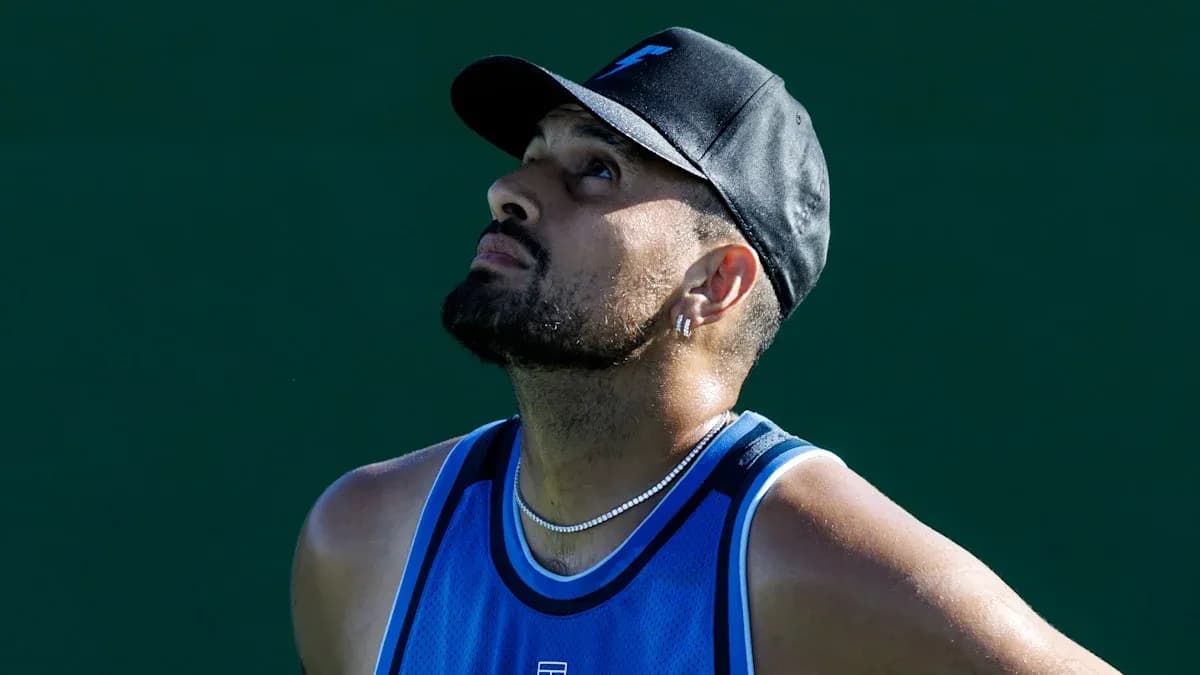
Away from the baseline battles, the fallout from Nick Kyrgios’ suspension continued to ripple through the locker room.
Karen Khachanov did not bother to sugar-coat his reaction after learning Kyrgios had been banned for testing positive to cocaine in June. Kyrgios had already gone public on social media, calling it a “huge mistake” and vowing to step away from the spotlight to address his issues.
Khachanov, who has faced the Australian on court and watched him weigh in loudly on doping matters over the years, was cutting in his assessment.
“Even when he wasn’t playing, he always liked to pick on someone, writing things on Twitter and so on,” he said at the US Open. “And now, when all that has turned against him… what do you want me to say? In the end, you reap what you sow.
“Honestly, it’s not just that I’m not surprised, but to some extent, I can’t feel too much pity either. What he got caught for was ultimately his choice. And in the end, look what happened. It backfired on him.”
The words landed with force, a stark contrast to the usual diplomatic tones players adopt when speaking about a peer’s downfall.
Wawrinka’s last stand
The emotional core of the day, though, belonged to Stan Wawrinka.
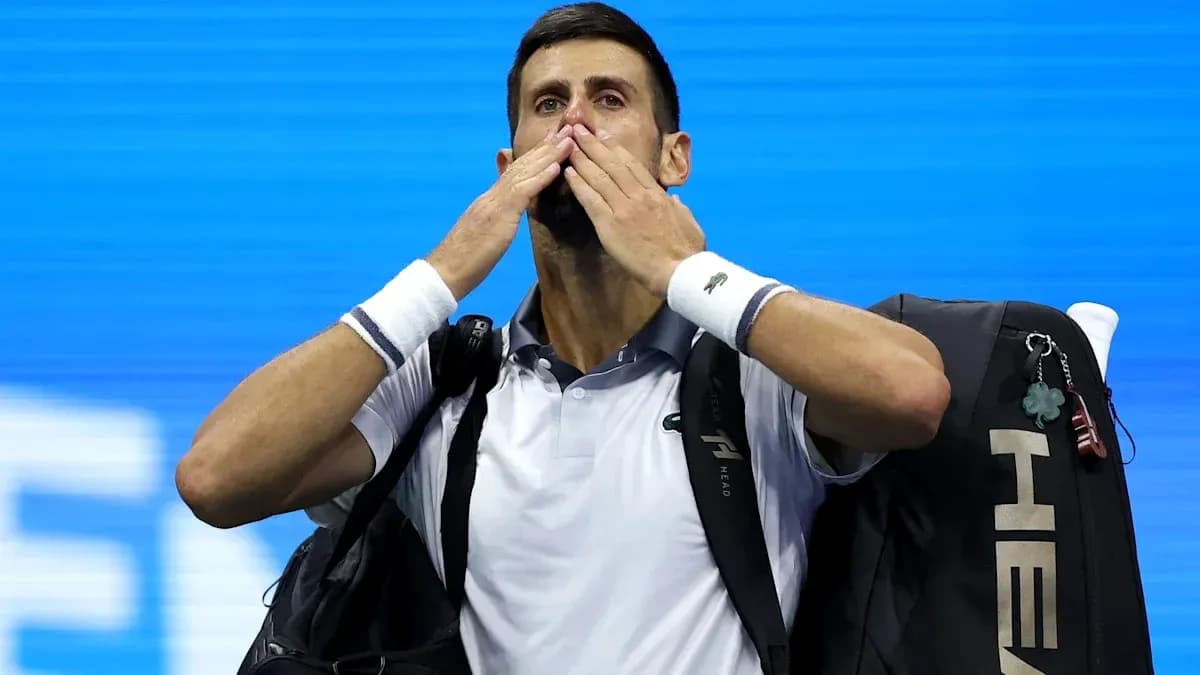
The three-time major champion, the man who once bullied Novak Djokovic off this very stage in a four-set classic in 2016, walked off a grand slam court for the final time. His last US Open match ended in a straight-sets defeat to Matteo Berrettini, 7-6, 7-6, 6-0, but the scoreline barely scratched the surface of the occasion.
Tournament organisers rolled a career highlights video on the big screens at Flushing Meadows. The crowd rose. Berrettini, his conqueror, stayed on court to applaud a career that reshaped the sport’s power structure for a decade.
“It’s been more than 20 years since I first came here,” Wawrinka told the crowd, voice cracking as he spoke. He recalled arriving as a qualifier, wide-eyed and overwhelmed, and explained that nights like this were why he kept playing into his 40s.
“One of the reasons I kept playing until I was 41 is to have these moments like you gave me tonight,” he said. “It was really special to me to finish my grand slam career here, 10 years after winning it. I am going to miss it. I love the game so much ... I really want to thank you all for all those years of support. It was amazing.”
Berrettini, who grew up watching Wawrinka lift trophies, understood the weight of the moment.
“I’m delighted to have shared the court with this legend once again,” he said. “I was a kid when I was watching him play and win slams. It is a dream come true. We’ve never played each other in our careers and now we have twice in a row in two grand slams. It is amazing to share the court with a great player like him.”
Berrettini’s frustration and a rare controversy
Their match even delivered a flashpoint.
Early in the third set, Wawrinka flicked a ball over the net in a tight exchange, appearing to strike it twice in two separate motions. Under the rules, the shot must be completed in one continuous swing to be legal. Anything resembling a stop and second hit should be called.
Berrettini immediately appealed to the chair umpire.
“You could see (his two motions) ... it was kind of like what he did before,” he argued, clearly convinced the point should be his.
Wawrinka, 41 and smiling through the tension, embraced his opponent at the net while the video review team went to work. He even managed to break the mood with a line that summed up both his humour and his age.
“I’m 41, that’s why I am slower than you,” he joked.
The replay, shown at full speed, was ruled legal, leaving Berrettini fuming. Off-court, Australian great Jelena Dokic later noted that slow-motion footage from the host broadcaster told a different story.
“The video review is not in slow motion at the US Open, which is a little bit weird,” she said. “It does show that he did hit it twice, so Berrettini is actually right. But when you look at it in normal speed, it doesn’t look like that.”
Wawrinka kept the advantage from the decision, but Berrettini brushed off the controversy, held his nerve and surged away, eventually leading 7-6, 7-6, 3-0 and closing out the match with authority.
A night that belongs to the Aussies – and to memory
By the time the lights fully took hold over New York, the day had offered a little of everything: a legend’s farewell, a simmering doping debate, a rules dispute, and a pair of Australians punching above their weight on some of tennis’ biggest stages.
Maya Joint is through, brimming with belief after turning a tough start into a commanding finish. Rinky Hijikata has world No.4 Felix Auger-Aliassime on edge, dictating the latter stages of the first set and refusing to bow to reputation.
For Wawrinka, the grand slam chapter is closed. For the Australians under the lights and in the shadows of Arthur Ashe, it feels like theirs is only just beginning.