NEW YORK — By the time Ben Shelton carved a 146 mph ace down the middle at 3:33 a.m., Arthur Ashe Stadium felt less like a tennis court and more like the last, wild corner of New York still awake.
This was billed as a tennis match. It played out like a title bout.
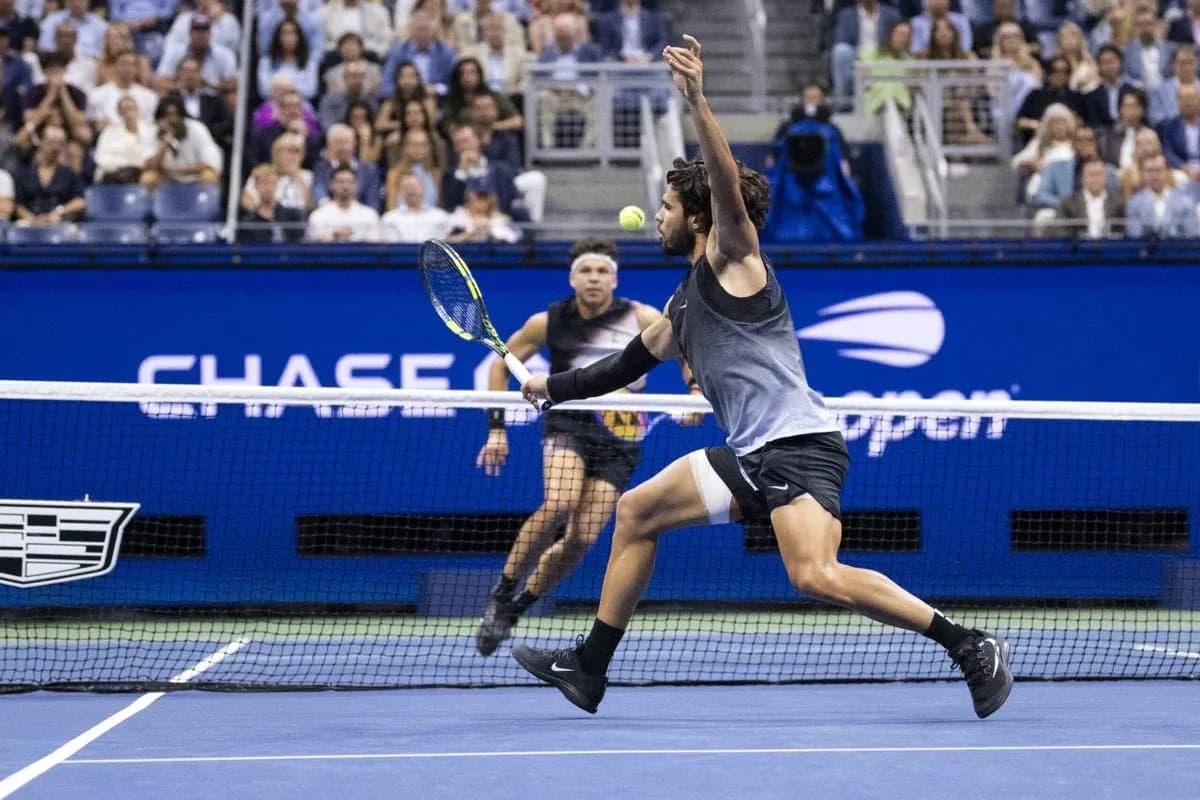
Shelton, the explosive American with a serve that sounds like a car crash, outlasted Carlos Alcaraz, the sport’s most inventive prodigy, 6-7(5), 6-1, 6-3, 1-6, 7-6(10-7) in a U.S. Open epic that set the record for the latest finish in tournament history. They started at 11:05 p.m. ET. They finished in another day, to the soundtrack of garbage trucks preparing the Billie Jean King National Tennis Center for sunrise.
By the end, nearly 24,000 had shrunk to a hardened core of true believers, the kind of fans who don’t check watches, only scoreboards. Shelton roared to them when it was done, a 23-year-old who had just taken down a seven-time Grand Slam champion with a final, brutal flourish.
“That was a war. Epic match. So physical,” Shelton said courtside, still buzzing. He called it “the most enjoyable match” of his career. It looked like it.
A first set that felt familiar
For a while, it followed the Alcaraz script. Big swings, bigger noise, the sense that the Spaniard would eventually find a way to tilt the night in his favor.
The opening set was all haymakers and half-chances. Shelton matched Alcaraz shot for shot, chasing down drop shots, uncorking serves that handcuffed even the best returner in the game. At 5-5, the familiar crack appeared. A couple of loose strokes, a missed first serve or two, and Alcaraz pounced for the break.
Shelton answered immediately, breaking back after Alcaraz sprayed two forehands well off the court. For almost anyone else returning from a nearly five-month layoff with a wrist injury, it would have been understandable. For Alcaraz, who had eased through his first four matches and looked settled, it was jarring.
The tiebreak became a microcosm of the night: brilliance wrapped in nerves. They traded errors, then produced a point that belonged in slow motion — lunges, improvisation, Shelton finishing with a delicate lob that sent Alcaraz sliding with his back to the net.
Shelton led 5-3. Then Alcaraz did what he so often does. He ripped through four straight points, rushing Shelton into a routine backhand miss, cracking a sideline backhand followed by a forehand into open court, then sealing the set with one of those all-court marathons only he seems to win. Shelton’s outrageous tweener save merely delayed the inevitable.
First set Alcaraz. Another American pushed to the brink by the sport’s new king.
The tide turns
What came next flipped the story.
The first set had drained something from Alcaraz. The next 80 minutes belonged to Shelton. The Spaniard’s precision deserted him. Seventeen unforced errors in the second set alone, just eight winners. His timing frayed, his footwork a half-beat late. Shelton didn’t need a second invitation.
He broke once. Then again. Then a third time. The scoreboard flashed 6-1, and the crowd realized this wasn’t a cameo from the American; it was a takeover.
Shelton’s serve, always a weapon, became a shackle on Alcaraz’s game. The Spaniard couldn’t get into rallies often enough. When he did, he found a 23-year-old willing to trade blows, not just from the baseline but on the move, stepping into forehands, driving into corners, forcing Alcaraz to defend at full stretch.
The third set followed the same pattern. Shelton on the front foot, dictating, landing body blows with heavy serves and penetrating groundstrokes. He grabbed an early break again. For long stretches, Alcaraz looked dazed, the fist pumps arriving late, as if he were trying to wake himself up with each shout.
Serving for the set, Shelton faced a late surge. At 30-30, they produced yet another ridiculous rally, both men sprinting to dig out angled drop shots before Alcaraz curled a twisting forehand winner while running toward the back wall. That’s usually the spark for one of his trademark runs.
Shelton knew it. He walked to his towel. His father and coach, Bryan, leaned over the video board, arm extended. A quick slap of hands. A message: keep going.
Shelton responded with three huge serves. Three errors from Alcaraz. Set Shelton. Two sets to one.
Alcaraz swings back
On the changeover, Alcaraz sat with his head between his knees, spent. When he rose for the fourth set, he looked as if he were walking through mud. Shelton had chances for the knockout.
A forehand error from Alcaraz handed Shelton an opening. Shelton pushed a backhand long. Another mishit from the Spaniard, another look at a decisive strike. This time Shelton missed with the forehand.
He stayed calm. Alcaraz was giving him chances. It felt like more would come.
They didn’t.
Alcaraz, who had looked disoriented for most of the night, suddenly found clarity. He serve-and-drop-volleyed off a rocket return, coaxed another error, and bellowed. The champion’s instincts kicked in.
Tennis turns on inches and moments. A few minutes earlier, Shelton had been cruising. Now he couldn’t locate the court. Alcaraz sensed the wobble, dragged him side to side, east and west along the baseline, and finally broke for the first time since late in the opening set, winning a brutal corner-to-corner exchange.
The clock crept toward 2 a.m. Ten thousand or so remained, wrapped in hoodies and adrenaline. The match was going the distance. Alcaraz rode the wave, steamrolling through the fourth set 6-1. Shelton, who had looked in control, suddenly found himself back in a fifth set with a man who lives for them.
Deep into the night
Fifth set. 2-2. Alcaraz carved out a break point with a forehand that screamed through the court. The moment felt familiar: the Spaniard closing in, the American about to be swallowed by the occasion.
Shelton refused.
He backed up two steps, leapt, and smashed an overhead so hard Alcaraz tumbled to the court. Then came the serve. The crowd sensed it and rose with him. He held, turned to every corner of Ashe, and shook his racket. Noise surged. “U-S-A” rang around the stadium.
By 2:51 a.m., Shelton and Alcaraz had pushed past the previous record for the latest finish in U.S. Open history, set by Alcaraz and Jannik Sinner in 2022. That night had been an expedition into the sport’s future. This one felt like a sequel with a new co-star.
Shelton kept pressing and carved out three chances to earn the right to serve for the match. On the first, he floated a chip approach instead of ripping through it. As the ball kissed the court, the net-post lights flashed red. Out.
On the next, Alcaraz sprinted and lasered a running crosscourt passing shot. On the third, Shelton pulled a backhand into the net. The clock hit 3 a.m. The escape artist had wriggled free again.
They played on into a 10-point tiebreak, the only fitting way to settle a night that refused to end. Chants of “Let’s go Ben” rolled down from the upper deck. In the brief silences between points, the beep of trucks preparing the grounds for the next day cut through the air. Tennis and real life overlapping in the small hours.
Shelton jumped ahead 3-1. Then he blinked. Three errors in four points, plus a heavy Alcaraz forehand, and suddenly the Spaniard had quieted the chants and grabbed the lead.
The tension snapped back the other way. Alcaraz’s forehand started to leak. “Let’s go Ben” roared again. Shelton crushed a serve. Alcaraz sailed a forehand long. Shelton moved to 8-7, serving, the match sitting squarely on his racket.
One more swing.
He went body. Unreturnable. Match point.
Then came the exclamation mark: 146 mph, a final ace to freeze Alcaraz and ignite the few thousand who had stayed to witness something that felt bigger than a quarterfinal.
Shelton had not just beaten Carlos Alcaraz. He had gone the distance with him, under the harshest conditions, and landed the last punch.
An American man hasn’t lifted a Grand Slam trophy in 23 years. On Sunday, one will stand in the U.S. Open final. To get there, Shelton will face Frances Tiafoe.
If this was the night the party began, New York will want to see how loud it can get.