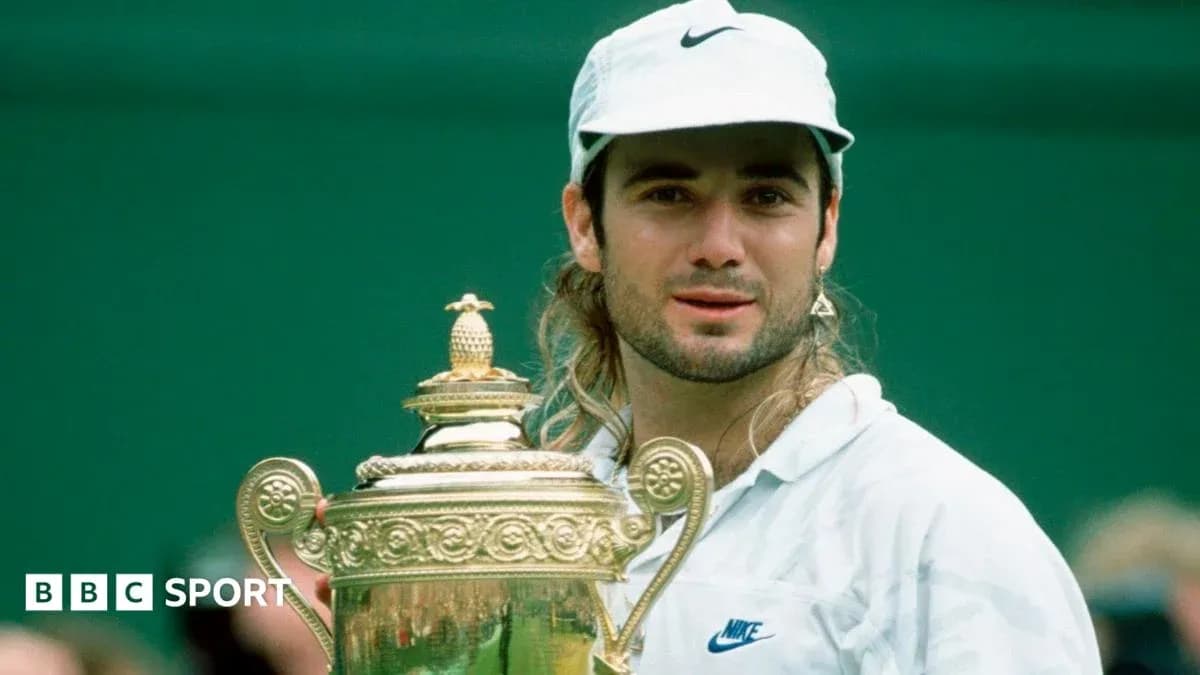
For 23 years, American men walked into New York with hope and walked out with what-ifs. Andy Roddick kept swinging at the wall. Andre Agassi made one last dash. James Blake, Mardy Fish, Sam Querrey, John Isner, Tommy Paul, Taylor Fritz – they all pushed deep into the second week, all ran into the same European ceiling and bounced back down.
Now it’s Ben Shelton’s turn to try and smash through it.
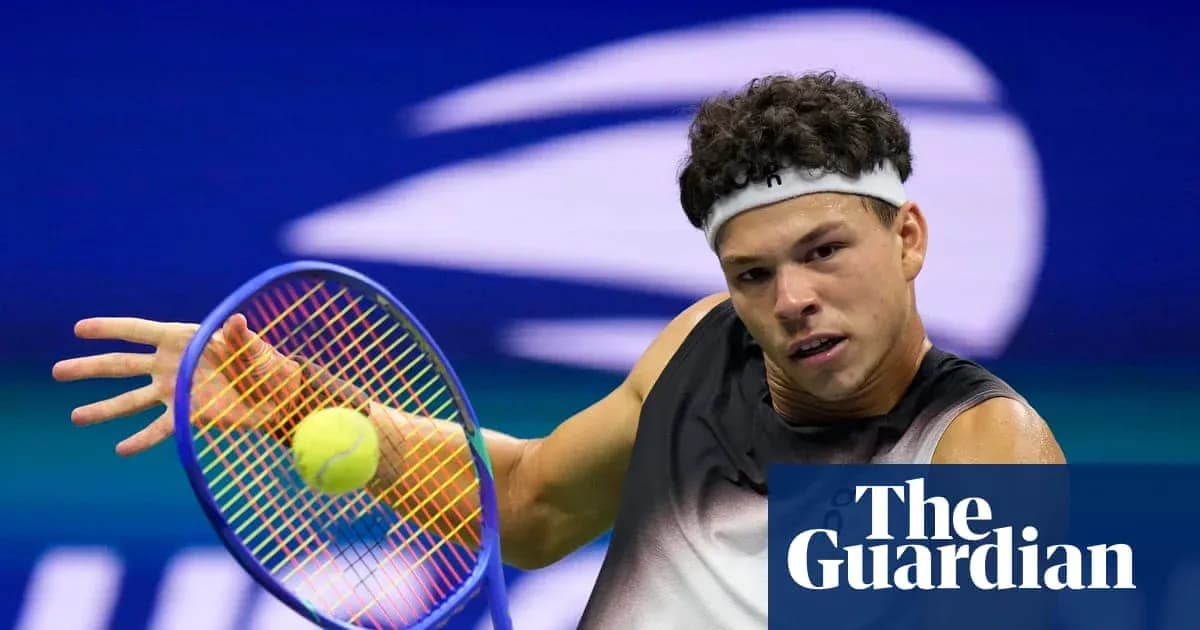
On a fevered Friday night inside Arthur Ashe Stadium, the 23-year-old from Atlanta tore into his first grand slam final with the kind of defiance that fills a building and bends a tournament. He rallied past Frances Tiafoe 4-6, 6-3, 6-3, 7-5 in a breathless all-American semi-final, a three-hour, 16-minute tug-of-war that left him one win from ending a drought that has shadowed US men’s tennis since Roddick’s 2003 US Open title.
Next up: world No 1 Alexander Zverev on Sunday afternoon, with the trophy and a slice of history on the line.
Shelton, seeded No 8, didn’t just survive Tiafoe. He overpowered him. He landed 75% of his first serves, cracked 20 aces and, when the fourth set looked headed for a tiebreak, he broke at the last possible moment, ripping the match out of his compatriot’s hands.
“It’s amazing to be in this position,” Shelton said afterwards. “Obviously we’re not done here. The job is not finished. Super excited to get another opportunity to go out there and show my best on Sunday.”
Arthur Ashe had seen this coming. The crowd of nearly 24,000 didn’t turn up for a polite evening of tennis; they arrived ready to ride every point. The usual hum of conversation that floats through night sessions in the sport’s biggest arena vanished. In its place: a constant, rolling roar, impartial and intense, that rose and fell with each momentum swing.
Tiafoe struck first. At 4-4 in the opening set, with Shelton cruising at 30-love, the younger American suddenly lost the range. Four of the next five points slipped away. A double fault on break point cut through the noise. Tiafoe stepped to the line at 5-4 and closed the set out at love in 45 minutes, looking every bit the veteran who had been here before.
Shelton’s answer was ruthless. He broke at love for 2-0 in the second set, only to see Tiafoe break straight back. The match could have settled into a grind. Instead, Shelton reached for his biggest weapon and turned the dial up.
Serving at 3-all, he fired a 125mph first serve, then 144mph, 139mph, 140mph – the last two untouchable aces. It was a statement game. In the very next one, he broke, then served out the set with a 149mph bomb. The scoreboard said one set all; the feeling in the stadium said the match had tilted.
The third set turned into something more bruising. Longer rallies, more patience, more nerve. Tiafoe escaped break points at 1-1 with some of his best scrambling of the night, but he couldn’t wriggle free again at 2-2. Shelton ripped through a series of backhand winners to break at love, then dragged Tiafoe into a 20-point, 15-minute ordeal at 5-3.
Three set points came and went. On the fourth, Tiafoe’s forehand sagged into the net. Shelton had the set and the lead, and the sense grew that the younger man’s game had more layers now than just raw firepower.
“His game is starting to get more polished,” Tiafoe said. “Instead of just being a shot maker, he’s actually staying tough in the rallies.”
Tiafoe’s best chance to flip the script came immediately in the fourth set. Shelton opened with a shaky game and slipped to 15-40. Two swings, two thunderbolts, and the door slammed shut: a 140mph ace to erase one break point, a 144mph serve that Tiafoe couldn’t control to erase the other. The opportunity was gone, and the holds began to stack up.
They marched together to 5-5, the tension ratcheting with every service game. A tiebreak, and perhaps a fifth set, loomed.
Shelton refused to let it get that far.
He held for 6-5, then stepped into Tiafoe’s service game and changed the tone entirely. Two long rallies went his way. Love-30. Another point, three match points. Tiafoe saved the first with a bold play, but then came the moment that silenced Ashe: a double fault on the second match point. The ball landed long, the collective gasp hung in the air, and the contest was over.
Shelton walked to his chair with the look of a man slightly surprised at himself.
“I was honestly shocked with how calm I was out there today, especially towards the end of the match,” he said. “Calm, confident, focused. I think that that’s what it takes to be in these positions and win at the highest level.”
This was more than just a breakthrough for one player. Shelton became the first black American man to reach the US Open singles final since Arthur Ashe in 1972, and the first black American man to play a grand slam singles final since MaliVai Washington at Wimbledon in 1996. The weight of that history hovered over the night, but he insisted he had kept it at arm’s length.
“Yes, I can think about how cool this moment is and what I’m playing for,” he said. “At the end of the day, I’m here in New York, I’m hanging out with my team, I’m with my homies playing a little bit of tennis and I’ve been able to downplay the moment pretty well.”
If there was any doubt about his reserves after his quarter-final epic, he erased it. Shelton showed no sign of wear from his five-set win over defending champion Carlos Alcaraz, a match that ended at 3.33am on Wednesday and delivered his first victory over a top-three opponent after 17 failed attempts, snapping Alcaraz’s 18-match winning streak at the majors.
Tiafoe arrived with scars and belief of his own. He had clawed back from two sets down and two points from defeat to edge Alex Michelsen in a final-set tiebreak. Yet once again, the semi-final proved his ceiling in New York – the third time in five years that his run has ended one step short of the title match.
“That’s why I just want to win it, man,” Tiafoe said. “The love is incredible. It’s something that gives me definitely tears in my eyes from a kid starting how I did, and the love I have here is crazy.”
Shelton’s rise has not come from nowhere, but the speed still startles. Two years ago he was winning the NCAA singles title for the University of Florida. He turned professional and reached the Australian Open quarter-finals within four months, then the US Open semi-finals later that same year. The raw tools were obvious: the serve, the swagger, the willingness to take the ball early and live with the consequences.
The years since have been about everything around that serve. He has layered in a sturdier return game, more reliable baseline patterns, sharper concentration, even better sleep. The payoff has come in a cascade of titles – Dallas, Munich, Stuttgart, Montreal – and a player who now speaks about his craft like someone who has worked out who he is.
“I feel that I’m a different player,” he said. “I feel like I have so many more tools. I feel like I know my identity, am comfortable in my own skin, and I know what it takes for me to be playing top-level tennis.”
One problem remains unsolved: Alexander Zverev.
Shelton has faced the German five times in the last two seasons. He has lost all five. No wins, no moral victories, just a clear, frustrating pattern against a man who has learned how to absorb his power and send it back with interest. Sunday will be their first meeting on a grand slam stage, where the stakes, the nerves and the noise change everything.
The record did not seem to rattle him.
“Problem-solving has been the name of the game here,” Shelton said. “I‘m looking forward to the challenge, being able to problem-solve on Sunday. I know what I’m up against, and I’m also the most confident I’ve ever been in my game.”
For two decades, American men have watched others lift the biggest trophies. On Sunday, in front of a crowd that has already adopted him, Ben Shelton walks into a final with a chance to break the spell – and to find out whether this is just the start of a moment, or the start of an era.