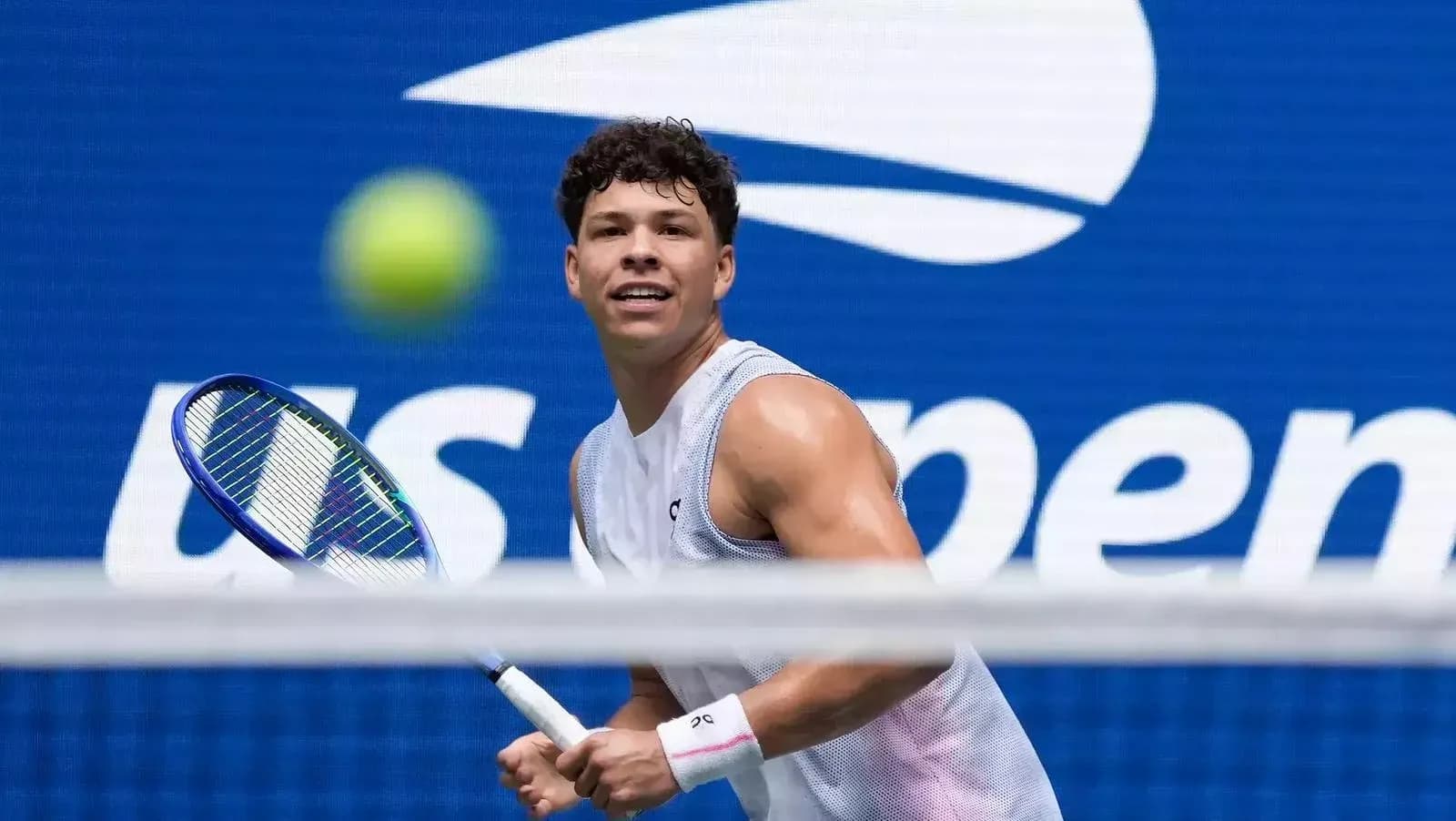
NEW YORK, N.Y. – Under the lights of Arthur Ashe Stadium, Ben Shelton finally ran into a wall he could not climb. Not yet, anyway.
The 21-year-old American’s breakout US Open ended one step short of the trophy on Sunday night, beaten by world No. 1 Alexander Zverev 3-6, 6-7(2), 7-5, 2-6 in a bruising final that stretched into a fourth hour and felt, at times, like a test of nerve as much as talent.
Zverev, relentless and composed, claimed his second major title of the year and pushed his record in 2024 Grand Slams to a staggering 25-2. He also extended his perfect head-to-head mark against Shelton to 6-0, a reminder of the gap that still exists between the sport’s established elite and its most electric new contender.
Shelton, though, left with more than a runner-up plate. He left with history.
The former Florida Gator became the first former NCAA singles champion to reach a Grand Slam final since 1986 and the first African American man to contest a major singles final since MaliVai Washington at Wimbledon in 1996. On Monday, he will rise to a career-high No. 4 in the PIF ATP rankings, the highest ranking for a former college player since James Blake in 2006.
This was not just a run. It was a statement.
Zverev pounces early
The final began with the kind of nerves you would expect from a first-time major finalist. Shelton’s serve, usually a thunderclap that sets the tone, misfired early. Zverev broke for 2-0 in the opening set and immediately settled into his preferred rhythm: long rallies, deep returns, pressure layered point after point.
Shelton clawed back some ground, breaking in the seventh game to close to 4-3 and finally igniting the crowd. But just when he had a foothold, the jitters crept in again. Serving to stay in the set at 3-5, Shelton double-faulted on set point. One loose swing, one early set gone.
The pattern was ominous. Zverev looked locked in. Shelton looked like he was still trying to locate the court.
A brutal tiebreak turns the screw
The second set finally produced a genuine tug-of-war. The opening game dragged to the first deuce of the match, Zverev hanging on to hold. Shelton answered with a love hold of his own, a glimpse of the swagger that had carried him through the draw.
Games traded. Serves held. The American crowd waited for a crack in the top seed’s armor that simply refused to appear.
When the tiebreak arrived, Zverev didn’t give Shelton a chance to breathe. He sprinted to a 5-0 lead, suffocating the rallies, reading the serve, dictating from the back of the court. Shelton, stuck between going for broke and trying to rein himself in, never found a rhythm. Zverev closed out the breaker 7-2 and, with it, a two-set lead that reflected his control of the match.
Through those first two sets, the numbers told the story. Zverev applied constant pressure, dragged Shelton into extended exchanges, and watched the errors pile up. Shelton had already racked up 29 unforced errors, many of them on big-point serves that missed their spots by inches.
The atmosphere inside Ashe was loud, but the tennis was lopsided.
Shelton finally breaks through
The third set looked, for a while, like a rerun. Both men held serve, trading blows without landing the knockout punch. Zverev’s serve, rock-solid all night, carried him to 5-5 with his eighth ace of the match.
Then, at last, the dam broke.
Shelton, who had gone 65 straight games without breaking Zverev’s serve in their previous meetings, finally cracked him in the most unlikely moment: late in a Grand Slam final, down two sets, with the match tilting heavily against him. Zverev pushed a shot wide to the left, and Shelton seized the opening, ripping through the 12th game to take the set 7-5.
It was his first break of Zverev’s serve in 66 consecutive service games. It was also the loudest Arthur Ashe had been all evening.
For the first time, the final felt alive.
Zverev slams the door
Any thought of a full-scale comeback, though, ran into the cold reality of Zverev’s experience.
As the match edged into a third hour and the fourth set began, the top seed reset. He jumped to a 2-0 lead, immediately quieting the building and reasserting control of the baseline. Shelton refused to fold, pulling back to 3-2 and giving himself a sliver of hope, but Zverev tightened his grip at the net and on return.
He surged to 5-2, one game from the title, and there was no escape this time. Serving for the championship, Zverev drew one last error, a Shelton return sailing long to end the American’s dream run and seal the German’s second major of the season.
No celebration from Shelton, just a brief look to the sky and a slow walk to the net. He had pushed, adjusted, fought back. Against this version of Zverev, it was not enough.
A loss that changes everything
The scoreboard will remember a four-set defeat. The sport will remember something different.
Shelton leaves New York as the new standard-bearer for American men’s tennis, a former college star who has forced his way into the game’s top tier in less than two seasons. His rise to No. 4 makes him the highest-ranked ex-collegian in nearly two decades, and his run to the US Open final snaps a 38-year wait for an NCAA singles champion to stand on this stage.
He also carries the weight of another milestone: the first African American man in a Grand Slam singles final since MaliVai Washington’s Wimbledon run in 1996. For a new generation watching from home, that matters.
This night belonged to Alexander Zverev, the world No. 1 who handled the moment with the authority of a serial champion. But the fortnight has belonged, in no small part, to Ben Shelton.
If this is what his first major final looks like, what happens when he comes back with scars, lessons, and a ranking that now says he belongs?