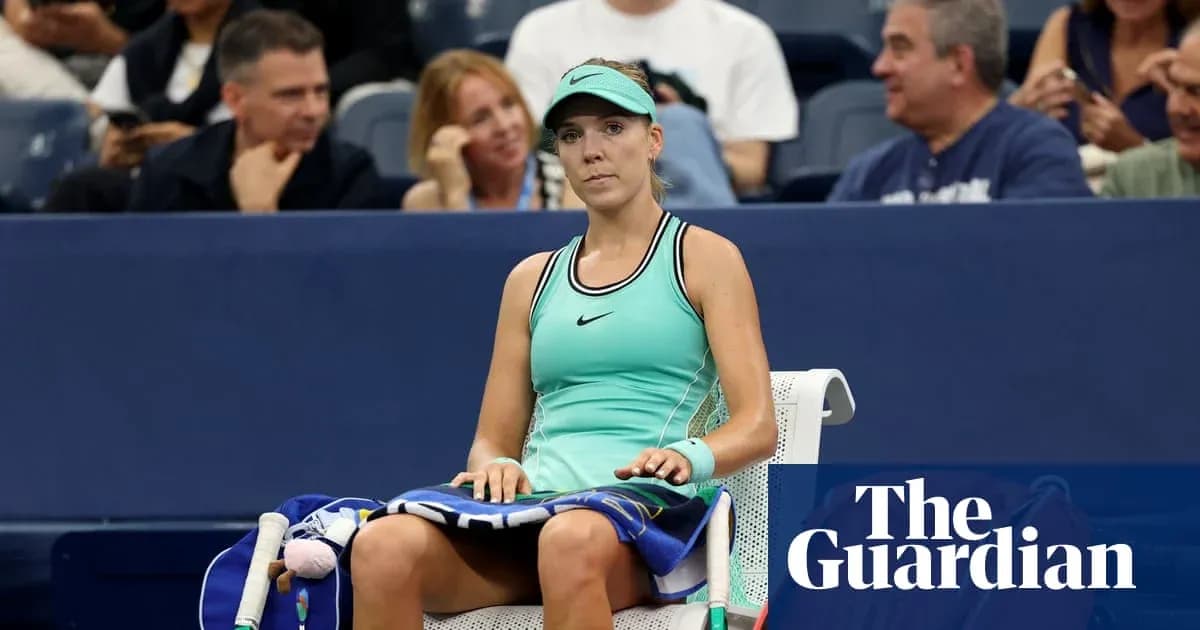
The rain hammered down on Flushing Meadows, driving thousands of fans under cover and freezing play on the outside courts. On a sodden afternoon when the Billie Jean King National Tennis Center fell eerily quiet, all the noise converged on one place: Louis Armstrong Stadium. There, under the roof and under the lights, Katie Boulter’s grand slam season ended with a brutal thud.
Karolina Muchova did not just beat her. She dismantled her. The seventh seed swept through 6-1, 6-0 in 59 merciless minutes, a mismatch that left Boulter staring at the scoreboard in disbelief and then searching for answers.
Boulter exposed under the roof
This was not the stage Boulter had expected. She and Muchova were originally slated for Court 17, following the men’s first-round meeting between rising Spaniard Rafael Jodar and Yunchaokete Bu. When the downpour hit and play stopped everywhere but the roofed arenas, the pair were bumped into Armstrong – a promotion on paper, a trap in reality.
Muchova thrived in it. She unfurled the full repertoire: soft hands, disguised angles, sudden changes of pace, and that languid, all-court movement that makes her look permanently unhurried. Boulter, by contrast, never settled. Her first serve misfired, her groundstrokes rushed, her timing just a fraction off – but enough to be punished every time.
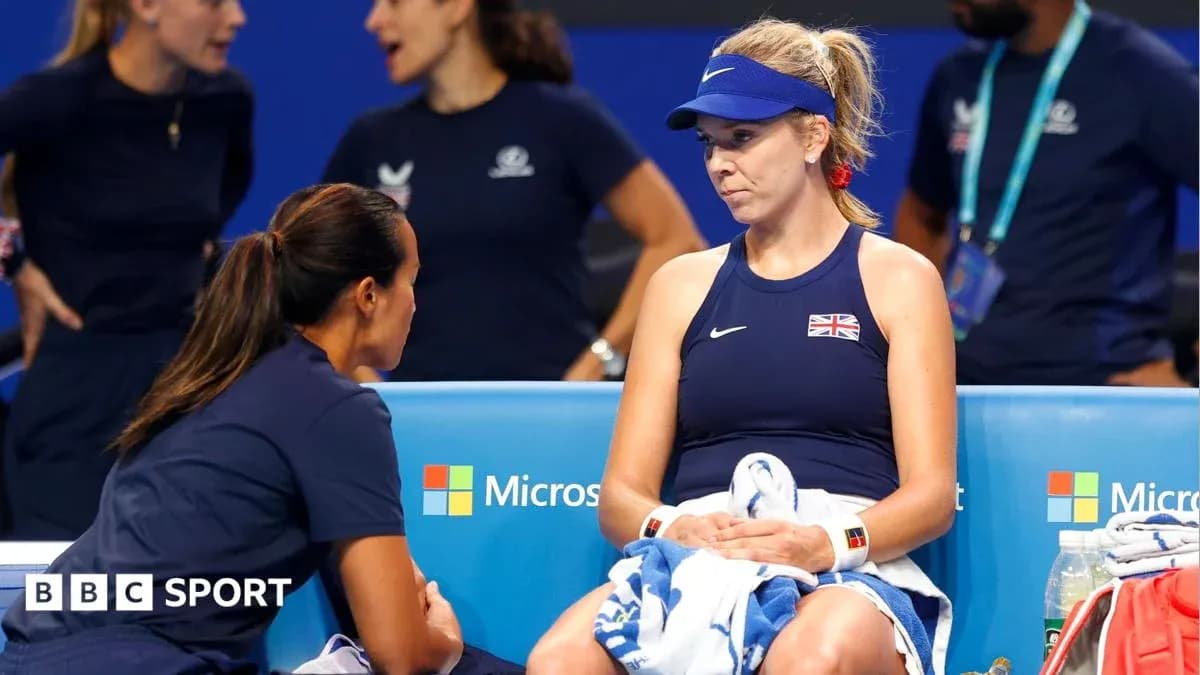
“She was better than me today for sure,” Boulter admitted afterwards. There was no attempt to sugarcoat what had unfolded. “I struggled with the conditions. I struggled with the roof, I struggled with the noise. I kind of let these little things distract me a little bit. But ultimately, at the end of the day, it was a bad day at the office.”
The noise was not the usual low hum of a grand slam crowd. Armstrong has its own personality: people drifting in and out, conversations continuing through points, a constant crackle of distraction. Boulter had trained there only once and had never played a match on the stadium. She expected the din to fade once the first ball was struck. It never did.
“I actually expected it to kind of die down a little bit, but it didn’t,” she said. “From the first point of the match I was expecting the crowd to go silent, which is normally how it works. But it never changed.”
She tried to adjust on the fly, tried to talk herself through it: be ready, adapt, find a way. It never came. For a player who usually feeds off energy and thrives in a charged atmosphere, feeling unsettled by the occasion was a jarring experience.
“I always want to have an atmosphere. I always want to have noise. I love that. I normally relish that feeling,” she said. “So for me today it’s a very different feeling to feel slightly distracted from that. It was a little abnormal for me.”
A summer of change, a season stalling
The defeat lands at the end of a summer that has transformed Boulter’s life off the court. She married Alex de Minaur in July, a personal high point in a year that had started with real professional promise.
She claimed her fourth WTA title in Ostrava and surged back into the top 60. Her statement win over world No 2 Elena Rybakina at Queen’s underlined the scale of her potential when her game clicks. Then the wheels began to wobble.
Before her opening-round victory in Cincinnati last month, Boulter had lost five matches in a row, including a straight-sets exit in the first round of Wimbledon that stung badly. Confidence, once flowing, has become elusive.
Here in New York, the stage was bigger, the noise louder, the margin for doubt thinner. Against a player of Muchova’s quality and composure, those fragile edges were exposed. By the end, Boulter could only watch as winners flew past and games slipped away in a blur.
Jones digs in and steps up
While Boulter wrestled with frustration, another Briton was quietly making one of the most important moves of her career.
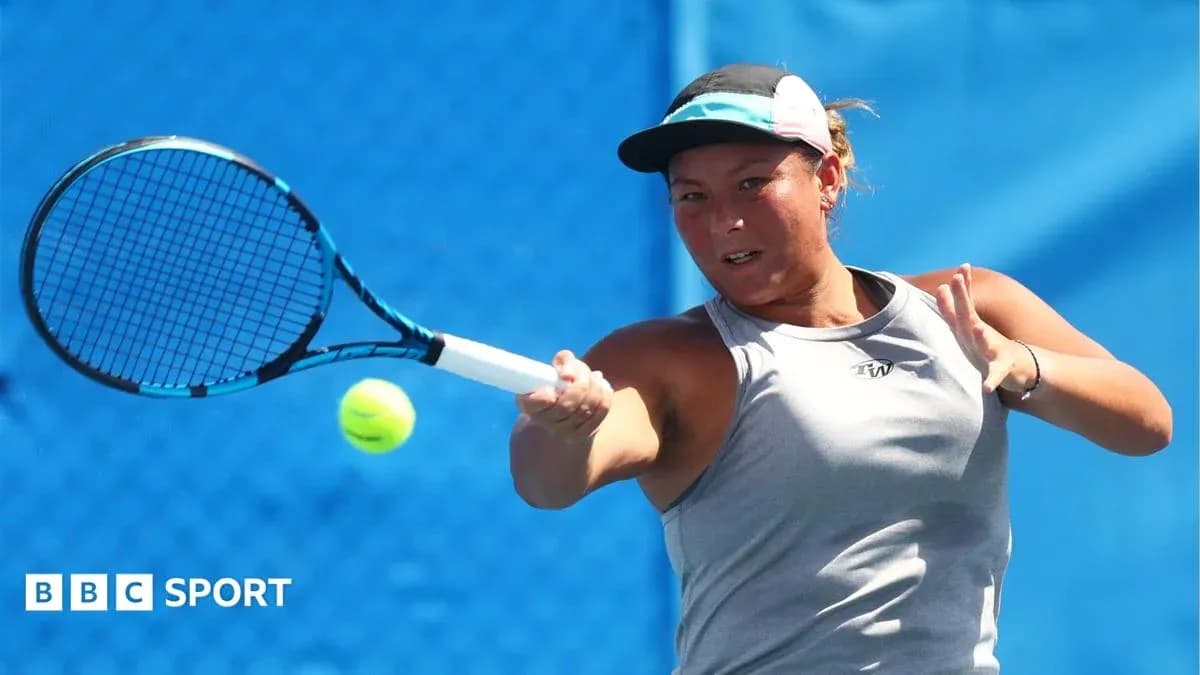
On an adjacent court, away from the glare of the stadium, Francesca Jones battled through chaos and rain delays to defeat former top-20 player Magda Linette 6-4, 1-6, 6-3, reaching the US Open second round for the first time.
Nothing about it was straightforward. Jones had come out sharp on Tuesday, striking cleanly and taking the first set before the weather shut everything down for the night. When they resumed on Wednesday, the pattern repeated: warmup, more rain, more waiting. When they finally got a run of games, Linette surged, tearing through the second set and racing ahead early in the third.
“It was incredible how she was playing until about 4-0 and then started to equal out,” Jones said. “But, you know, in that situation, hats off if they can maintain that. I just tried to show my northern grit, stick in there and do what I can.”
That grit has been tested to the limit this year. After breaking into the top 100 last season, Jones has spent long stretches of 2024 on the sidelines, battling a series of injuries and a freak concussion that derailed her momentum. Only from July did she finally string together a sustained block of training, and the results followed quickly: back-to-back WTA 125 titles on clay, a surge of form and belief at just the right time.
By the time she arrived in New York, she had already fought through three rounds of qualifying. Linette, with her experience and weight of shot, was a significant step up. Jones rode the swings, absorbed the pressure, and, when the match finally levelled out, held her nerve. For a player rebuilding a career and a body, this win carries weight far beyond the ranking points.
Mixed fortunes for the British men – and a shock for a rising star
Elsewhere, it was a sobering day for the British men in the main draw.
Jan Choinski fell 6-3, 6-1, 7-6(5) to Botic van de Zandschulp, unable to claw his way back after the Dutchman took control early. Lucky loser Jacob Fearnley pushed 27th seed Tomas Etcheverry into a fourth set but went down 6-3, 6-3, 3-6, 6-3, his late surge not quite enough to turn the match.
The biggest jolt of the day, though, came on Court 17. Rafael Jodar, the 19-year-old tipped as one of the most exciting young names in the draw, walked into his first US Open with a growing reputation and left with a harsh lesson. Yunchaokete Bu tore through him 6-2, 6-1, 6-1, a demolition that cut through the pre-tournament hype in just over an hour.
On a rain-soaked New York day that reshuffled schedules and tested patience, British tennis absorbed a heavy blow at the top of the bill, even as Jones quietly pushed her story forward. For Boulter, the challenge now is clear: can she turn a “bad day at the office” into the spark that stops a stalling season, or will this afternoon under the Armstrong roof linger longer than she can afford?