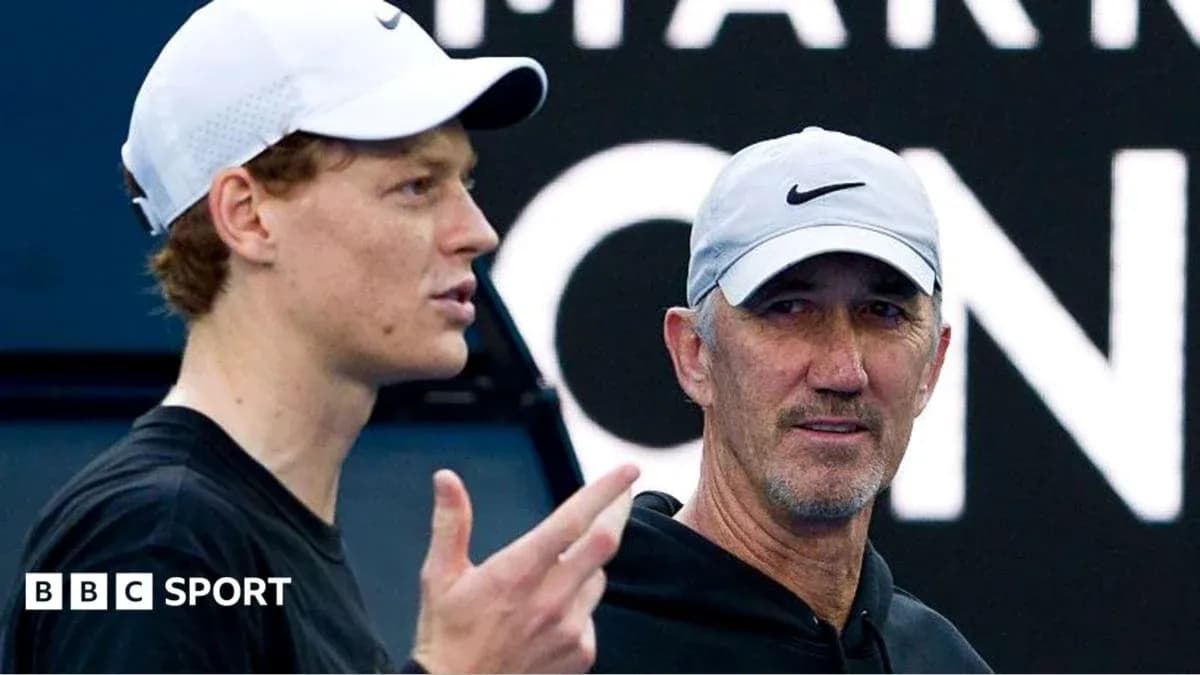
For the first time in years, Jannik Sinner will walk into a new season without Darren Cahill at his side.
The Australian coach, who helped steer Sinner from promising top-20 talent to five-time Grand Slam champion and world number one, will leave the Italian’s camp at the end of the year. It closes a remarkably productive chapter that began in June 2022 and reshaped the top of the men’s game.
When Cahill joined forces with Simone Vagnozzi two summers ago, Sinner was hovering just outside the top 10 and still searching for a breakthrough beyond the quarter-finals at the majors. The tools were obvious; the résumé was not. Under their joint guidance, the gap between potential and reality disappeared at startling speed.
Five Grand Slam titles followed. Ninety-five weeks at world number one followed. Sinner didn’t just arrive. He took up residence at the summit.
That reign has been interrupted only by injury. The 25-year-old has not played since defending his Wimbledon crown in July, a second straight title on Centre Court that underlined his dominance on grass but also turned into an unexpected pause. His absence opened the door for Alexander Zverev to overtake him in the rankings, a reminder that the sport moves quickly, even when its brightest star is forced to sit still.
Sinner is due back next month at the Six Kings Slam exhibition in Saudi Arabia, the first glimpse of what the next phase of his career might look like without Cahill’s familiar presence in the box.
The transition will not be quiet. Swede Magnus Norman, long-time mentor of recently retired three-time major champion Stan Wawrinka, will join Sinner’s team for next season. Norman brings a proven track record of chiselling a powerful, aggressive game into a Grand Slam-winning machine. The parallels with Wawrinka’s late bloom and Sinner’s current peak are obvious, and intriguing.
Sinner made a point of underlining just how deep Cahill’s influence has run.
“Darren has been an incredibly important part of my journey,” he said, reflecting on a partnership that accelerated his rise from contender to standard-bearer. “Together with Simone and the whole team, we have achieved things I dreamed of growing up. He has helped me grow both as a player and as a person, and his guidance will stay with me throughout my career.”
The respect runs both ways. Cahill, 61, has worked with some of the sport’s elite names, but his time with Sinner clearly struck a chord. He had originally mapped out an exit at the end of 2025, yet even that plan became part of the competitive edge between coach and player. At Wimbledon, Cahill told Sinner he could decide whether the partnership continued — on one condition: win the title.
Sinner did exactly that. The coach still chose to bring the curtain down earlier than expected, but not without underlining what the collaboration meant to him.
“Working with Jannik has been a special honour and privilege,” Cahill said, summing up a spell in which Sinner’s calm temperament, heavy hitting and tactical maturity turned him into the benchmark of the men’s tour.
Now the landscape shifts again. Vagnozzi remains, Norman arrives, and Sinner returns from injury into a locker room that has spent months trying to close the gap he created. The foundations Cahill helped lay are solid. The question is simple, and brutal, in the way elite sport always is: can Sinner, with a new voice in his ear, stay one step ahead?