Carlos Alcaraz is back to hunting history, and he’s doing it with a swagger that makes Flushing Meadows feel like his personal playground.
On a humid New York night, the 23-year-old dismantled Tommy Paul 6-4 6-3 6-4, a straight-sets win that was as ruthless as it was routine. The American had arrived talking up his chances. He left with a sixth consecutive defeat to the Spaniard and the growing sense that, against this version of Alcaraz, belief only gets you so far.
Alcaraz in full flight
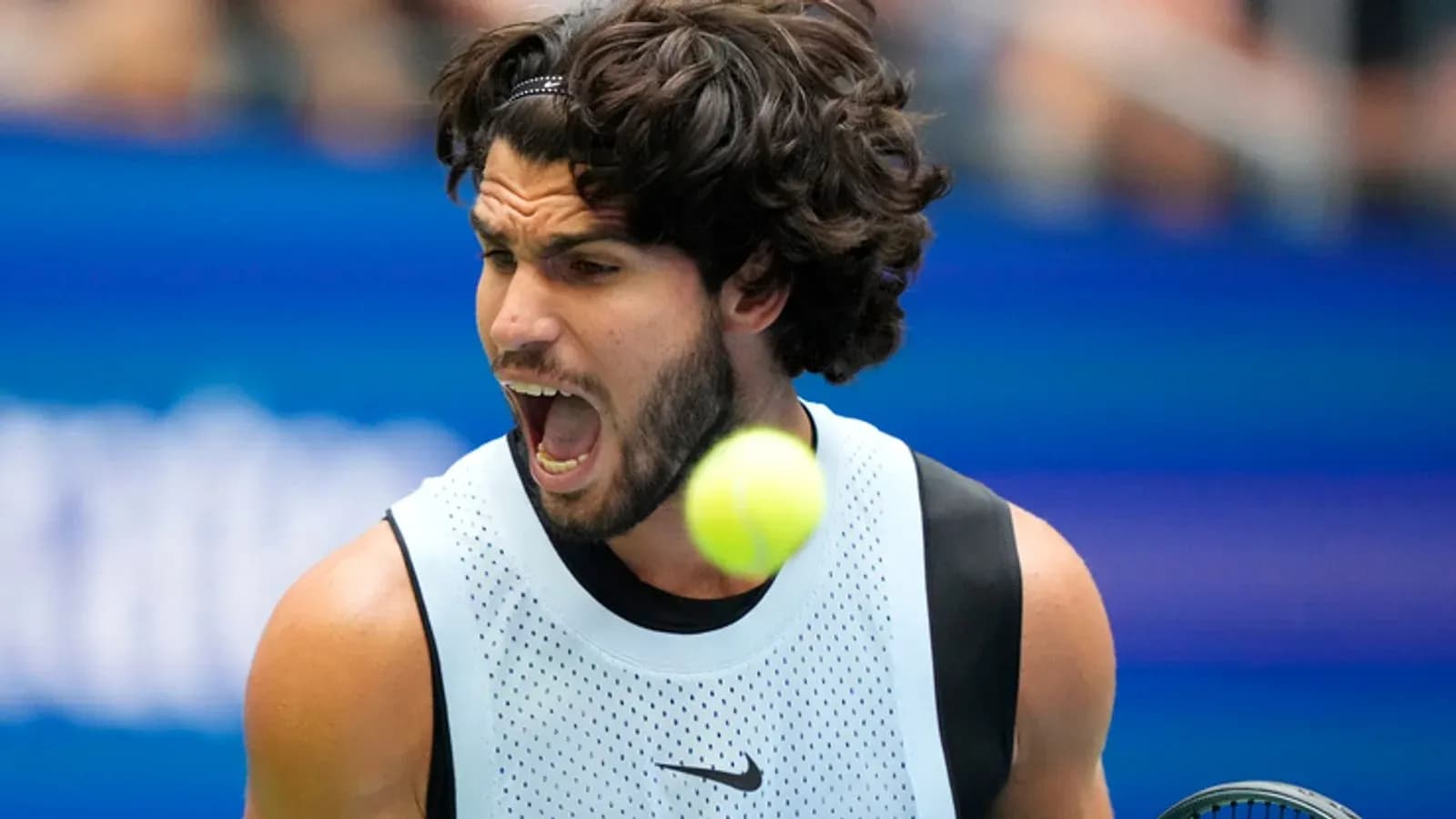
Any doubts about the wrist that kept him out for more than four months have evaporated. They didn’t just fade; Alcaraz blasted them off the court. He dictated from the baseline, stepped inside the court on return, and squeezed the air out of Paul’s game.
The numbers tell part of the story: three sets, two hours and 21 minutes, and 14 consecutive sets now won against Paul. The rest you could see in the body language. Paul, the 20th seed, tried to change pace, tried to open the court, tried to drag Alcaraz into awkward positions. The response was the same: explosive forehands, lightning movement, and a constant, suffocating presence on return.
Twice in the third set, Paul stood on the brink of extending the contest, holding set points. Both vanished in a blur of Alcaraz forehands, struck with the kind of authority that turns a tight moment into a statement. He closed the door, then closed the match.
“I played my game. I tried to put my style on today’s match,” Alcaraz said afterwards, summing it up simply. He talked about being ready to run, to battle, to stay aggressive and push Paul off the court. He did all of that, and he did it looking relaxed, almost serene.
He insists he’s back to “full power”. On this evidence, it’s hard to argue.
Chasing a unique slice of history
Alcaraz already owns a career Grand Slam, the youngest man ever to do it. But the target this fortnight is even more rarefied.
Having conquered Wimbledon’s grass in 2023 and 2024, and Roland Garros clay in 2023 and 2024, he now stands two wins away from defending a major title on hard courts as well. If he lifts the trophy again next Sunday, he will become the only man in the Open Era to successfully defend Slam titles on all three surfaces.
He thrives here. He knows it. “Every time I come here I play my best,” he said, shrugging off the long lay-off as if it were a minor detour, not a four-and-a-half month absence. The court speed, the night sessions, the noise – it all seems to sharpen his game rather than distract it.
From the commentary box, the admiration was unfiltered. Tim Henman called it “a pleasure” to watch Alcaraz move through the gears, describing him as “different class” and highlighting a forehand he believes might be the best he’s ever seen. Martina Navratilova went further, marvelling at how quickly Alcaraz has mastered a game packed with options, declaring him “in another stratosphere”.
Right now, that’s exactly how it feels.
Sabalenka survives the chaos
On the women’s side, Aryna Sabalenka kept both her US Open title defence and her grip on the No 1 ranking alive, but she did it the hard way.
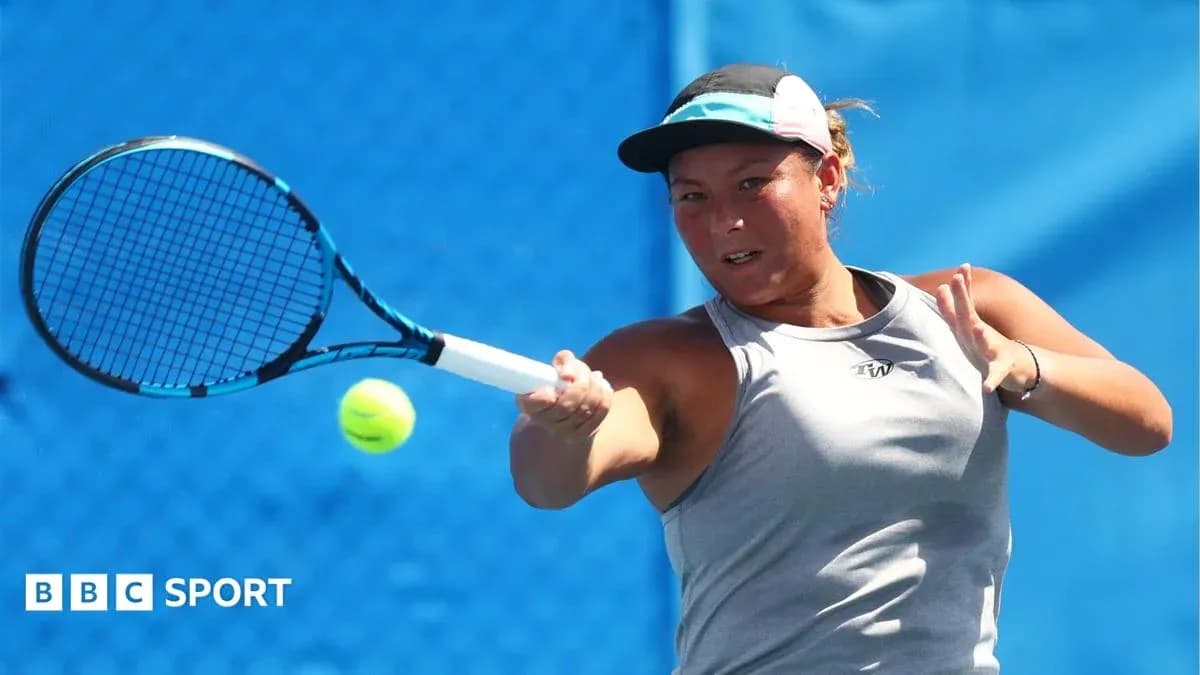
Her 6-4 6-3 win over Taylor Townsend sounds straightforward on paper. It was anything but. The Arthur Ashe crowd watched a strange, scrappy contest with 11 breaks of serve in just 19 games, momentum swinging like a pendulum between a relentless baseliner and a fearless net-rusher.
Sabalenka, who has sat at the top of the rankings for 99 weeks, knows the equation. To reach the 100-week mark, she must win a third straight title in New York, and Elena Rybakina, the current world No 2, must fall before the semi-finals. The pressure is built into every match.
Townsend, roared on by a partisan crowd, broke early in the second set and briefly threatened to drag Sabalenka into a decider. That’s when the champion’s steel surfaced. Sabalenka tightened her return games, hammered her groundstrokes into the corners, and chased down every foray to the net. She talked afterwards about going “ball by ball”, about focusing on herself and ramping up the pressure on return. It showed.
When she clawed her way back from that second-set deficit, she let out a huge, primal shriek. It sounded like a warning.
Navratilova judged the performance as “good enough”, handing out a mental report card: a solid “B”. Too many lost service games, but big-time tennis when it mattered most. Annabel Croft picked up on the intensity and theatre, calling Sabalenka a “showwoman” who understands that this is sport and spectacle rolled into one. On this night, the aura counted.
Sabalenka hasn’t dropped a set so far. She doesn’t look like a player clinging on to the top spot; she looks like one intent on defending it with force.
Noskova’s marathon and what comes next
Waiting for her in the quarter-finals is Wimbledon champion Linda Noskova, who survived a brutal, nerve-shredding contest against Marta Kostyuk. Their match, a repeat of their SW19 semi-final, turned into a three-set war: 7-5 5-7 6-4 to the Czech.
Kostyuk refused to fold, saving five match points – two at the end of the second set, three more in the decider – and dragging Noskova deep into the night. The Czech finally broke through, but the struggle told you plenty about her resilience and her readiness for the big stages.
Now she runs into Sabalenka, a champion who blends raw power with theatre and has made Arthur Ashe her stage.
On one side of the draw, Alcaraz is chasing a piece of history no man has ever held. On the other, Sabalenka is fighting to keep a throne she’s occupied for 99 weeks. New York has a habit of exposing pretenders and elevating the real thing.
Over the next few days, we find out who truly belongs at the top.