Carlos Alcaraz didn’t just return to Arthur Ashe Stadium. He stormed back into it.
After 139 days away from singles competition with a wrist injury, the seven-time major winner walked out under the New York lights on Monday night and picked up exactly where his US Open story left off – winning, entertaining, and feeding off a crowd that has clearly missed him.
The scoreline said routine – 6-4 6-4 6-4 over Russia’s Roman Safiullin. The occasion was anything but.
A champion back in his element
For four months, Alcaraz could only watch as Alexander Zverev lifted the French Open and Jannik Sinner claimed Wimbledon. Two majors gone, rivals rising, questions swirling about his wrist and his rhythm.
On Ashe, those doubts met his answer.
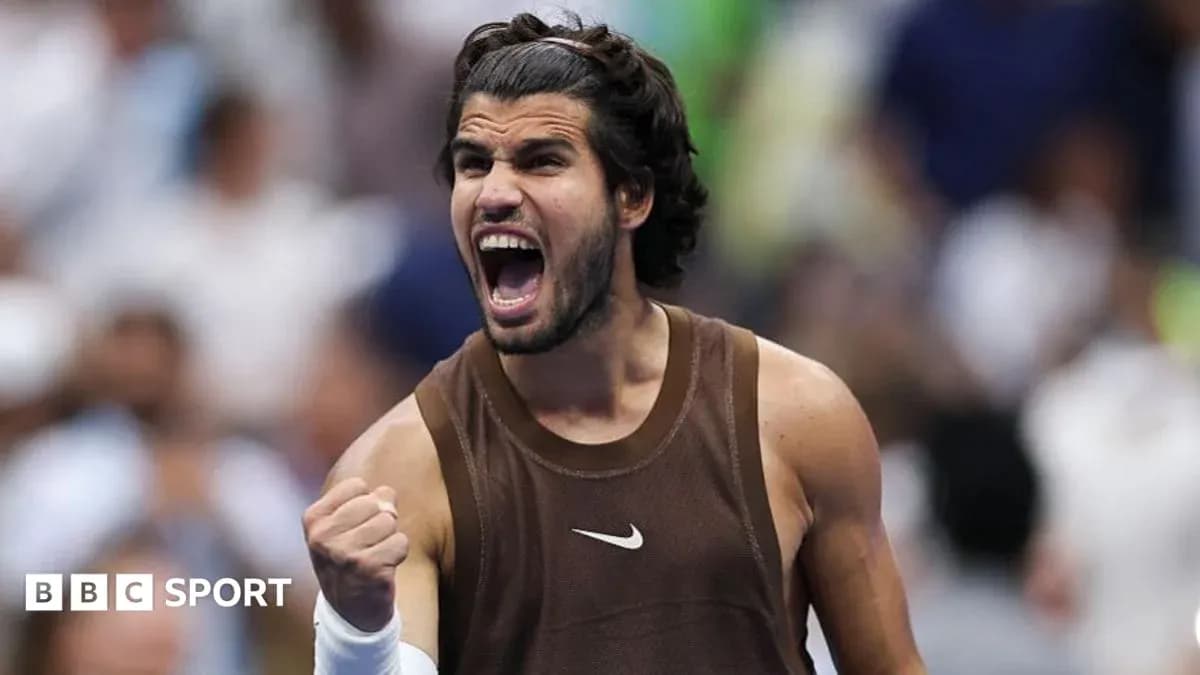
Compression sleeve on his right arm, Alcaraz swung freely, that vicious, whippy forehand cracking through the night. It produced the bulk of his 28 winners, the kind of ball-striking that has become his signature and, just as importantly, his calling card to the crowd.
Every clean strike, every line-clipping forehand, brought the same response: a clenched fist and a shout of “vamos” towards his box. Not forced. Not theatrical. Just a player who had been starved of this stage and was determined to savour every second of his return.
“I missed the crowd, the energy, the competition – I missed everything,” he said on court, smiling as if someone had just handed him back his favourite toy. “I’m just really, really happy that I was able to compete again.”
He played like it. He behaved like it.
At one changeover he sang along to a Michael Jackson track drifting through the stadium. During rallies he grinned after outrageous points. When he finished a brutal exchange in his final service game with a feathered drop shot, he raised a fist to the sky, then cupped his ear and waved his arms, demanding more noise from an already raucous Ashe.
From the commentary box, former Wimbledon champion Pat Cash noted that it looked like “every little win” meant something to Alcaraz. It did. It has been a long 139 days.
“What I really want to do is enjoy every time that I’m going to walk into the court, feeling the energy from the people,” Alcaraz said. “That’s what I’m going do this tournament. The results, it’s going to come after all. That’s why I enjoyed so much today, and it wasn’t a surprise for me, because I came here to enjoy.”
Rust, reality – and a risky serve
Joy, though, didn’t mask the work still to be done.
The forehand was firing. The drop shots had their usual disguise and touch. But the serve? That remains a project.
Alcaraz finished with just two aces and five double faults. The numbers behind them were solid – 68% of first serves in, 66% of points won behind that first delivery – but the weapon that usually earns him so many cheap points never fully appeared.
“The serve is the shot I was struggling [with] the most,” he admitted. He also revealed that some of the slower serves were by design, a tactical play to disrupt Safiullin’s rhythm rather than a sign of physical limitation. “I’m going try to serve better. The point is going to try to serve normal, but it’s a shot that I just always struggle [with]. But it will be back, for sure.”
If there was rust, it showed more in his mind than his legs. Alcaraz didn’t look short of fitness across three sets, but he confessed that the question of how his body would cope with best-of-five had been gnawing at him.
“There were some doubts in the match, I’m not going to lie,” he said. “I’ve been thinking about ‘am I going to last the best of five, am I going to last playing four sets, five sets?’. I need more matches under the belt to get again into the rhythm of the tournament. I’m pretty sure I’m going to get better and better every day.”
Safiullin, ranked 99 in the world, pushed but never truly threatened. The Russian asked questions, extended rallies, and forced Alcaraz to find his range under pressure. The defending champion, still short of match play, found enough answers without needing to hit top gear.
A draw that suddenly looks different
The win itself was expected. The landscape around it is not.
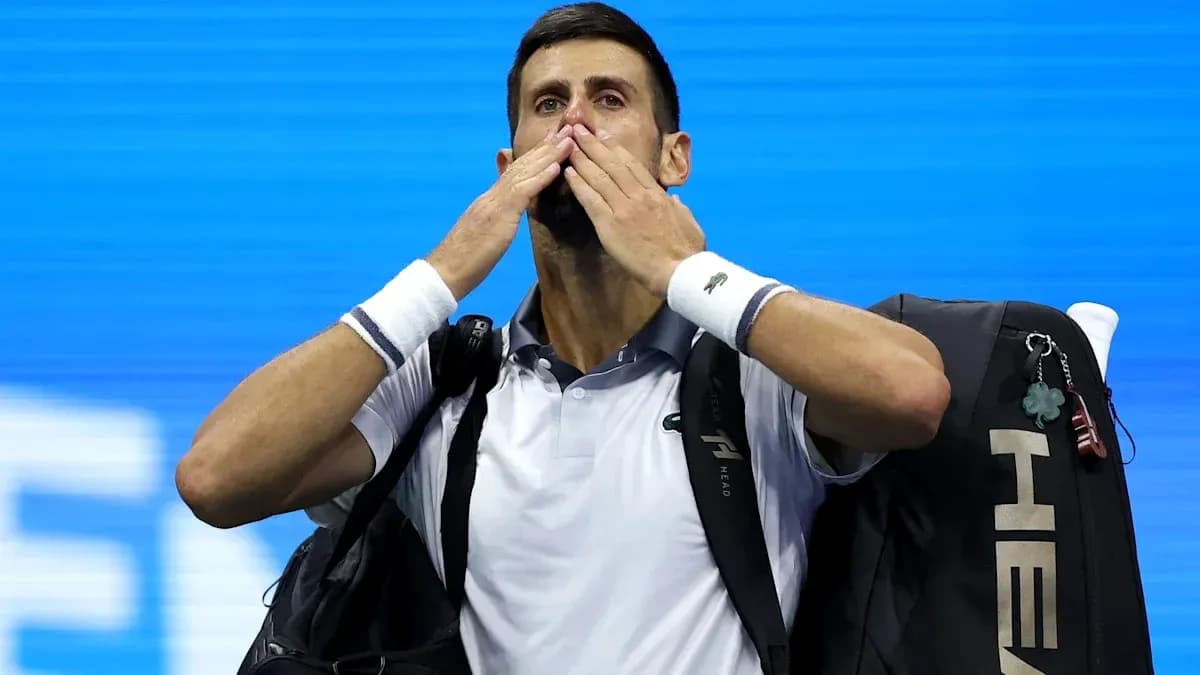
Alcaraz’s route to the final has opened in ways nobody predicted a week ago. World number one Jannik Sinner is not even in the draw, sidelined by a knee problem. Novak Djokovic, the 24-time Grand Slam champion and the man who has so often loomed over this tournament, is gone as well after a stunning first-round defeat to Argentina’s Mariano Navone.
French Open champion and top seed Alexander Zverev sits on the opposite side of the draw. The two cannot meet before the final. French 10th seed Arthur Fils, fresh from a Cincinnati Masters title and widely tipped as a contender here, also crashed out on Monday, beaten by Stefanos Tsitsipas.
The effect is clear: as second seed, Alcaraz will not see another top-10 opponent until at least the semi-finals, with American Ben Shelton the only possible top-10 hurdle before then, potentially in the quarter-finals.
Next up is Portugal’s Jaime Faria, ranked 72 in the world. A different test, but on paper not a daunting one for a man who has already lifted this trophy and who now walks into Ashe with both the defending champion’s aura and a comeback story at his back.
Alcaraz insists he is here to enjoy himself first and let the results follow. The way this draw is breaking, the tournament might not give him that choice.