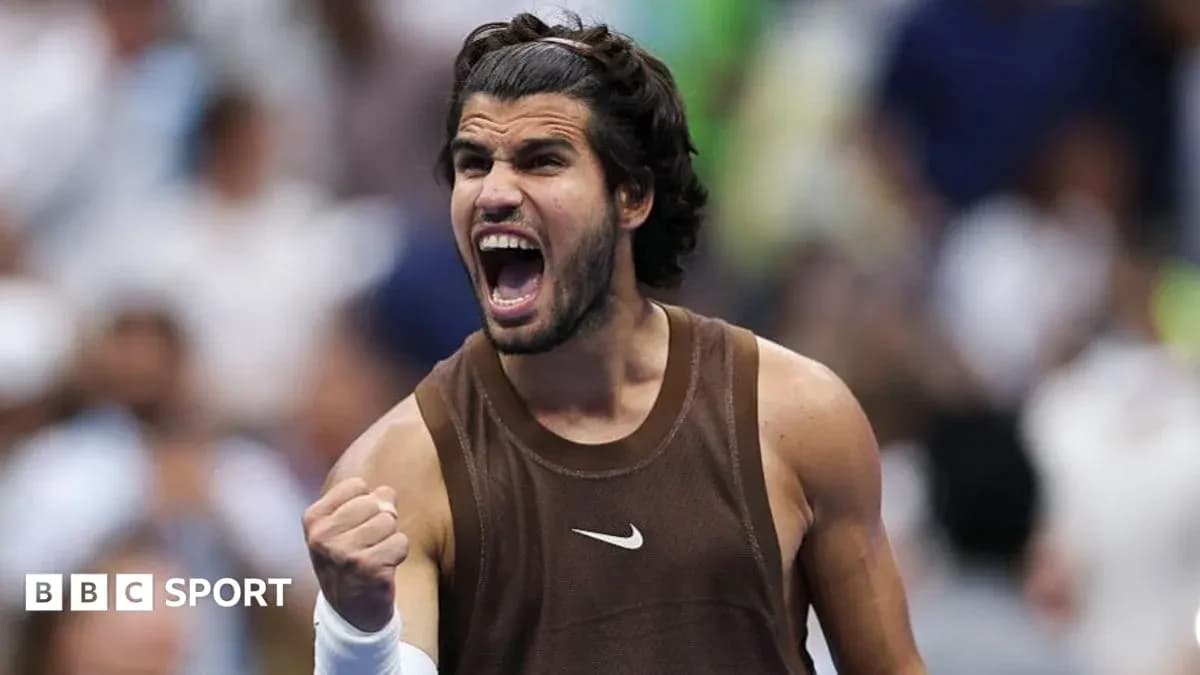
Carlos Alcaraz walked back into Arthur Ashe Stadium on Monday night not as a question mark, but as a statement.
After 139 days out with a wrist injury, the seven-time major winner began his US Open title defence with a straight-sets win over Russia's Roman Safiullin, 6-4 6-4 6-4, and with it reminded New York exactly what it has been missing.
This was less a careful comeback and more a joyride.
Noise, nerves and a familiar roar
Alcaraz had spent the summer watching others take the biggest stages. Alexander Zverev lifted the French Open. Jannik Sinner conquered Wimbledon. The Spaniard, meanwhile, sat on the sidelines, his racket idle, his wrist healing.
On Monday, he drank it all in.
"I missed the crowd, the energy, the competition – I missed everything," he said on court, grinning as if the words barely did it justice. "I'm just really, really happy that I was able to compete again."
From the first point, the defending champion played as though he had been starved of this arena. Every winner drew a clenched fist and a full-throated "vamos" towards his team. He smiled between points. At one changeover he casually sang along to Michael Jackson, a 23-year-old turning a Grand Slam night session into his own street performance.
Former Wimbledon champion Pat Cash, watching on BBC Radio 5 Sports Extra, noted how "every little win" seemed to matter to Alcaraz. It showed. Even routine points felt like small celebrations.
The crowd responded in kind. When he capped a bruising rally in his final service game with a feathered drop shot, Alcaraz raised his fist to the sky, then cupped his ear and waved his arms, demanding more noise. Flushing Meadows happily obliged.
Forehand firing, serve still searching
The right arm carried a compression sleeve, a reminder of the months lost. The forehand carried no such hesitation.
Alcaraz’s trademark whip shot tore through the night, accounting for the bulk of his 28 winners. He hit it with the same ferocity and shape that made him champion here a year ago, dragging Safiullin off the court, then knifing in the drop shot when the Russian tried to retreat.
"I felt great," Alcaraz said. "I don't know how it looked from outside, but from inside, my feeling was that I was hitting normal. I was playing pretty normal, playing my style, and everything felt great."
Not everything, though, was back at full power.
The serve, by his own admission, lagged behind the rest of his game. Alcaraz finished with only two aces and five double faults. The numbers behind the headline were more solid – 68% of first serves landed, 66% of those points won – but the usual pop was missing.
"The serve is the shot I was struggling [with] the most," he explained, adding that taking some pace off was partly by design to disrupt Safiullin’s rhythm. "I'm going try to serve better. The point is going to try to serve normal, but it's a shot that I just always struggle [with]. But it will be back, for sure."
His movement, though, eased some of the concerns about ring rust. He chased, slid and changed direction with the same elasticity that has become his trademark. Safiullin, ranked 99 in the world, pushed him in patches, but never truly looked close to flipping the match.
Doubts, honesty and the long road back
For all the showmanship, there was a more vulnerable side to this return.
"There were some doubts in the match, I'm not going to lie," Alcaraz admitted. "I've been thinking about 'am I going to last the best of five, am I going to last playing four sets, five sets?'"
He didn’t need the extra sets on Monday, but the questions were real. Four months away from best-of-five tennis will do that to anyone, even a player already with seven majors to his name.
"I need more matches under the belt to get again into the rhythm of the tournament," he said. "I'm pretty sure I'm going to get better and better every day."
The mindset, he insisted, has shifted slightly. Results, for once, are not the only obsession.
"What I really want to do is enjoy every time that I'm going to walk into the court, feeling the energy from the people," he said. "That's what I'm going do this tournament. The results, it's going to come after all. That's why I enjoyed so much today, and it wasn't a surprise for me, because I came here to enjoy."
On this evidence, that enjoyment is infectious.
A draw blown wide open
If Alcaraz needed any more encouragement, it came from the rest of the field.
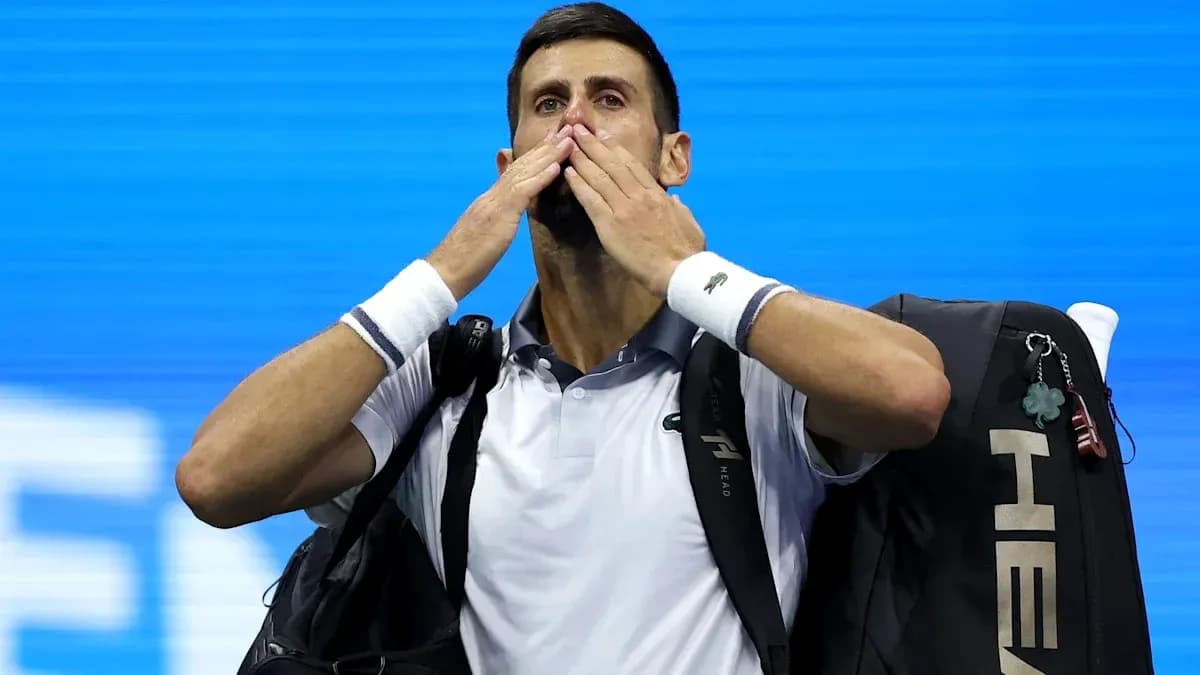
World number one Sinner is missing from New York with a knee problem. Novak Djokovic, the 24-time Grand Slam champion and perennial measuring stick, crashed out in a stunning first-round defeat to Argentina's Mariano Navone on Sunday.
As second seed, Alcaraz sits on the opposite side of the draw from French Open champion and top seed Zverev. The earliest they can meet is the final.
The dangers are still there, but they are scattered. French 10th seed Arthur Fils, fresh from his Cincinnati Masters title and widely tipped as a contender, fell earlier on Monday to Stefanos Tsitsipas. The only top-10 opponent Alcaraz can face before the semi-finals is American Ben Shelton, a potential quarter-final showdown that would send the New York crowd into overdrive.
Next up, though, is Portugal's Jaime Faria, ranked 72 in the world. A different test, another step, and another chance for Alcaraz to feel his way back into the full brutality of best-of-five combat.
On Monday night, the result was straightforward. The message was not.
Carlos Alcaraz is back, still searching for his top gear, still tinkering with his serve – and already dangerous enough to make a suddenly shaken draw look over its shoulder.