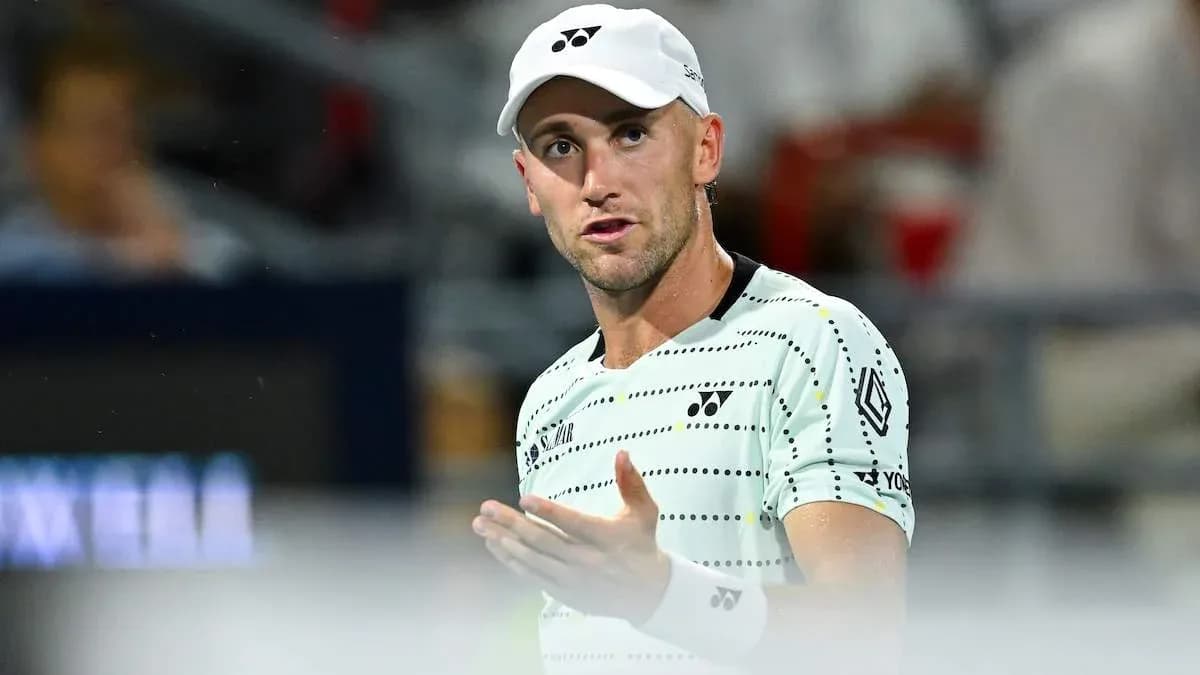
Casper Ruud arrived in New York with doubts. He left it on Sunday with answers nobody in his camp wanted.
The world No. 20 pulled out of the U.S. Open before hitting a ball in singles, scratching from his first-round match against Juan Manuel Cerúndolo because of a lingering back injury. Tournament organizers confirmed the withdrawal, a decision that caps a stop-start summer and raises an uncomfortable question: how much of his 2026 season is now at risk?
Lucky loser Arthur Gea steps into Ruud’s place in the men’s draw, a late promotion born from someone else’s pain.
From Cincinnati Alarm to Flushing Meadows Exit
The warning signs flashed in mid-August.
On Aug. 16 in Cincinnati, Ruud led Christopher O’Connell 5-2 in the opening set, only to call a medical timeout for lower-back pain. He retired trailing 7-5, 1-2, according to French daily L’Équipe. A day earlier, he had already felt something go.
“I tweaked my back in practice the day before,” Ruud wrote on Instagram then, explaining that he could not move freely. The hope was that rest, treatment and a gradual return would steady him before New York.
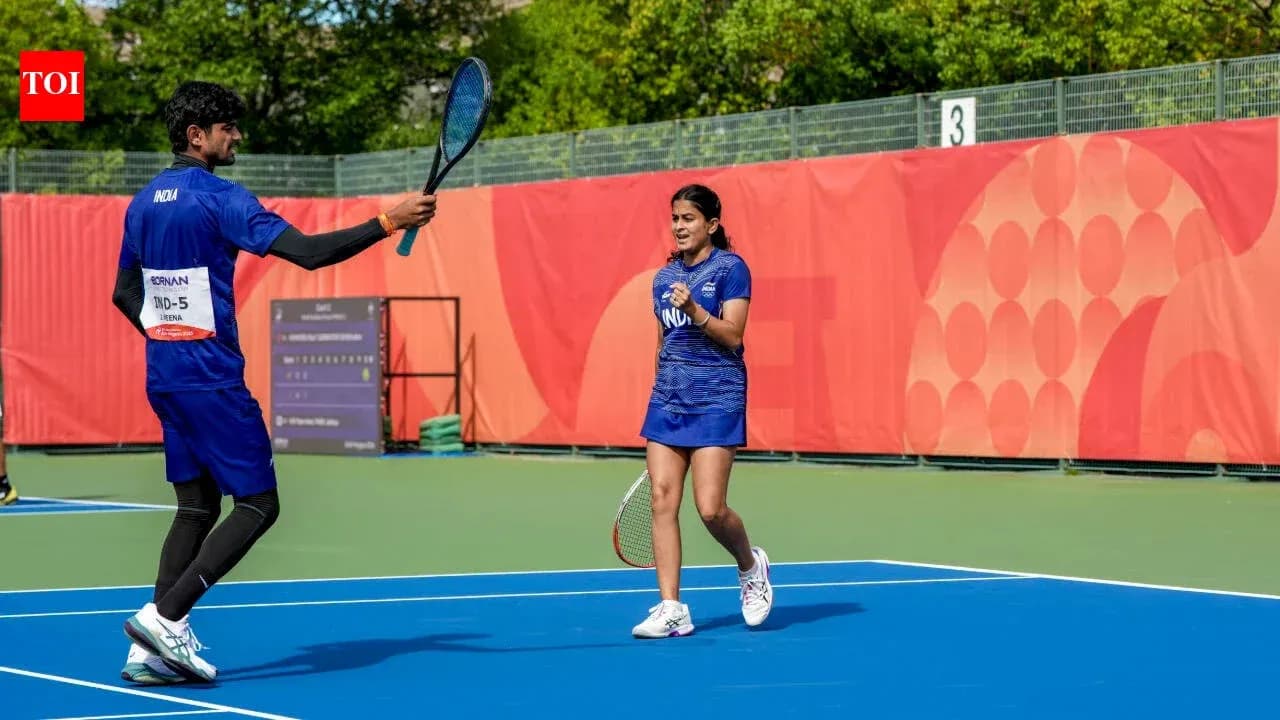
The back allowed just enough grace for one more run — in mixed doubles. Partnering Diana Shnaider at Flushing Meadows, Ruud managed to compete, and compete well. They beat Jessica Pegula and Taylor Fritz in the first round and then pushed Mirra Andreeva and Andrey Rublev in a tight quarterfinal before bowing out.
Shnaider was a late addition herself, replacing Iga Swiatek, who had withdrawn from the event to rest. Ruud, already compromised, carried on. It looked like a calculated gamble to keep rhythm and test his body under match conditions.
By Aug. 27, the optimism had thinned.
Footage from a practice session with Tomás Martín Etcheverry showed Ruud cutting things short after roughly 50 minutes. He “couldn’t serve” and even routine groundstrokes caused “considerable pain,” according to a social media post cited by Tennis365 reporter Richie Mills. The images matched the words: a player trying to loosen up and finding only resistance.
On Sunday morning, his name quietly vanished from the official order of play. Norwegian broadcaster NRK reported that the back trouble first flared in mid-August; now it had caught up with him fully.
A Steep Fall From a Lofty Peak
The timing stings because of what Ruud once represented in this very tournament.
He climbed to No. 2 in the world on Sept. 12, 2022, the day after reaching the U.S. Open final. Between September 2021 and November 2023, he spent 113 consecutive weeks inside the top 10, a model of consistency on a tour that punishes any dip.
This week, he sat at No. 20 in the singles rankings, according to ESPN, and entered New York as the No. 19 seed, placed in the same quarter as Alexander Zverev, per injury tracker RotoWire. On paper, the path was rugged. In reality, his body never even let him step onto it.
A deep run had already looked like a long shot. Ruud arrived with a 25-16 record in 2026, still searching for his first title of the year. His hard-court form had sagged badly, highlighted by a third-round loss to João Fonseca in Toronto. Since that 2022 final in New York, his best U.S. Open results have been a fourth-round appearance and a second-round exit.
For a player who once threatened to make Flushing Meadows his stage, it has become a measuring stick of how far he has drifted.
Norway’s Standard-Bearer at a Crossroads
Strip away the current struggles, and the résumé remains imposing.
Born Dec. 22, 1998, in Oslo, Ruud turned professional in 2015 and is coached by his father, former tour pro Christian Ruud. He is the highest-ranked player in Norwegian history and the country’s trailblazer in almost every major category: first Norwegian man to win an ATP title, first to reach a Grand Slam final, first to qualify for the ATP Finals, according to his U.S. Open player profile.
On clay, his dominance has been unmistakable. Ruud owns 14 ATP singles titles, 12 of them on clay, including last year’s Madrid Masters. His baseline patterns, his heavy forehand, his patience — all built to grind opponents down over time.
He has also proven he can hit the very top level on faster courts when healthy. In the Monte-Carlo Masters 2024 semifinals, he stunned Novak Djokovic 6-4, 1-6, 6-4, his first career win over a world No. 1 and the first time a Norwegian had ever beaten a No. 1 in ATP rankings history, which dates to 1973. At the ATP Finals 2024, he dismantled Carlos Alcaraz 6-1, 7-5 in the group stage, his lone win in six meetings with the Spaniard but a reminder of his ceiling.
The problem is no longer talent. It is durability.
The back issue now joins a medical file that is not extensive by tour standards but has a nasty habit of intruding at the wrong moments. An ankle injury forced him out of the 2022 Australian Open. A painful left knee hampered him during a 2025 French Open loss to Nuno Borges. Each setback has been isolated; together, they sketch a pattern that will concern a player whose game relies so heavily on physical intensity.
What Comes Next?
Ruud’s withdrawal from the U.S. Open does more than reshuffle one section of the draw. It interrupts the momentum of a career that once seemed on a smooth, upward curve.
For now, the focus turns to recovery and clarity. How serious is the back problem? Is this a flare-up that settles with rest, or the kind of injury that forces a rethinking of schedules, surfaces, even playing style?
At 27, with 14 titles and multiple major finals behind him, Ruud still has time to write a new chapter. The question after Sunday is whether his body will let him pick up the pen.