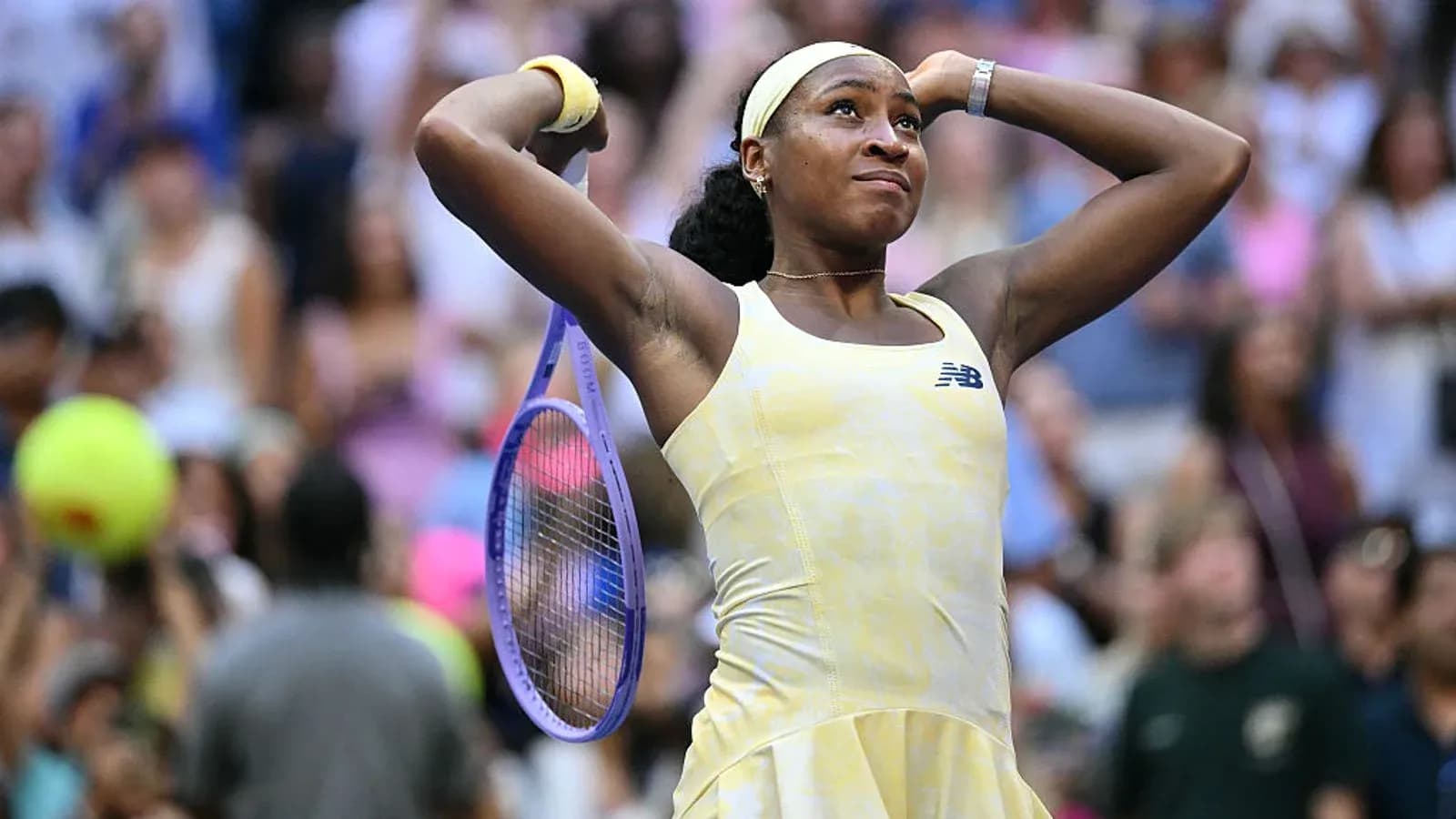
Coco Gauff kept the American flag flying at Flushing Meadows on a bruising day for the home contingent, grinding her way into the last 16 of the US Open as some of the country’s biggest names crashed out around her.
Gauff wins ugly – and that’s enough
This was not the electric, free-swinging Gauff who stormed to the title here in 2023. Against world No 40 Cristina Bucsa, she often looked stuck in second gear, searching for timing, for rhythm, for any kind of flow.
She still won 6-3 6-4.
Day conditions bothered her, the ball skidding through quicker than under the lights she loves. When Bucsa grabbed an early break, the match threatened to drift into a grind Gauff didn’t want. She snapped herself out of it.
“Once I was down that break I just told myself I need to accelerate through my shots,” she said. It showed. The forehand, tentative at the start, began to cut through the court. The serve, patchy early, tightened up when it mattered.
Bucsa, a canny opponent, kept changing speeds, mixing height and spin, dragging Gauff into awkward positions. “She’s a tricky player and sometimes she can pick it up and slow it down, so it was tough for me to get a rhythm,” Gauff admitted. The match never quite settled, but Gauff did. She managed the scoreboard, protected her serve in the tight moments and walked off with a straight-sets win that was more about resilience than brilliance.
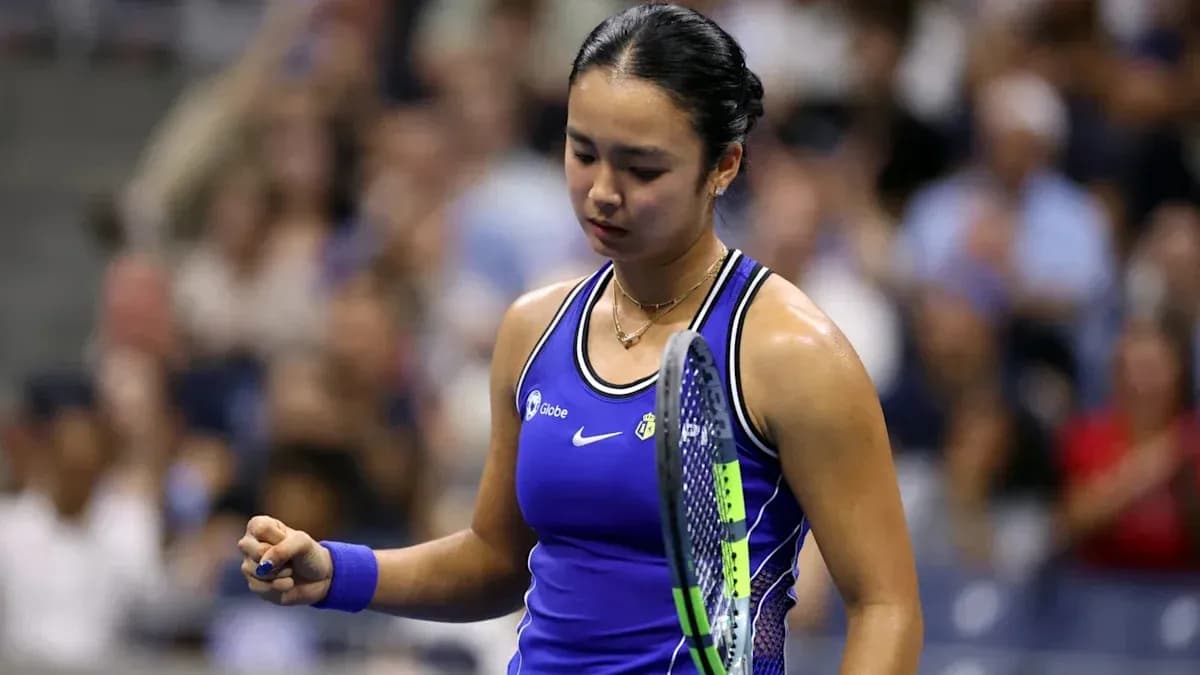
At 22, the defending champion is back in the second week in New York. She will face the winner of an all-teen clash between compatriot Iva Jovic and the Philippines’ Alexandra Eala for a place in the quarter-finals. It is the kind of draw that brings opportunity – and expectation.
On a day when American hopes elsewhere were shredded, that mattered.
Fritz collapses from two sets up
If Gauff steadied the ship, Taylor Fritz rocked it.
The ninth seed looked in complete control against Federico Cerundolo, two sets up and cruising. He had not dropped a set all week. Runner-up here two years ago, Fritz seemed to be playing his way into form, poised to join Ben Shelton, Frances Tiafoe, Tommy Paul and Alex Michelson in a strong American block in the last 16.
Then the match turned.
Cerundolo, the surprise champion at Queen’s Club earlier this summer, dug in. This was not a clean, high-quality contest; it was ragged, full of errors on both sides. But the Argentine embraced the chaos better. He tightened his margins, extended rallies, and asked Fritz to keep hitting one more ball. Fritz could not.
From two sets down, Cerundolo clawed back to win 3-6 4-6 6-3 6-4 6-4, leaving Fritz staring at the court in disbelief. A match that looked routine became another chapter in a long American wait: no home men’s singles champion in New York since Andy Roddick beat Juan Carlos Ferrero in 2003.
Cerundolo’s reward is a fourth-round meeting with Belgian 28th seed Alexander Blockx, who produced an upset of his own, dismantling Italian fifth seed Flavio Cobolli 6-7 (4-7) 6-3 6-0 6-3 with a ruthless mid-match surge.
Paul lines up Alcaraz test
With Fritz gone, attention swings to Tommy Paul, the 20th seed, who faces defending champion Carlos Alcaraz in one of the standout matches of the round.
“I think I played Carlos more than anybody on tour, for me, which is kind of crazy,” Paul said. “We’ve had some good matches.”
He knows exactly what awaits. “He’s the test, him and [Jannik] Sinner. They have been playing great, and I guess Carlos we haven’t really seen too much, but he’s obviously doing pretty well coming right back to competition.”
For American men’s tennis, Paul’s showdown with Alcaraz now carries extra weight. With Fritz out, the search for a standard-bearer in New York intensifies.
Keys’ nightmare from 5-0 up
If Fritz’s loss hurt, Madison Keys’ defeat cut even deeper.
The 2017 runner-up led Qinwen Zheng 5-0 in the deciding set. The match seemed done. Keys had bludgeoned her way through the first set 6-1, and though Zheng wrestled the second set in a tie-break, the American reasserted control and stood on the brink of victory.
Then came the freeze.
“I feel like I obviously got off to a really good lead, and then I just got really scared, like I couldn’t swing,” the 31-year-old said, raw and honest. “I don’t know. Tennis just feels really hard right now, so I feel like that kind of took over.”
From 5-0 up, Keys never crossed the line. Zheng surged, Keys tightened, and game by game the lead evaporated. The Chinese star completed a stunning 1-6 7-6 (7-3) 7-5 comeback, leaving Keys staring at one of the most painful defeats of her career.
Zheng’s reward is brutal: a fourth-round clash with Iga Swiatek.
Anisimova out, Andreeva marches on
Last year’s beaten finalist Amanda Anisimova could not escape the American slide. Her game, usually so clean when she’s in rhythm, unravelled under pressure from Anastasia Potapova. Forty-six unforced errors told the story as the Austrian closed out a 6-2 7-5 win.
Potapova now steps into the path of French Open champion Mirra Andreeva. The Russian fifth seed handled Czech Nikola Bartunkova with authority, winning 6-2 7-6 (7-5) to reach the fourth round in New York for the first time.
Andreeva, still so young but already a Grand Slam champion in Paris, continues to look at home on the sport’s biggest stages. Her baseline weight of shot and competitive edge make her one of the most dangerous players left in the draw.
Swiatek survives, sets up blockbuster with Zheng
On the other side of the women’s draw, Iga Swiatek had to work for every inch. Against Czech 25th seed Marie Bouzkova, the rallies stretched, the legs burned, and the margins shrank.
Swiatek found a way.
The six-time Grand Slam champion edged both tie-breaks to win 7-6 (7-3) 7-6 (7-3), relying on her resilience and defence when her attacking game misfired. “It got pretty physical, many long rallies,” said the 25-year-old. “It wasn’t easy.”
Now comes Zheng, fresh from that extraordinary turnaround against Keys. Swiatek’s discipline against Zheng’s power and belief has the feel of a genuine second-week marker.
Williams sisters spared fine
Away from the singles drama, Serena and Venus Williams again commanded attention, even in defeat. Playing their first doubles match at Flushing Meadows in four years, the sisters fell in three tight sets to Maya Joint and Chan Hao-ching.
They did not speak to the media afterwards, a move that usually brings a fine under tournament regulations. This time, they were spared. No punishment will follow.
On a day when the old guard bowed out quietly and American hopes took heavy blows, it was Gauff – still so young, yet already carrying the weight of a champion – who held her nerve.
The question now is whether she can carry the nation’s expectations a second straight year, on a court that demands not just brilliance, but the kind of stubborn, imperfect wins she found today.