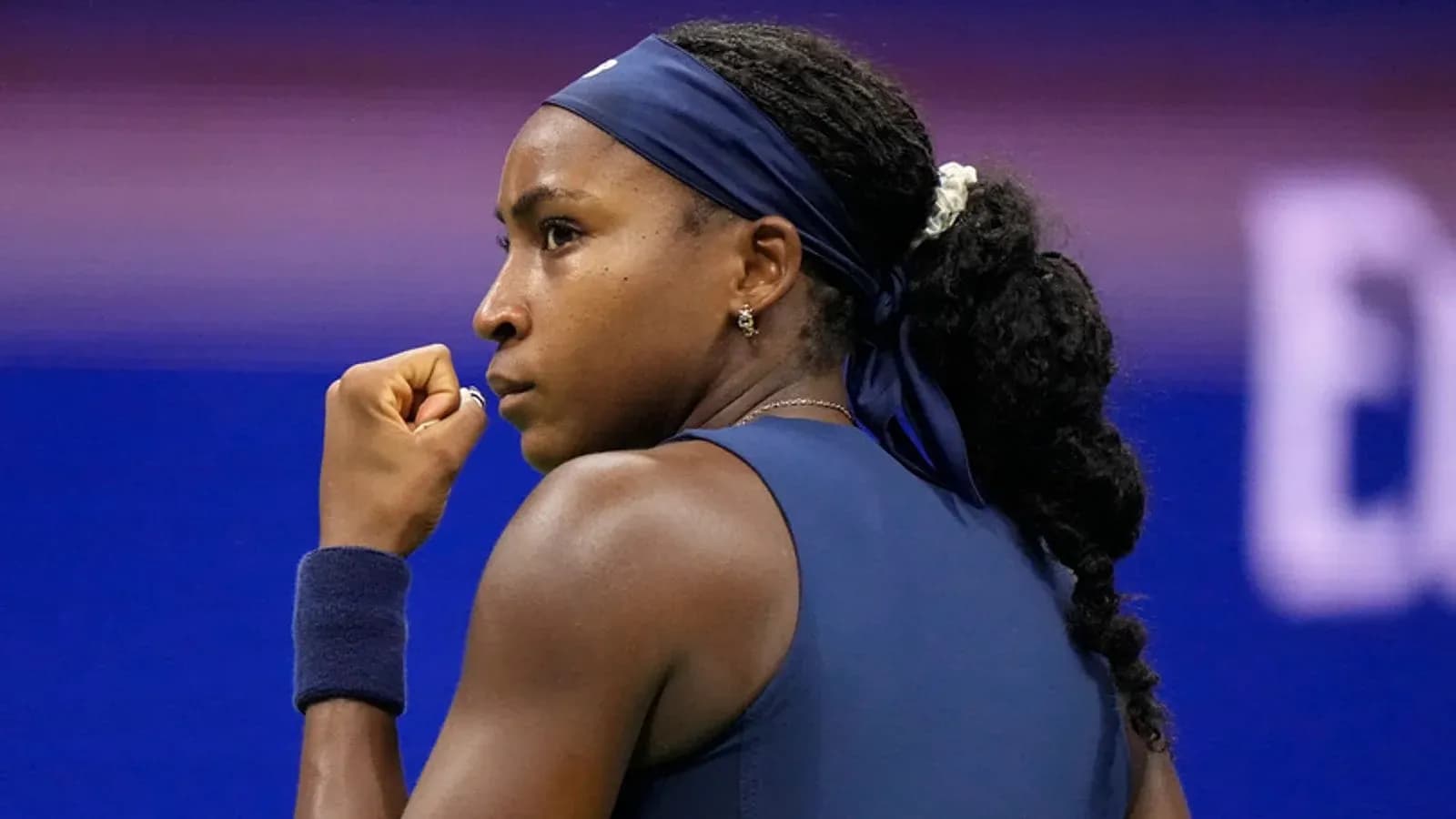
Coco Gauff steadied, then surged.
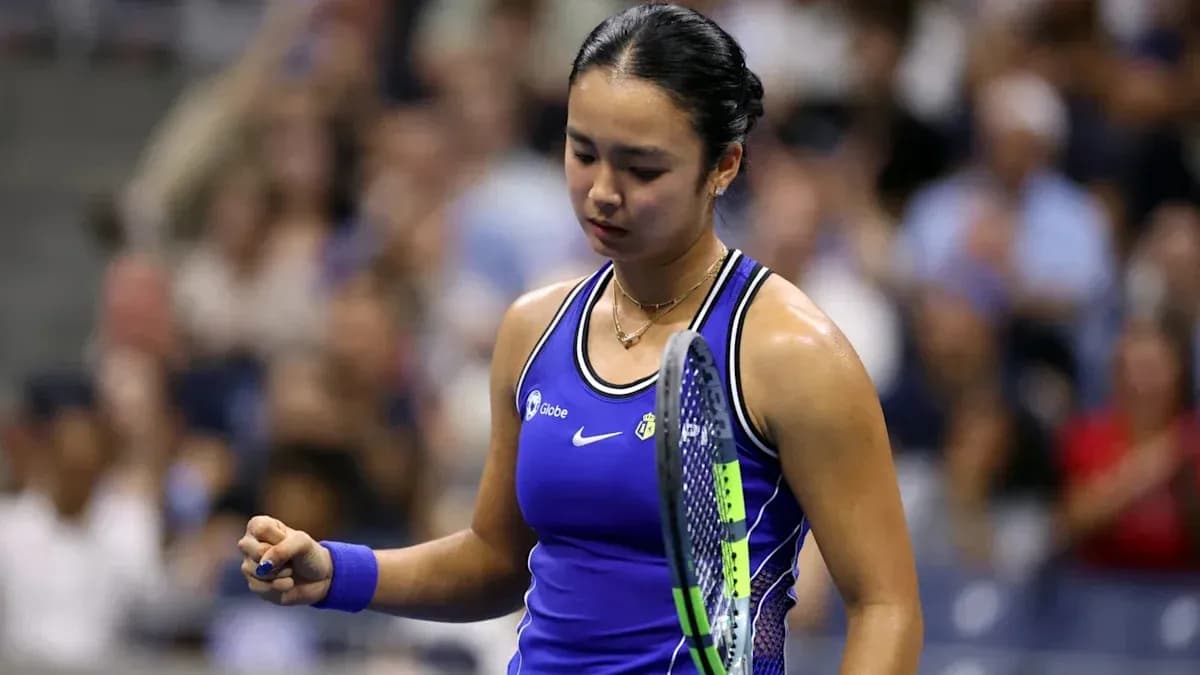
On a warm Labour Day night in New York, the defending US Open champion rode out an edgy opening to dismantle fellow American Iva Jovic 6-1, 6-4 and return to the quarter-finals at Flushing Meadows.
The first act was surprisingly shaky. Serving to start, Gauff double-faulted to hand the 18-year-old a break and an early jolt of belief. The crowd sensed a contest. For a few minutes, the Arthur Ashe hum turned into a murmur of intrigue.
That didn’t last.
Gauff snapped into gear, tightened her serve and began to bully the baseline. Jovic’s own nerves spilled out in short rallies and rushed errors, and Gauff tore through the next six games, ripping through the first set 6-1 with the authority of a player who knows this court, this stage, and this fortnight.
The second set brought more resistance and more of the spectacle people came for. Jovic finally settled, holding serve to open and starting to swing more freely. The teenager’s ball-striking hinted at why so many inside American tennis circles rate her so highly.
Then came the rallies that broke her.
Three times in one game, Gauff turned defence into attack with the kind of scrambling, lung-bursting retrievals that have become her trademark. What looked like Jovic’s points morphed into Gauff’s winners. The 22-year-old dragged herself out of corners, flipped the rhythm, and snatched the break for 3-2.
Jovic answered immediately, striking back to level at 3-3 and briefly tilting the match into a genuine fight. She stepped inside the baseline, went after returns, and tried to rush Gauff out of her patterns.
But the door she had prised open slammed shut in an instant.
Gauff broke to love in the very next game, a ruthless four-point burst that underlined the gap in experience. From there, she never loosened her grip, serving out the match in one hour and 33 minutes to keep her record of not dropping a set this tournament intact.
What followed at the net and in the aftermath said as much about Gauff as the scoreline. She made a point of reassuring Jovic, speaking from the experience of someone who once was the teenage sensation on the other side of the net.
“Iva’s an incredible player, an incredible talent, she plays beyond her years. I’m used to being the younger American,” Gauff said, acknowledging the role reversal.
She praised the “high-level” first set, noted how Jovic raised her level in the second, and admitted she had chances to pull away even earlier.
Then she turned reflective. She talked about being 18, about how every defeat felt crushing and every win euphoric, about the lessons buried in those lows. Jovic, she suggested, already carries a maturity she herself didn’t always have at that age. The message was clear: the performance mattered more than the loss, and nights like this would shape the player Jovic becomes.
“I know that she will be in many more fourth rounds and quarters,” Gauff said, convinced that the teenager will learn to seize these stages soon enough.
For now, this stage still belongs to her.
Andreeva awaits as the stakes rise
The victory completes a heavyweight women’s last eight in New York and hands Gauff a familiar, and increasingly dangerous, opponent: French Open champion Mirra Andreeva.
Gauff has beaten the Russian in all five of their meetings, a head-to-head that looks lopsided on paper but has rarely felt that way on court. Their matches have been tight, tense, and tactical, decided by a handful of points rather than any gulf in ability.
Gauff knows it. She called it “another tough match,” pointing out that every one of their previous encounters “could have almost gone either way.” The difference this time? Andreeva returns to New York as a Grand Slam champion, a player who now walks into the biggest arenas with the aura of someone who has already climbed the mountain.
“She is obviously in a different mindset now at the top of the game coming off of a Grand Slam win,” Gauff said. She expects a different approach, a different version of Andreeva than the one she has handled so far.
Around them, the draw has hardened. Aryna Sabalenka faces Linda Noskova. Jessica Pegula meets Emma Navarro in an all-American clash of contrasting styles. Qinwen Zheng takes on Elena Rybakina in a power-laden quarter-final.
Gauff, though, remains the home hope with the heaviest weight on her shoulders and the clearest sense of purpose. She has not lost a set. She has navigated the noise and expectation that come with defending a title in your own country. She has handled a dangerous young compatriot without ever letting the occasion drift away from her.
Now comes Andreeva, a rival with a major trophy in her bag and revenge on her mind.
Gauff wanted a second US Open run that tested her credentials. She is about to get exactly that.