Coco Gauff rips up script to deny Andreeva and set Rybakina showdown
For 26 brutal minutes, Coco Gauff looked like a defending champion about to be chased out of her own house.
Her serve misfired, her forehand flew long, and Mirra Andreeva — the teenage French Open winner with ice in her veins and nothing to lose — tore through the opening set 6-2, handing Gauff just three winners and forcing 14 unforced errors out of her. The Arthur Ashe crowd, ready for a coronation, instead watched a crisis.
Then Gauff disappeared.
Not from the tournament. Just to the restroom.
She came back with a different look in her eyes.
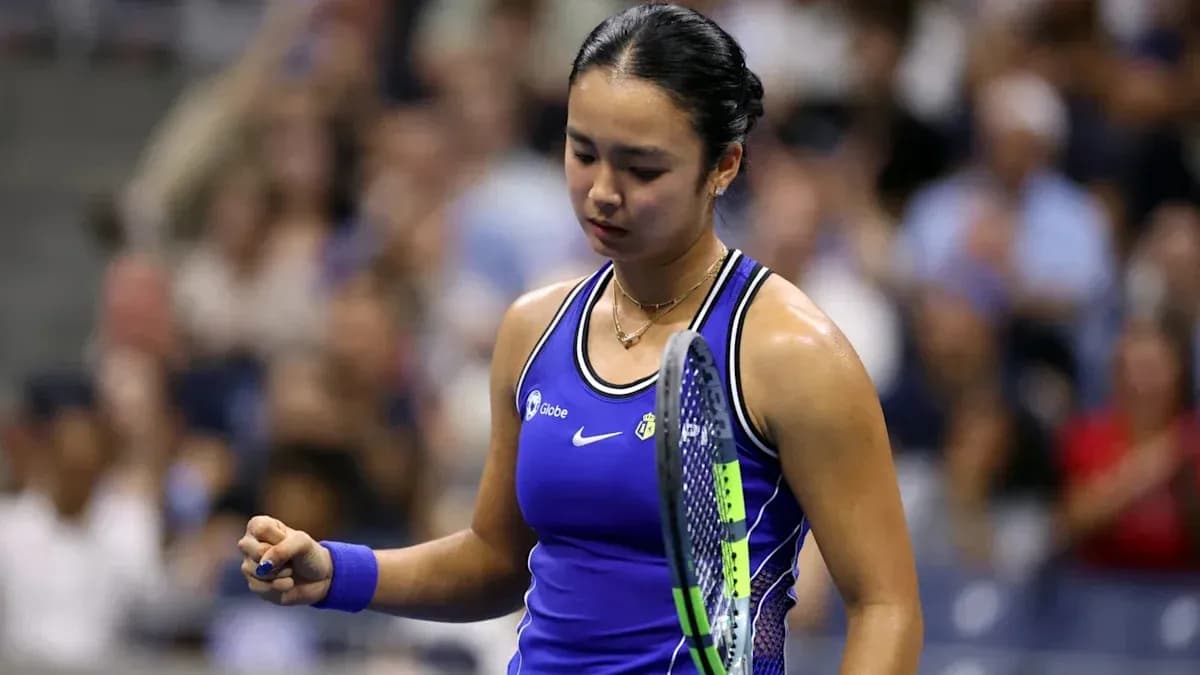
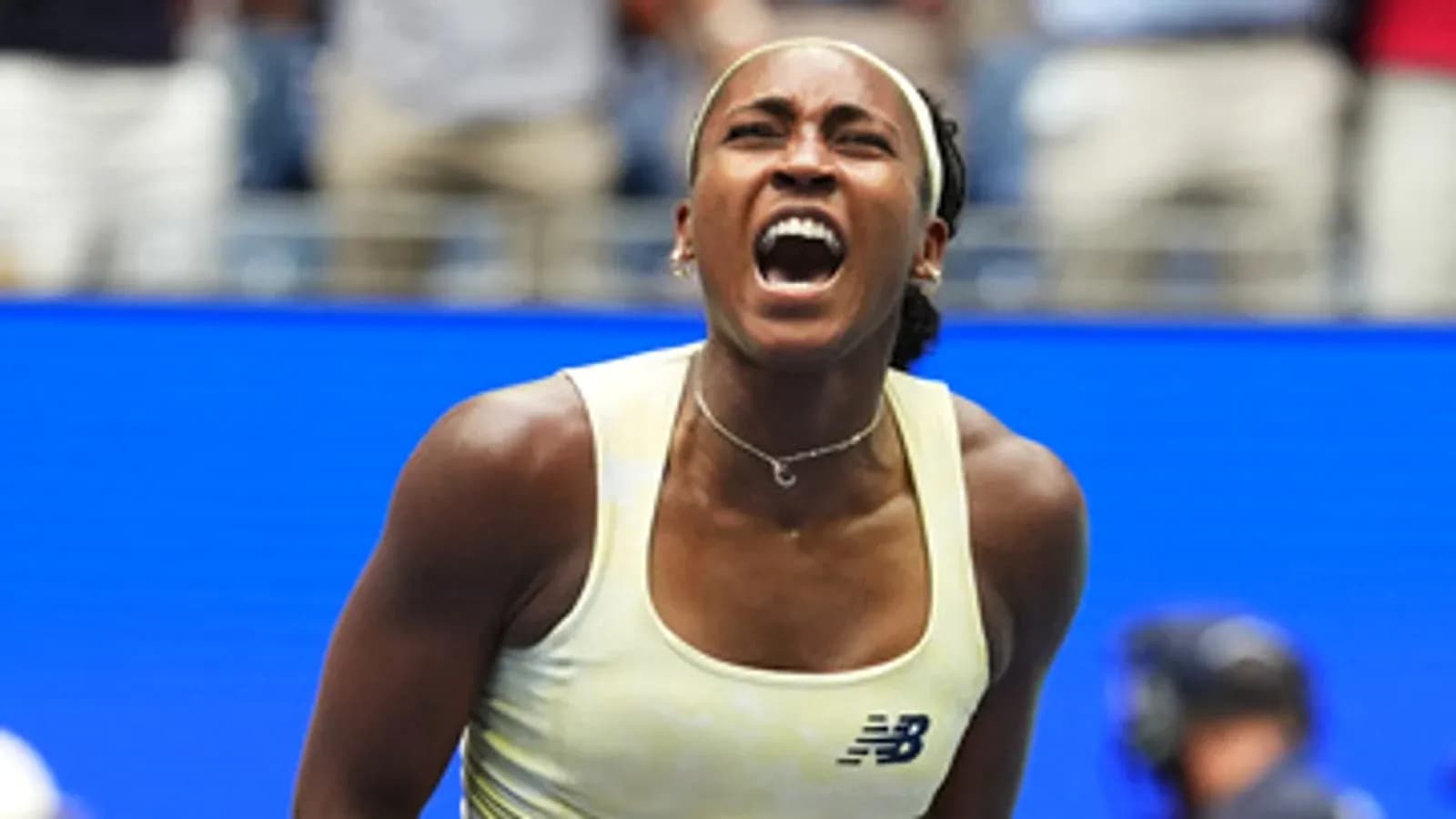
What followed was not a clean, flowing performance. It was something far more compelling: a scrap for survival that ended with Gauff saving two match points and clawing her way into the US Open semi-finals, 2-6 7-6 (7) 6-2, where newly crowned world No 1 Elena Rybakina now waits.
From freefall to fightback
Gauff’s start was a mess. The 2023 champion could barely feel the ball. First serves drifted long or sat up to be punished, the forehand wing that has so often been questioned looked vulnerable again, and Andreeva needed no invitation.
The Russian fifth seed played with clarity and aggression, picking on Gauff’s errors and racing through the first set in under half an hour. The scoreboard said 6-2; the performance gap felt wider.
Gauff later admitted she had to “reset.” That trip off court after the opener wasn’t a breather. It was a reboot. She thought about Frances Tiafoe’s comeback the previous night, about the responsibility of playing in front of this crowd, about leaving with no regrets. The tennis still wasn’t perfect when she returned, but the body language changed. The feet moved quicker. The shoulders straightened.
Andreeva, though, didn’t go away. The second set tightened, rallies lengthened, and nerves began to creep into both service games. The match turned into a test of who could simply keep the ball “on the island,” as Tim Henman would later put it, and cut out the rash mistakes.
The pressure finally told in the tie-break.
Andreeva earned two match points. Twice she stood a point from the biggest win of her career, the scalp of the reigning champion in her grasp. Twice she flinched. Gauff hung in, forced the extra ball, and escaped.
When Gauff snatched the breaker 9-7, the emotional swing was immediate. Andreeva’s frustration boiled over as she hurled her racket towards her chair. It spun dangerously close to a courtside camera operator, who had to dodge out of the way. The incident left the teenager flirting with a default, her composure visibly shaken.
From that moment, the match belonged to Gauff.
She surged through the decider 6-2, the weight of shot returning, the serve finally landing with purpose. The crowd, so quiet in the first set, roared with every hold. The defending champion had been on the brink; now she was marching into another New York semi-final.
“It was just pure heart to find a way, somehow,” said Sky Sports Tennis analyst Marion Bartoli. “It doesn’t really matter the level, you just have to find a way on the day. Coco Gauff is one of the only players in the world capable of winning a match like that.”
Henman agreed on the knife-edge nature of it all. “You’ve got two brilliant players capable of playing some amazing tennis who through serving issues and errors became so tight and so nervous,” he said. The ball speed dropped, the rallies turned cagey, but Gauff — just — kept her nerve.
For Andreeva, this will sting. Two match points in a Grand Slam quarter-final against the defending champion, a tie-break in her hands, and then it all slipped away. “That is going to be a very difficult defeat for Andreeva to get over,” Henman said. “But she will learn so much from it.”
Rybakina rises to No 1
Waiting for Gauff is a new kind of challenge: Elena Rybakina, freshly installed as world No 1.
The 27-year-old from Kazakhstan secured the top ranking earlier in the day by outlasting Qinwen Zheng 3-6 6-1 6-4 to reach her first US Open semi-final. Aryna Sabalenka’s 99-week reign at the summit will end on Monday, regardless of how deep the Belarusian goes in New York.
Rybakina, the Australian Open champion, has been stalking Sabalenka all year. Now she finally steps into the role, though she brushed off the milestone with the coolness that has become her trademark.
“It’s just a number right now, I’m only in the semis and the goal is to win every tournament I play,” she said. “I feel like I just need to focus on my game and enjoy tomorrow.”
Her performance against Zheng wasn’t flawless. For the first time this fortnight, she dropped a set. Zheng, riding an Emma Raducanu-style surge from the qualifying draw, came out swinging and took the opener 6-3. By then she had logged nearly 12 hours on court through three qualifying matches and five in the main draw, but her legs still carried her through one more big push.
Rybakina’s response was ruthless. She reset, turned up the aggression from the baseline, and tore through the second set 6-1. When the decider tightened, her class showed. The depth on her groundstrokes pinned Zheng back, and the Chinese player’s marathon workload finally caught up with her as Rybakina closed it out 6-4.
“It ended up being a really good performance,” Henman said. “It wasn’t the best start from Rybakina, Zheng had something to do with that, but the way she responded in the second and third sets was impressive. In that third set, when it was tight, Rybakina really did show her class.”
Zheng’s fairytale run ends with her back on the verge of the top 50 after elbow surgery had dragged her down to 121. Rybakina, by contrast, walks into the last four as the new standard-bearer in the rankings and a woman who has learned how to grind as well as glide.
“I didn’t start that well, I was too negative,” she admitted. “It was a lot of unforced errors but I told myself to keep on fighting.”
A semi-final with edge
So the stage is set.
On one side of the net: Gauff, the defending champion who just survived a match she had no right to win, carried by stubborn belief and a New York crowd that refuses to let her go quietly.
On the other: Rybakina, the new world No 1, an understated destroyer who shrugs off rankings talk and keeps stacking wins.
Gauff’s quarter-final wasn’t pretty. Rybakina’s wasn’t perfect. Both, in different ways, were revealing.
Now they meet with a place in the US Open final at stake — and with it, a chance to shape the balance of power at the very top of the women’s game.