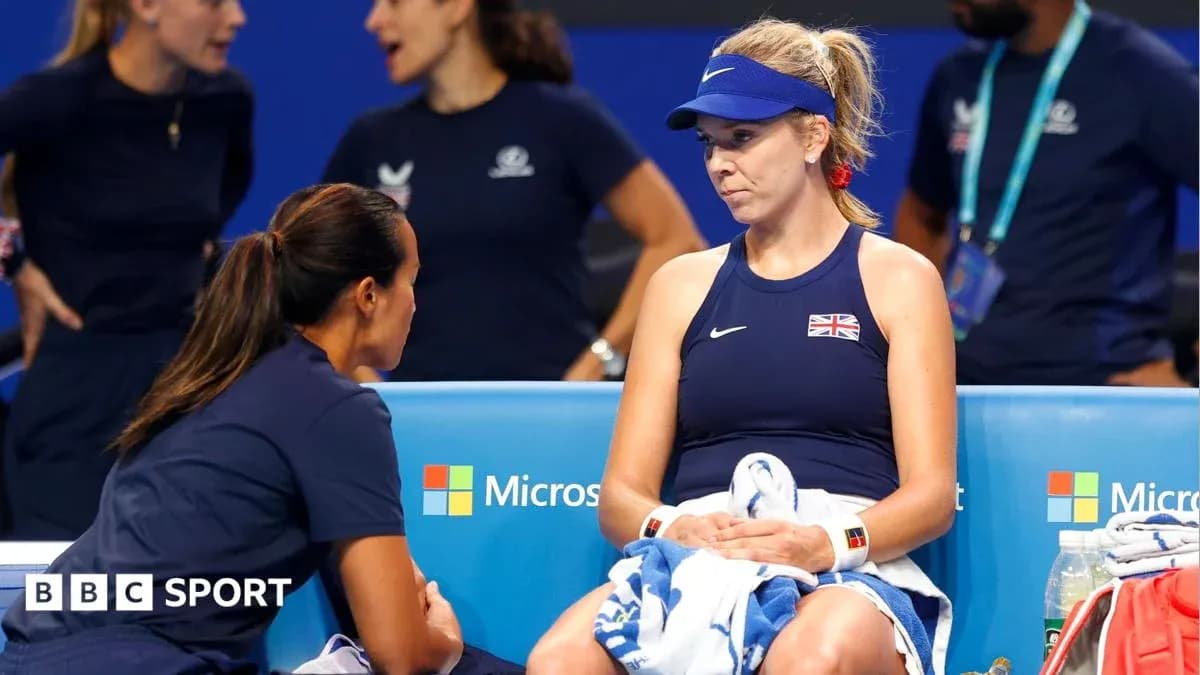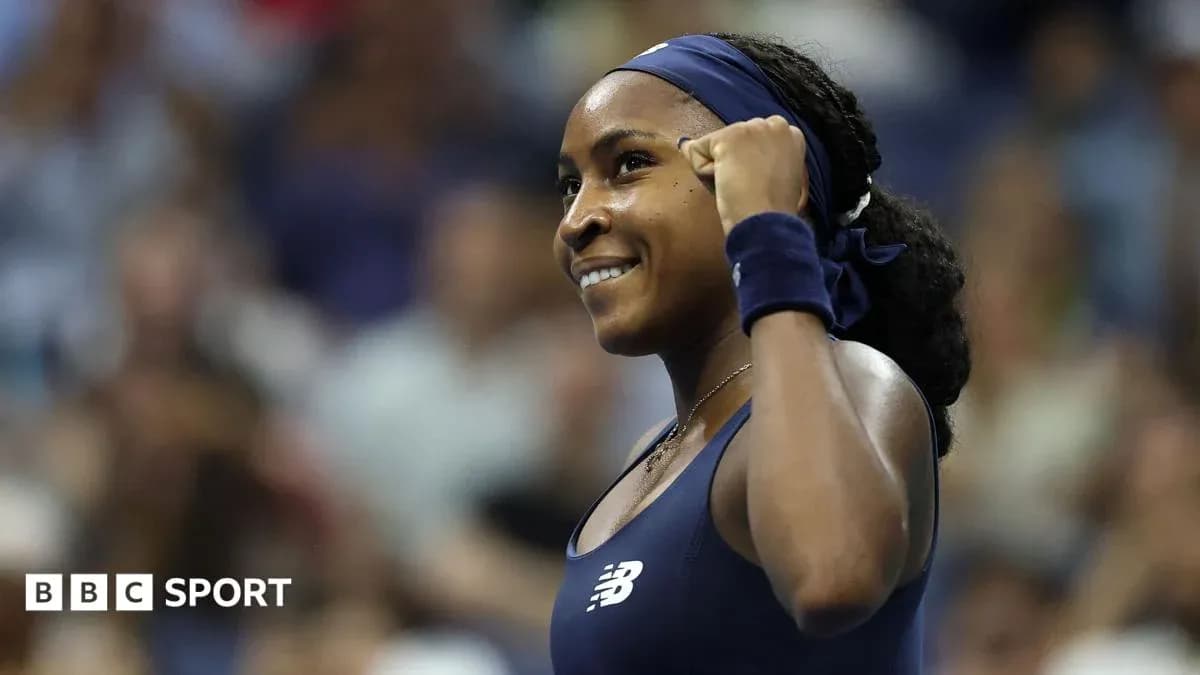
Twelve months ago, Coco Gauff stood alone in the rain on the US Open practice courts, stubbornly tossing ball after ball into a grey New York sky. The serve that once freed her had turned into a public ordeal. Every double fault drew a wince, every second serve felt like a test of nerve. The image of her serving through the drizzle became a snapshot of a young star wrestling with the one shot she could not trust.
Fast forward a year and the contrast could not be sharper.
On Tuesday, under drier skies and with a far clearer mind, the 22-year-old American opened her US Open campaign with a 6-3 6-4 win over Turkey’s Zeynep Sonmez, built on the very foundation that had once betrayed her. The serve, once a liability, is now the bedrock.
She announced it from the first game. A 112mph ace down the T. An unreturned first serve. Another ace. A hold to love in under 90 seconds that felt like a statement as much as a start. Sonmez barely laid a racquet on the Gauff first serve in that opening set; the world number four won 93% of those points and cruised through the opener with a control that would have felt unthinkable here last August.
Back then, the tension around her delivery was suffocating. On the eve of her home Slam in 2023, Gauff tore up the script, reshuffling her coaching team and bringing in biomechanics specialist Gavin MacMillan, the man credited with helping Aryna Sabalenka tame her own serving demons. It was a bold, borderline drastic move, made in the wake of a flurry of double faults in Cincinnati.
To overhaul technique right before the US Open, where every practice swing is scrutinised, was a gamble. It showed. Gauff looked tight, burdened by the expectation that the fix had to be instant. She exited in the fourth round, often appearing anguished, even reduced to tears during matches. The serve, and the noise around it, weighed heavily.
“Now it’s like I can look back a year on and think, ‘Oh, wow, it’s a big difference’,” she said in New York, now the fourth seed at Flushing Meadows. “It feels good to come into a tournament feeling confident on that shot finally.”
The changes have been precise rather than dramatic. A more consistent toss. No longer chasing the ball too far out in front. A straighter wrist. Subtle adjustments, but on a shot as exposed as the serve, they’ve altered the whole picture.
The transformation began to show itself in Cincinnati earlier this month, where her improved delivery underpinned a title run. Analysis from that event showed Gauff aiming closer to the lines while maintaining her pace, a combination that speaks to both technical refinement and growing belief. The serve is not flawless — the occasional double fault still appears — but it is now a weapon opponents must solve, not a weakness they can exploit.
Against Sonmez, that new reality was obvious. After breaking for a 1-0 lead in the second set, Gauff briefly wobbled. The Turkish player clawed back to 2-2, then pushed hard, earning three break points for a 4-2 advantage. A year ago, this is where panic might have crept in, where the arm might have tightened and the double faults multiplied.
Not this time.
Gauff responded with a precise ace out wide, then a 115mph first serve that Sonmez couldn’t touch. The hold was gritty, defiant, and it flipped the tone of the match. From there, Gauff broke immediately for 4-3, then closed the door with the kind of authoritative serving that once felt beyond her.
In the final game, she unleashed three unreturned first serves, all just under 120mph, to earn three match points. Sonmez finally cracked on the first of them after a brief rally, the contest ending exactly as it had begun: with Gauff dictating behind a serve that now carries menace rather than doubt.
“Psychologically, I’m now going to go for the ace, or I know I can hit the serve and the return is probably not going to come back,” she said. “Last year I literally was like I hope I make it in. It’s such a big difference knowing almost every serve I’m trying to basically hit 110, 115, 120mph if I can.”
That shift in mindset may prove as important as any biomechanical tweak. The serve is no longer a shot she tiptoes around; it’s a platform she’s willing to attack from. The numbers, the speed, the accuracy all tell one story: this is a player who now trusts her first shot again.
Next up is Spain’s Paula Badosa or Australia’s Daria Kastakina in the second round. Whoever emerges will face a very different Coco Gauff to the one who once served in the rain, searching for answers. This time, she arrives with a clear plan, a rebuilt motion, and a serve that finally looks ready for the weight of a home Slam.