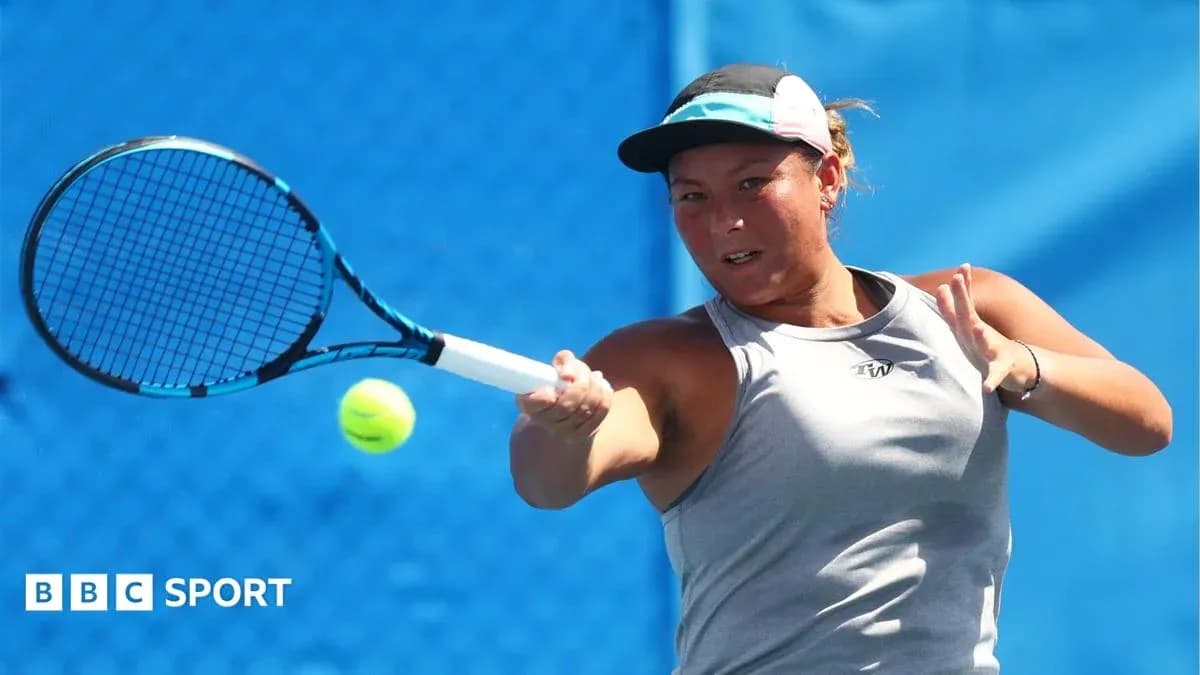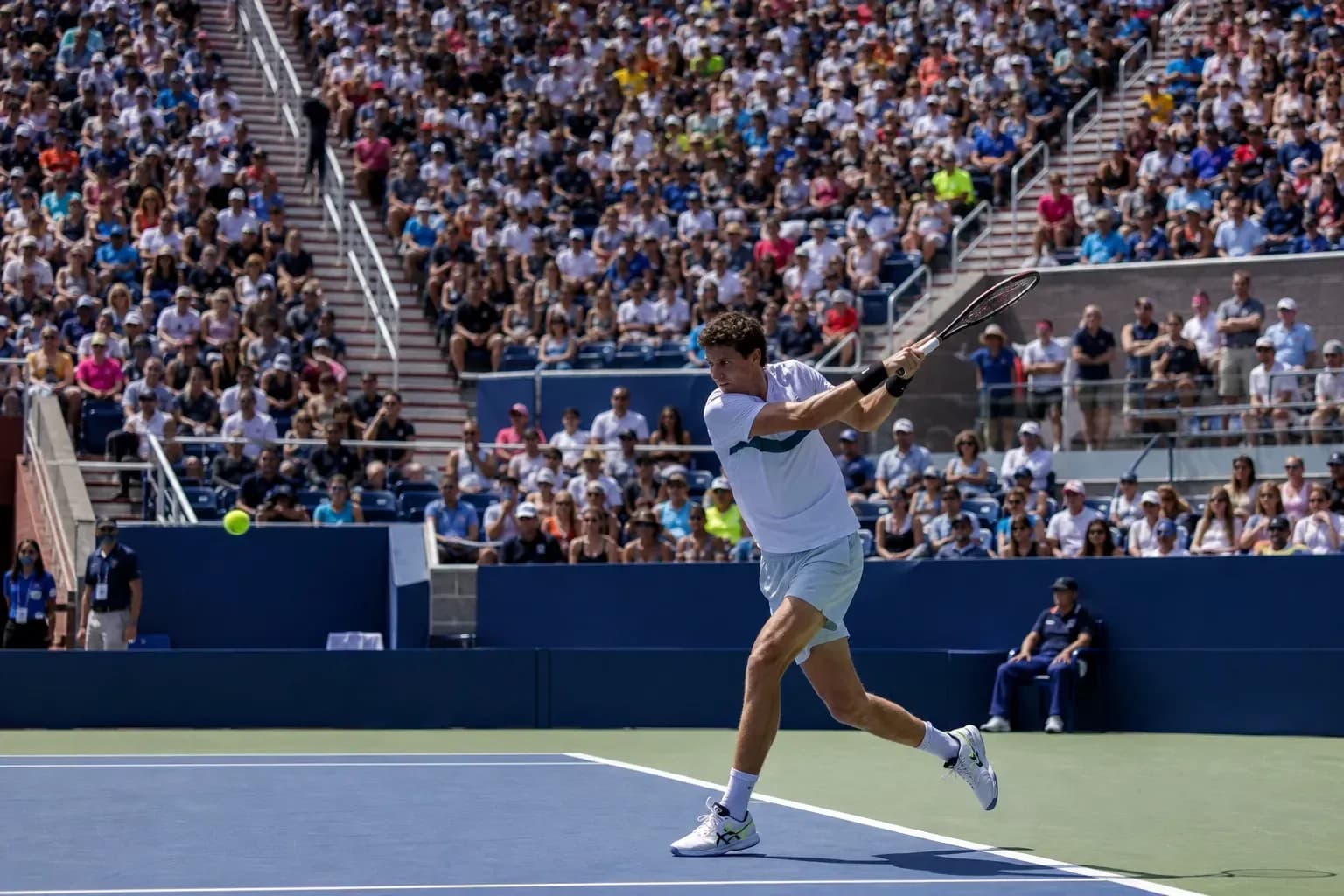
Dane Sweeny walked off Louis Armstrong Court with a limp, a straight-sets defeat, and the clearest week of his career.
The 25-year-old Australian, a late arrival to the US Open main draw and ranked 123 in the world, saw his singles run end in the third round with a 4-6, 3-6, 3-6 loss to 21st seed Luciano Darderi. The Italian’s heavier weight of shot and cleaner execution told, but Sweeny’s body also betrayed him. He complained of a hip issue during the match and never found the rhythm that had carried him into uncharted territory.
He knew it. He said afterwards he lacked his usual sense of pace and timing and had sprayed too many unforced errors. For a player who thrives on feel and court craft, the timing of the injury could hardly have been worse.
Yet this was still the most important week of his career.
Sweeny only made the main draw because of late chaos higher up the food chain. Two withdrawals opened a slot, and Tennis Australia shifted a reciprocal wild card that had originally been earmarked for Alexei Popyrin. Sweeny grabbed it and turned it into a first appearance in the last 32 of a Grand Slam.
He arrived as a fringe figure. He leaves New York as a man on the brink of the top 100.
The run guarantees him $402,500 in prize money and, by early calculations, a jump to around No. 109 in the rankings — a career high. One more push over the coming months, one more surge at smaller events, and he’ll crack the top 100 for the first time. Do that before the season ends and he won’t need any favours in January: direct entry into the Australian Open would finally be his, earned outright rather than granted.
Sweeny was also carrying the flag. By the time he walked on court against Darderi, he was Australia’s last player standing in the singles draws. His exit closes that chapter, but it also underlines how sharply his profile has risen in a matter of days.
The American exits: big names, brutal turns
While Sweeny’s story in New York felt like a breakthrough, several home hopes endured a brutal day.
Taylor Fritz, the ninth seed and last year’s US Open finalist, crashed out in five sets to Francisco Cerundolo. The Argentine came back from two sets down to win 3-6, 4-6, 6-3, 6-4, 6-4 and reach the fourth round here for the first time.
For Fritz, this marks his earliest departure from his home Slam in four years. He had the match where he wanted it, two sets in hand and the crowd behind him, but Cerundolo refused to go away. The Argentine grew bolder on return, cleaned up his baseline patterns, and slowly turned the match into a grind that Fritz could no longer control.
On the women’s side, Madison Keys suffered the kind of defeat that lingers.
Up 5-0 in the deciding set against Zheng Qinwen, she stood on the brink of victory, only to see the match unravel. Zheng stormed back and eventually closed out a 1-6, 7-6 (7-3), 7-5 win, stealing a contest that had looked utterly lost an hour earlier.
The reward for Zheng is a marquee fourth-round clash with world No. 1 Iga Swiatek, who survived two tense tiebreaks against Marie Bouzkova. Swiatek didn’t run away with it, but she held her nerve in the pressure moments, edging both breakers to move on.
The American losses kept coming. Tenth seed Amanda Anisimova fell 2-6, 5-7 to Anastasia Potapova, unable to claw her way into a deciding set. The Russian’s aggression on the front foot dictated most of the key exchanges and kept Anisimova off balance.
Coco Gauff, though, steadied the home narrative. The defending champion produced a controlled 6-3, 6-4 win over Cristina Bucsa, a performance built on clean serving and sharp first-strike tennis. On a day when so many American contenders faltered, Gauff’s authority stood out.
So New York moves on without Fritz, without Keys, without Anisimova — and without Dane Sweeny, the late wild card who turned a last-minute lifeline into a career reset.
The question now is simple: was this week the start of Sweeny’s rise, or just the first glimpse of what he’ll need to back up across a full season?