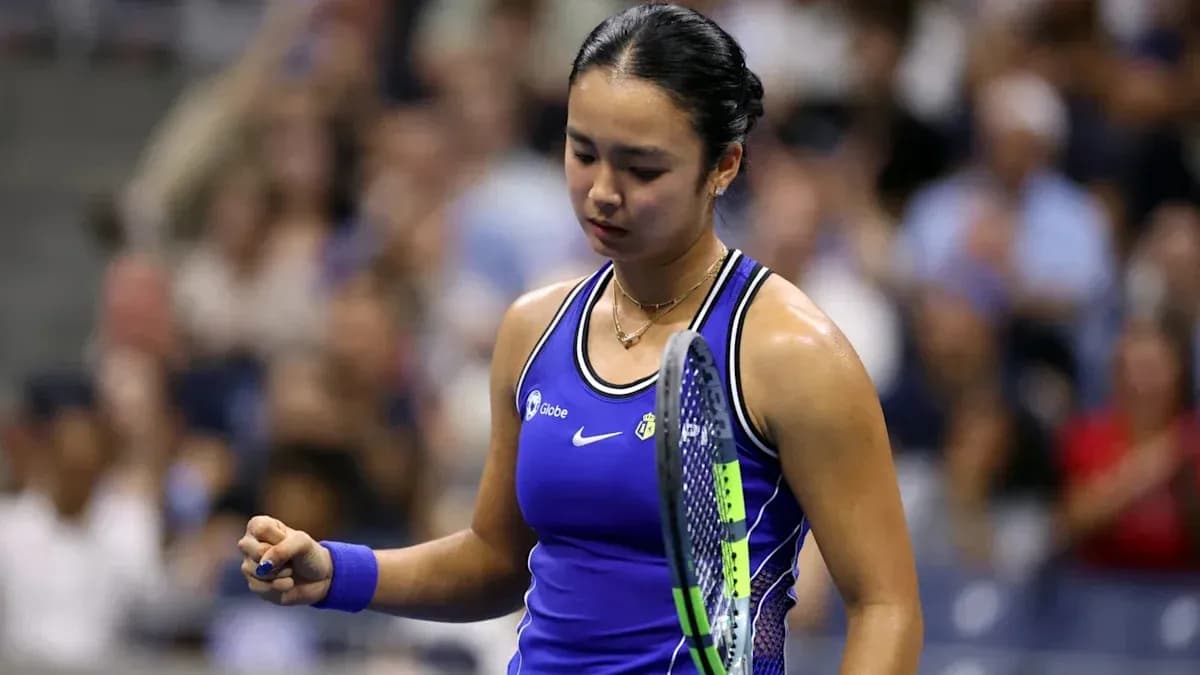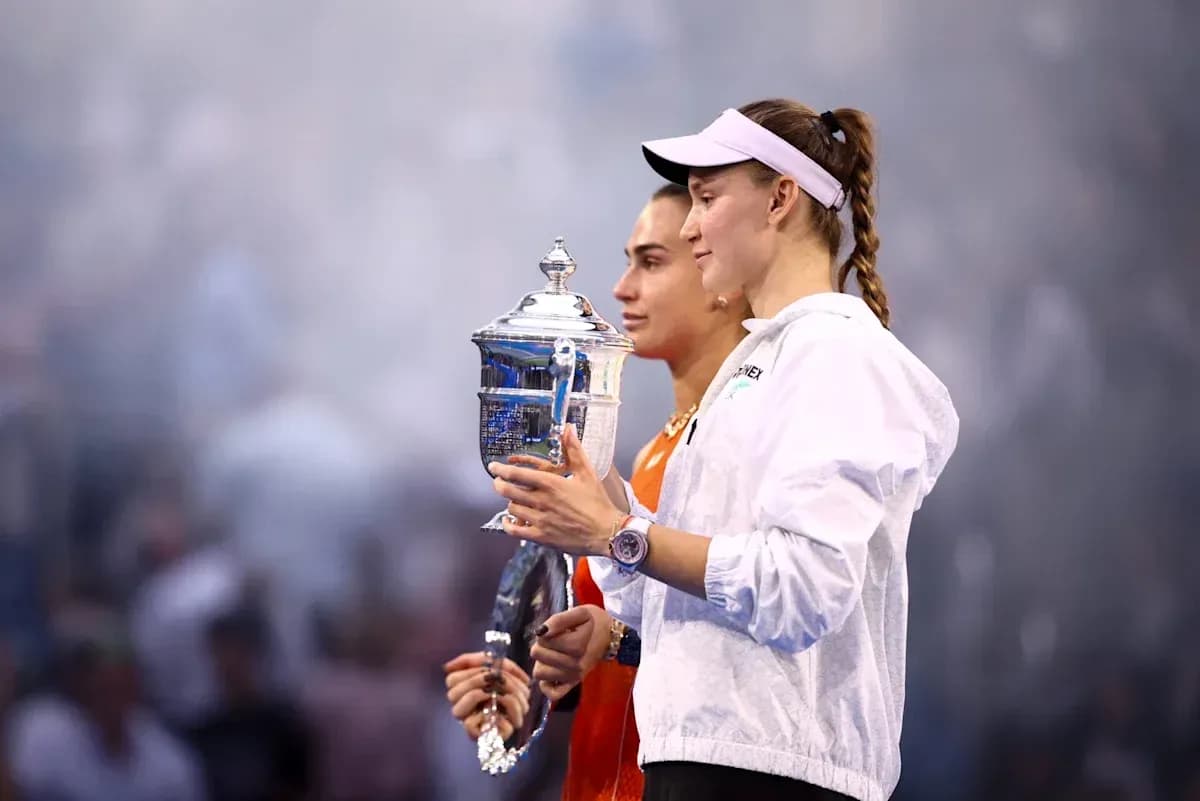
Elena Rybakina walked into New York as the new world No. 1. She left it as the US Open champion – and a three-time major winner with history at her back.
Under the lights and under real pressure, the 27-year-old Kazakhstani outlasted Aryna Sabalenka 6-4, 5-7, 6-2 in a final that swung wildly before Rybakina ripped it out of the Belarusian’s hands. Having already conquered Wimbledon in 2022 and the Australian Open earlier this year, she now owns hard courts and grass. Only Roland Garros stands between her and a career Grand Slam.
From No. 1 burden to US Open brilliance
This was not a serene coronation. Rybakina arrived in New York with the ranking target on her back, having just overtaken Sabalenka at the top of the WTA standings. Her previous best at Flushing Meadows? The fourth round.
That context is exactly why Marion Bartoli, herself a former Wimbledon champion, could barely hide her admiration.
“Can you imagine that her previous best result here was the fourth round? That’s extraordinary, to come here with all the pressure of the world, knowing she had the No. 1 world ranking on her racket, to actually go on and win the title,” Bartoli told Sky Sports Tennis.
The word she kept coming back to was “extraordinary”. On this evidence, it fits.
Rybakina handled the weight of expectation with a cold, almost ruthless calm. She edged a tight first set, saw Sabalenka storm back to steal the second, and then – in the kind of moment that often breaks new No. 1s – she simply reset.
The turning point in the third
The end of the second set could have haunted her. Serving, leading, then suddenly broken and dragged into a deciding set by an opponent who thrives in chaos – many players crumble there.
Rybakina did the opposite.
“The way she bounced back at the beginning of the third set tonight for me, was absolutely extraordinary,” Bartoli said. “It looked like she completely forgot what happened at the back end of that second set, when she got caught on her own service game.”
The pressure finally told, just not on the player most expected. Rybakina stepped in, took the ball early, and went after Sabalenka’s serve with relentless intent.
“She just kept on moving on, and moving forward all the time. The way she attacked Sabalenka's serve all the time, putting her under so much pressure,” Bartoli added.
The third set became a showcase of controlled aggression. Rybakina’s ball-striking, already one of the most feared weapons on tour, went up another gear. She dictated rallies, pinned Sabalenka behind the baseline, and turned a knife-edge contest into a one-sided finish.
“The ball-striking from that young lady is just something else. She can do anything on the tennis court. She's only missing Roland Garros now from completing a career Grand Slam,” Bartoli said.
A slice of Open Era history
The scoreline tells part of the story. The route to the trophy tells even more.
In the Open Era, no woman had ever won the US Open while going the distance in the quarterfinals, semifinals and final. Rybakina just did exactly that.
Three straight three-set epics in the business end of a major. Three times she walked to the edge. Three times she found more.
It is a record that underlines not only her shot-making, but her engine and her nerve. At 27, she now looks like one of the physically and mentally strongest players on the WTA Tour, a champion who can live in the trenches and still swing freely when it matters most.
A champion at her peak – with one gap to fill
With New York conquered, Rybakina’s Grand Slam résumé now reads: Wimbledon, Australian Open, US Open. Three different stages, same icy composure.
For now, she has earned what comes next: a pause. Time away from the grind, time to let this run sink in. Few players have deserved it more after the way she has pushed herself through this fortnight.
But the shape of her career is suddenly clear. She stands one title away from the career Grand Slam. The question is no longer whether she belongs at the top.
It’s how long the rest of the field can stop her from completing the set in Paris.