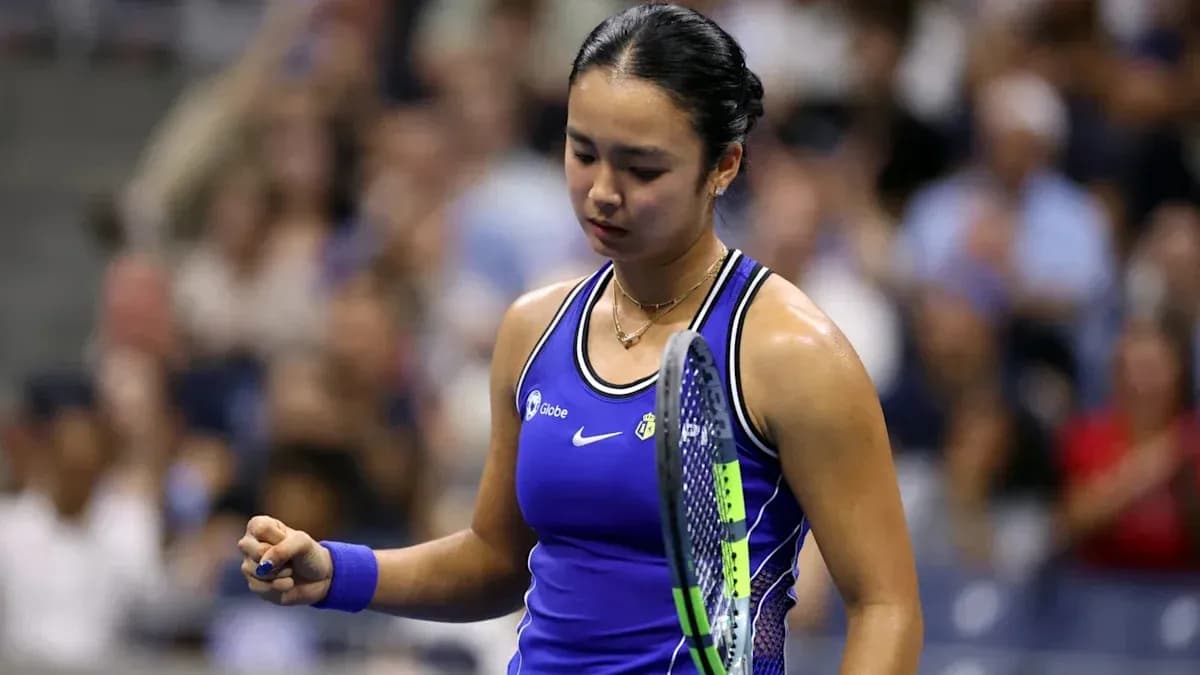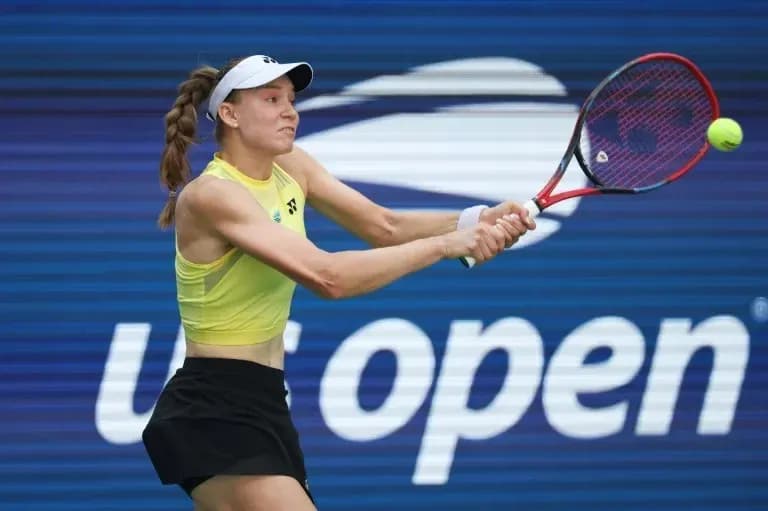
Elena Rybakina clawed her way into the US Open semi-finals on Wednesday – and into history.
The 27-year-old will rise to world number one for the first time in her career after overturning Olympic champion Zheng Qinwen 3-6, 6-1, 6-4 in a tense, two-hour-14-minute battle on Arthur Ashe Stadium.
She will replace Aryna Sabalenka at the top of the rankings next week, becoming the first Kazakh player ever to hold the WTA’s premier spot and the 30th woman to reach number one since the rankings began.
“It’s just a number right now,” Rybakina said on court, brushing aside the milestone as she tried to keep the focus on the tournament. “Of course I’m in the semis. It’s an amazing achievement (but) during the match I feel like I just need to focus on my game.”
A slow start, a sharp response
For a player on the brink of the summit, Rybakina opened like someone still stuck in the shadows.
She admitted she “didn’t start that well” and it showed. Zheng, the reigning Olympic champion and ranked 121 after a long injury layoff, settled first. She dragged Rybakina into long, physical rallies, teased errors from the Kazakh’s forehand and pounced on the first real opening.
At 4-3, Zheng earned the first break chances of the match and cashed in when Rybakina slapped a forehand into the net. The next game turned into a mini-epic: 14 minutes, five break points saved, Zheng serving her way out of trouble with an ace, a backhand down the line and a service winner while Rybakina’s returns flew long or wide.
On her fourth set point, Zheng drew another forehand error on the return and pocketed the opener 6-3. For Rybakina, who had been 0-6 at the US Open after losing the first set, the numbers pointed in the wrong direction.
“I was struggling a little bit,” she said. “We got into long rallies and I made mistakes. I was trying to be more aggressive because I feel like I wasn’t pushing enough.”
The shift came quickly.
Rybakina walked to her chair after the set visibly irritated, later admitting she had been “too much negative” and even complaining in her head about the early start and the shadows on court. Then she reset.
She opened the second set with back-to-back aces, a statement hold that snapped the rhythm of the match. The next game, she stepped inside the baseline, ripped a forehand winner to break for 2-0 and began dictating with the kind of first-strike tennis that has carried her to two major titles.
Zheng tried to respond, earning a break point at 3-1, but Rybakina erased it with another forehand winner and surged to 4-1. The pressure finally told again at 5-1, Rybakina breaking once more with her forehand to level the match and force a decider.
World number one secured in a tight third
The third set tightened into a classic quarter-final scrap.
Zheng, who had come through qualifying and won seven matches in New York after nearly eight months out with elbow surgery, refused to fade. She saved a break point in the fifth game, clinging on with the resilience that has defined her run. Rybakina, now fully locked in, stared down a break point of her own at 3-4, holding firm in the eighth game to keep the set on serve at 4-4.
Then came the moment that decided everything.
Serving at 4-4, Zheng blinked. A double fault handed Rybakina the crucial break. The Kazakh, who had spent the afternoon pushing away “negative thoughts” and telling herself to “keep fighting,” stepped up to serve for the match and didn’t flinch. One last hold, and with it a place in the semi-finals, a shot at a third Grand Slam title, and the confirmation that she will wake up as world number one next week.
“No matter how long you’re going to stay it’s an achievement and I feel very proud,” she said. “It’s something for which you’re going to be very proud when you finish at the end of the year.”
Rybakina has shown no sign of the foot injury that disrupted her US Open build-up. Her victory also slammed the door on the number one hopes of Sabalenka, Coco Gauff and Jessica Pegula, the three other players who arrived at Flushing Meadows with a mathematical chance to end the tournament on top.
Rybakina, the second seed, now faces the winner of the quarter-final between fourth-ranked American Gauff, already a two-time major champion, and 19-year-old Mirra Andreeva, the reigning French Open champion. Sabalenka and Pegula will contest the other semi-final.
Zheng’s run ends, but her message is clear
For Zheng, this was a night of frustration wrapped around a fortnight of resurgence.
The 23-year-old missed out on a first US Open semi-final and remains without a title in New York, having lost her only Grand Slam final at the Australian Open earlier this year. Yet from a ranking of 121 to a guaranteed place inside the top 60 next week, her campaign has re-announced her as a major threat.
“I got a lot of chances in the third set, but I didn’t take them,” she said. “That was a bit pity for me to lose this match, but obviously I can take positive things from the US Open this year.”
She saw the margins clearly.
“Maybe when she serve second serve, I could be more aggressive sometimes and make a bit less mistake in the return,” Zheng reflected. “Today is just few points makes the difference.”
Those few points fell Rybakina’s way. She now stands two wins from a third Slam crown, having already lifted trophies at Wimbledon in 2022 and at this year’s Australian Open.
The number one beside her name will be new. The way she earned it – under pressure, from behind, on the biggest court in the sport – looked exactly like a player who intends to stay there.